










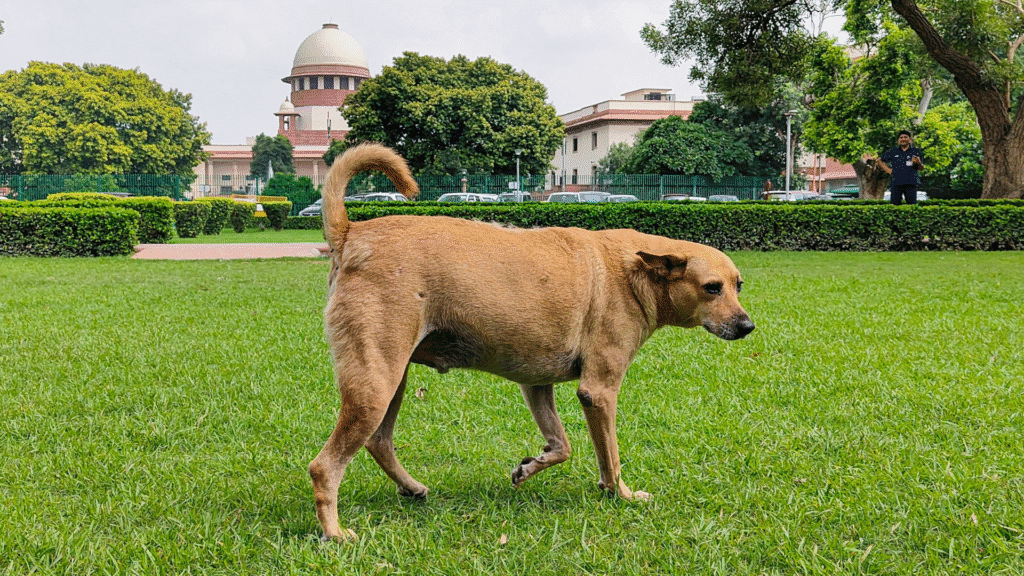
New Delhi, In a significant order aimed at enhancing public safety and addressing the nationwide menace of stray animals, the Supreme Court of India has issued stringent directives for the immediate removal of stray dogs and cattle from key public infrastructure, including railway stations, bus stands, hospitals, educational institutions, and all national and state highways.
The three-judge special bench, comprising Justices Vikram Nath, Sandeep Mehta, and N. V. Anjaria, passed the sweeping directions after noting the “alarming rise” in dog bite incidents, particularly in institutional areas, and the fatal accidents caused by stray cattle on high-speed expressways.
Key Directives: Clearing Institutional Areas and Transport Hubs
The Supreme Court’s order, delivered as part of an ongoing suo motu (on its own motion) case concerning stray dog management, focuses on insulating specific high-traffic, sensitive zones from the threat posed by strays.
1. Railway Stations and Public Premises:
- Immediate Removal and Relocation: All stray dogs must be forthwith removed from the premises of government and private educational institutions, hospitals, public sports complexes, bus stands, depots, and railway stations.
- No Release Back: Crucially, the court has directed that the dogs so picked up shall not be released back to the same location from which they were picked up. They must be relocated to a designated shelter after due sterilization and vaccination, as per the Animal Birth Control (ABC) Rules, 2023.
- Securing Premises: Administrative heads of these institutions must ensure the premises are secured with adequate fencing, boundary walls, and gates to prevent the ingress of stray dogs. This exercise must be completed within eight weeks.
- Nodal Officers and Inspection: Every institution must designate a nodal officer responsible for ensuring strays do not enter the campus. Local municipal authorities and Panchayats are mandated to carry out regular inspections at least once every three months.
Zero Tolerance for Strays on Highways
The court also moved decisively to tackle the danger posed by stray cattle and other animals on the country’s road network, affirming earlier directions of the Rajasthan High Court.
2. Highways and Expressways:
- Mandatory Removal of Cattle: Authorities, including the National Highways Authority of India (NHAI), must ensure the immediate removal of all cattle and other stray animals from national highways, state highways, and national expressways.
- Joint Coordinated Drive: A joint, coordinated drive must be undertaken to identify stretches where stray cattle are frequently found.
- Helpline Numbers and Patrols: All major highways must prominently display helpline numbers at regular intervals for commuters to promptly report the presence of stray animals or accidents caused by them. Dedicated highway patrol teams are to be constituted for continuous surveillance and immediate response.
- Shelter and Care: Removed animals must be kept in appropriate cattle pounds or shelters and provided with necessary food, water, and veterinary care in accordance with the law.
Accountability and Compliance
The Supreme Court has placed the responsibility for strict enforcement squarely on the highest authorities.
- Chief Secretaries Responsible: The Chief Secretaries of all States and Union Territories have been directed to ensure strict compliance with the order.
- Personal Accountability: The court explicitly warned that any “lethargy in this regard shall be viewed seriously,” and the concerned officers will be held personally accountable for non-compliance.
- Status Reports: States and UTs must file comprehensive status compliance reports detailing the remedial mechanisms within eight weeks before the matter is taken up for further hearing on January 13, 2026.
This directive marks a major judicial push for public health and safety, signaling a shift toward more centralized and immediate action to manage the stray animal population in sensitive public areas across India.