

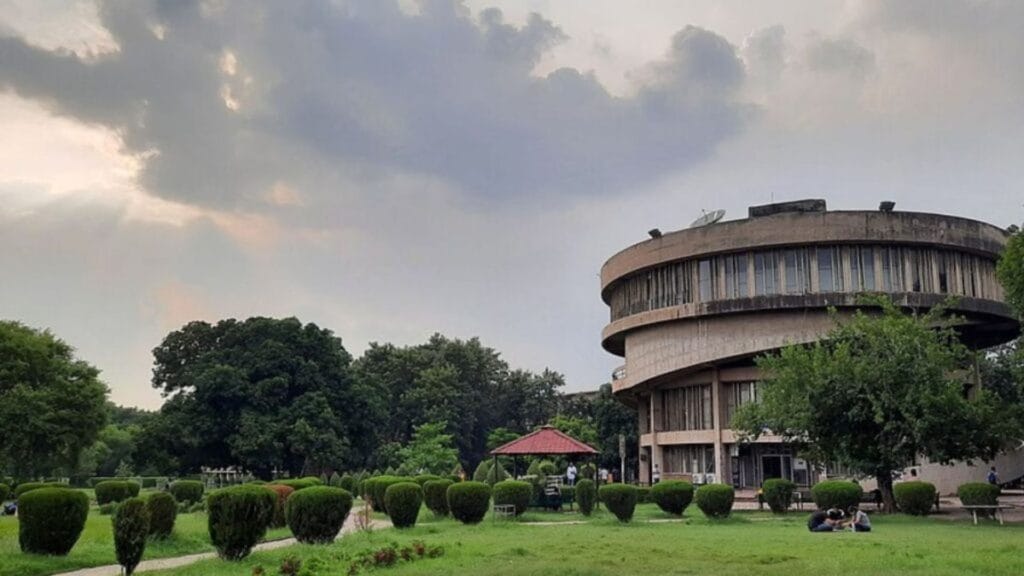
Chandigarh: The current political storm over the Central government’s move to dismantle the democratic structure of the Panjab University (PU) Senate is not just a fight over institutional autonomy—it’s a stark confrontation exposing decades of political indifference by the Punjab government itself.
While the state fiercely defends the Senate’s historic structure today, public records paint a picture of severe, almost non-existent engagement by its highest officeholders. A review of Senate proceedings over the last two decades reveals that the Chief Minister and the State Education Minister, both mandatory ex-officio members, have been consistently absent from the very meetings they are now fighting to save.
Near-Zero Attendance: A Political Habit
For the past 20 years, spanning multiple administrations from different political parties (SAD, Congress, and AAP), the pattern has remained shockingly consistent:
- The Ex-Officio Ghost Members: The Chief Minister of Punjab and the State Education Minister are legally required to be members of the Senate. However, the minutes of Senate meetings—which occur several times a year—almost universally list these top leaders in the section detailing members who “could not attend the meeting.”
- The Rarity of Presence: Attendance by a sitting Chief Minister is considered extremely rare, if not entirely absent, over the last two decades. The same holds true for the Education Minister, whose representation is often delegated to a senior bureaucrat or, more often, is entirely absent.
- The Bureaucratic Band-Aid: Only senior administrative officials, such as the Director of Higher Education (DHE), show sporadic attendance, demonstrating a lower-level administrative link rather than a commitment from the state’s political leadership.
The prevailing trend confirms that these top-level Senate seats were treated as purely ceremonial, lacking any active political commitment from the state’s leadership.
The Cost of Apathy: Losing the Moral High Ground
The absence of Punjab’s political heavyweights has had a profound impact, weakening the state’s position in the ongoing battle with the Centre:
- Administrative Vacuum: This systemic indifference over two decades created an administrative vacuum within the Senate, giving the Central government an opening to argue for “reform”—which in this context meant replacing elected representatives with appointed nominees.
- Diminished Stake: The political leaders who now vociferously defend the Senate structure have almost never participated in its functions, budget reviews, or policy-making. This long-standing detachment undermines their argument that the body is truly vital to the state’s governance and destiny.
- A Self-Inflicted Wound: Critics argue that had successive Punjab governments taken their Senate seats seriously—using them to actively push for more funding, address the university’s financial deficit, or champion academic causes—the Central government would have found it far more difficult to challenge the Senate’s relevance or its right to exist.
In essence, the fierce political battle being waged today to save the PU Senate is overshadowed by the history of neglect. While the fight for autonomy is just, the state government finds itself with little moral authority to argue for the preservation of a democratic body it demonstrably chose to ignore for the past 20 years.
URL: https://senatesyndicate.puchd.ac.in/senate-updates.php