



Central Asia, a region once viewed through the lens of Russian dominance, is rapidly emerging as the new nexus of global power competition. Comprising the five former Soviet Republics (Kazakhstan, Kyrgyzstan, Tajikistan, Turkmenistan, and Uzbekistan)—collectively known as the CARs—this strategic heartland of Eurasia is no longer a peripheral territory. It has transformed into a high-stakes chessboard where China is making a powerful geo-economic play, setting up a critical strategic test for India’s regional ambitions.
The tectonic shift in the region’s power dynamics, accelerated by the war in Ukraine and the U.S. withdrawal from Afghanistan, has created a vacuum. This void is being rapidly filled by the two Asian giants, each employing distinct strategies to secure their interests in a pivotal region rich in resources, critical for continental connectivity, and vital for border security.
1. China’s Chessboard: The Geo-Economic Titan
For Beijing, Central Asia is the indispensable western anchor of its global vision. China’s strategy is not merely about influence; it is about continental-scale connectivity and securing its strategic backyard.
The Belt and Road Initiative (BRI) Anchor
China’s principal vehicle for engagement is the Silk Road Economic Belt (SREB), the overland component of the BRI. This initiative seeks to transform Central Asia from a landlocked region into a land-linked corridor, providing China with:
- Connectivity and Trade: A “land bridge” connecting China to Europe, the Middle East, and West Asia, bypassing vulnerable maritime chokepoints. China is now the top, or second-largest, trade partner for most CARs.
- Energy Security: Securing long-term access to energy supplies, including natural gas from Turkmenistan and Kazakhstan via the Central Asia-China gas pipelines.
- Border Security: Creating a stable buffer zone along its borders with Xinjiang. Beijing is focused on combating the “Three Evils”—terrorism, separatism, and religious extremism—often through security cooperation mechanisms under the Shanghai Cooperation Organization (SCO) and bilateral training of regional forces.
To institutionalize its growing clout, China has elevated its diplomatic engagement through the C5+1 mechanism (China plus the five CARs). Through massive investments in infrastructure, digital networks, and industrial projects, China has established itself as the unquestionable economic hegemon, making a clear statement that its rise is inextricably linked to the prosperity of Central Asia.
2. India’s Strategic Test: The Connectivity Challenge
India’s primary challenge in Central Asia is geographical: the lack of a direct land route, blocked by Pakistan. Despite this hurdle, New Delhi recognizes the region’s significance for its energy security, counter-terrorism efforts, and strategic desire to establish an alternative developmental model to China’s.
The ‘Connect Central Asia Policy’ and INSTC
India’s policy, formalized in 2012, focuses on a multi-dimensional approach encompassing security, energy, trade, and cultural ties. The key pillars are:
- The International North-South Transport Corridor (INSTC): This multi-modal sea, rail, and road network aims to connect India to Iran, Azerbaijan, Russia, and Central Asia, drastically reducing transport time and costs compared to the Suez Canal route.
- Chabahar Port: Situated in Iran, this port is India’s “Golden Gate” to Central Asia, providing a crucial maritime bypass to Pakistan. Its operational success is vital to realizing the full potential of the INSTC.
- Soft Power and Capacity Building: India leverages its historical and cultural ties—rooted in the ancient Silk Road, Sufism, and Bollywood—to maintain influence. Programs like the Indian Technical and Economic Cooperation (ITEC) offer training and expertise, positioning India as a reliable partner focusing on human resource development rather than large-scale debt-fueled infrastructure.
For the CARs, India offers a necessary counterbalance, allowing them to diversify their diplomatic and economic partnerships and avoid over-reliance on a single major power.
3. The Shifting Sands: Russia’s Wane and CARs’ Agency
The geopolitical flux has been dramatically accelerated by external shocks.
- US Retrenchment: The 2021 withdrawal of the United States from Afghanistan removed a key stabilizing presence, leaving a security vacuum that primarily concerns the southern CARs (Tajikistan, Uzbekistan, and Turkmenistan).
- Russia’s Distraction: Russia’s full-scale invasion of Ukraine in 2022 has severely curtailed its ability to project decisive military and economic power in Central Asia. Historically the primary security guarantor, Moscow is now seen as a less reliable, and even a cautionary, figure.
In response, the Central Asian states have collectively asserted a more confident, ‘multi-vector’ foreign policy. They are diversifying alliances, strengthening intra-regional cooperation, and opening doors wider to China, Turkey, and other external powers to enhance their sovereignty and maximize economic gains while minimizing dependence on any single country.
The region’s stability hinges on its success in maintaining this delicate balancing act between their traditional security partner (Russia), their primary economic partner (China), and the aspirational alternative (India).
Conclusion: A New Great Game Defined
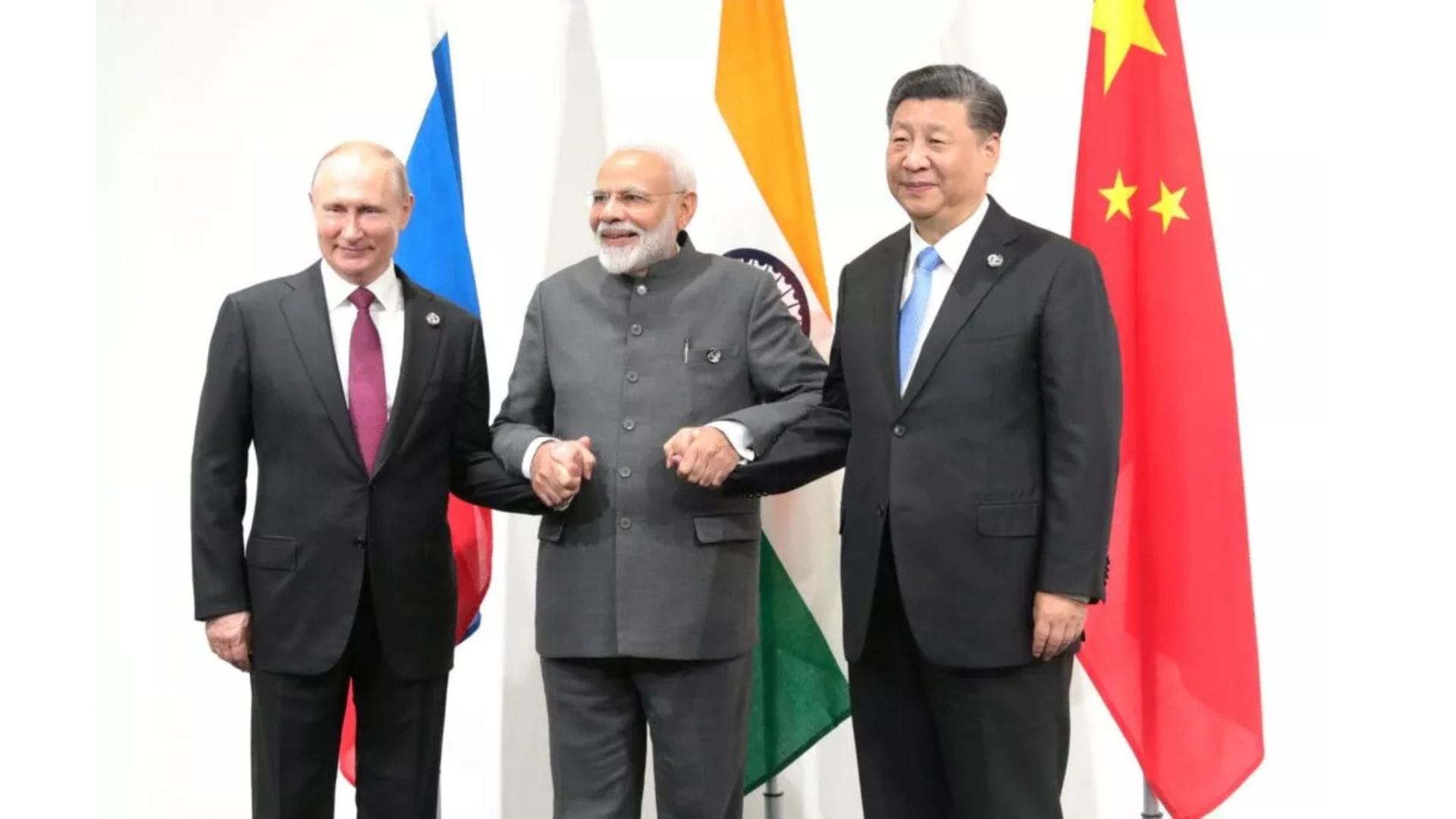
Central Asia is now the stage for a new “Great Game,” fundamentally driven by the contrasting strategies of Asia’s two largest economies.
China’s approach is defined by geo-economics—utilizing vast financial power and infrastructure projects to create dependency and secure strategic assets. India’s approach, constrained by geography, is focused on alternative connectivity, security cooperation, and soft power diplomacy to secure its energy interests and preserve strategic space.
For India, the task is monumental: it must urgently operationalize the INSTC and Chabahar Port to compete with the velocity and scale of China’s BRI. For China, the challenge is to manage the perception of “debt-trap” diplomacy and avoid overt security competition with a retreating but still present Russia.
The ultimate outcome will not be the domination of a single power, but a complex, fluid environment where the Central Asian republics themselves will determine their future by skillfully managing the competitive interests of the world’s rising giants. The heart of Eurasia is in play, and the world is watching.