


News Unwrapped

Thursday, January 15, 2026 11:04 AM
Hot News

Panjab University Protest

Panjab University Protest

From Gates to High Court: The Panjab University Protest is Now a Tense Standoff

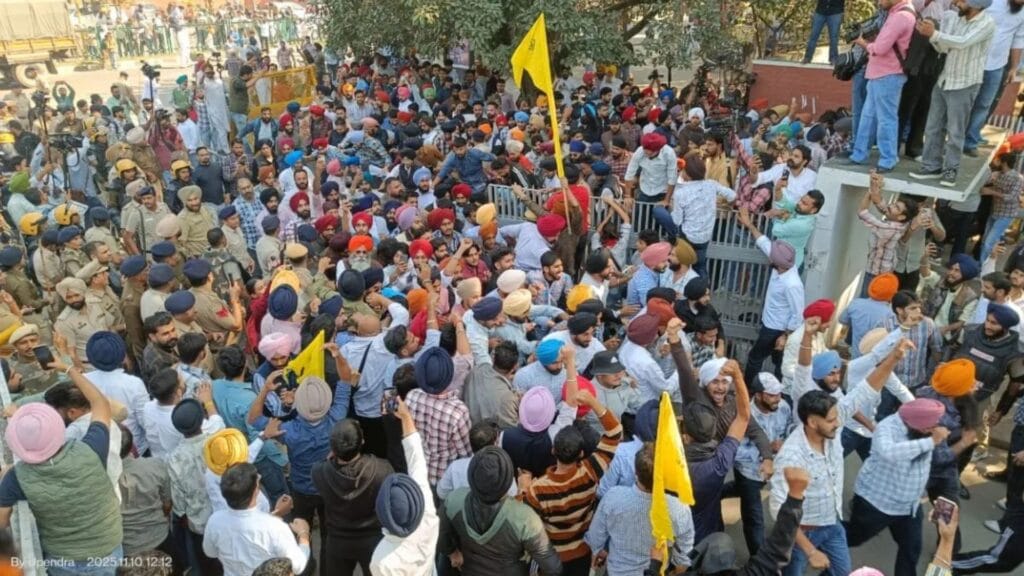
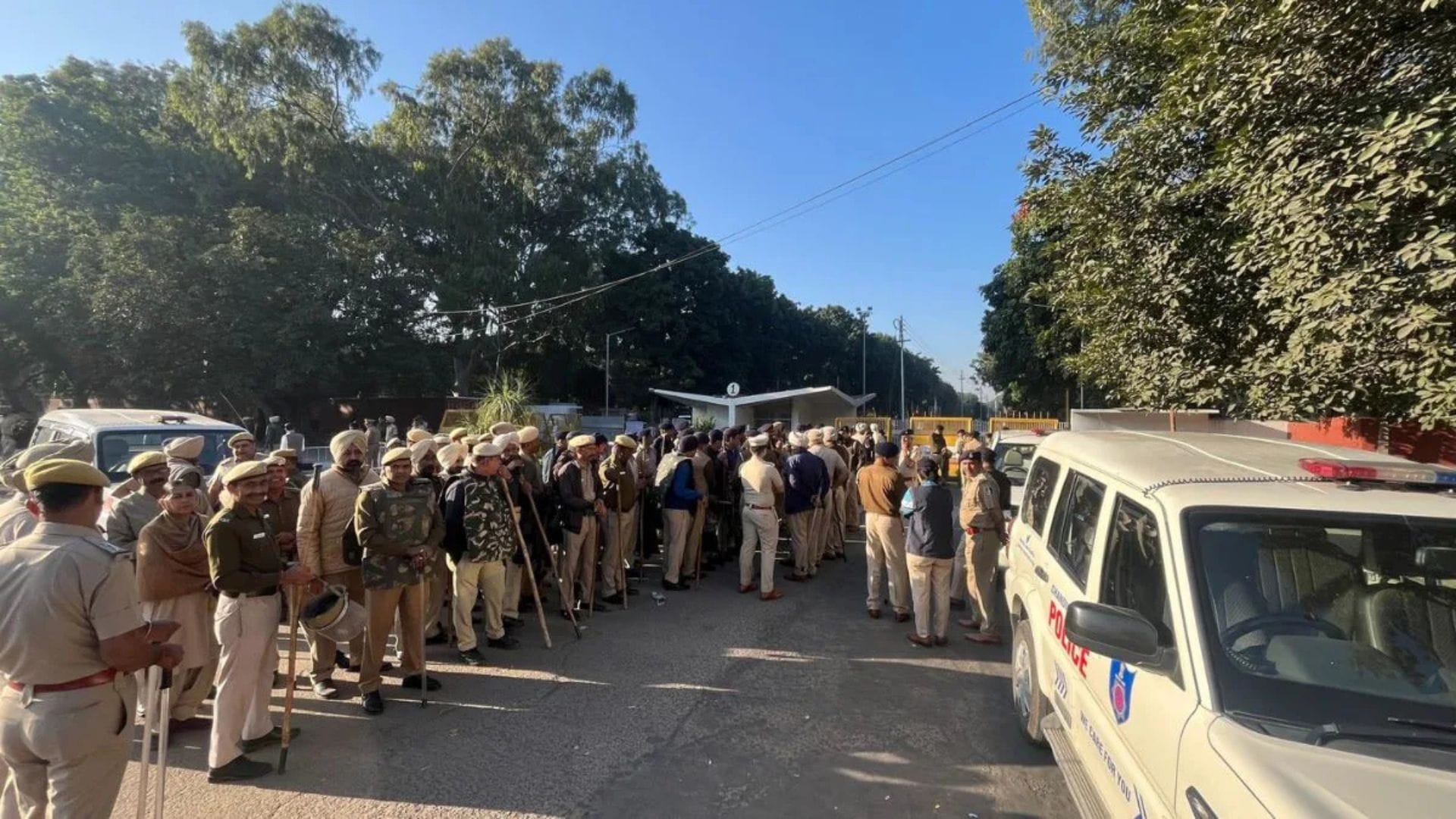
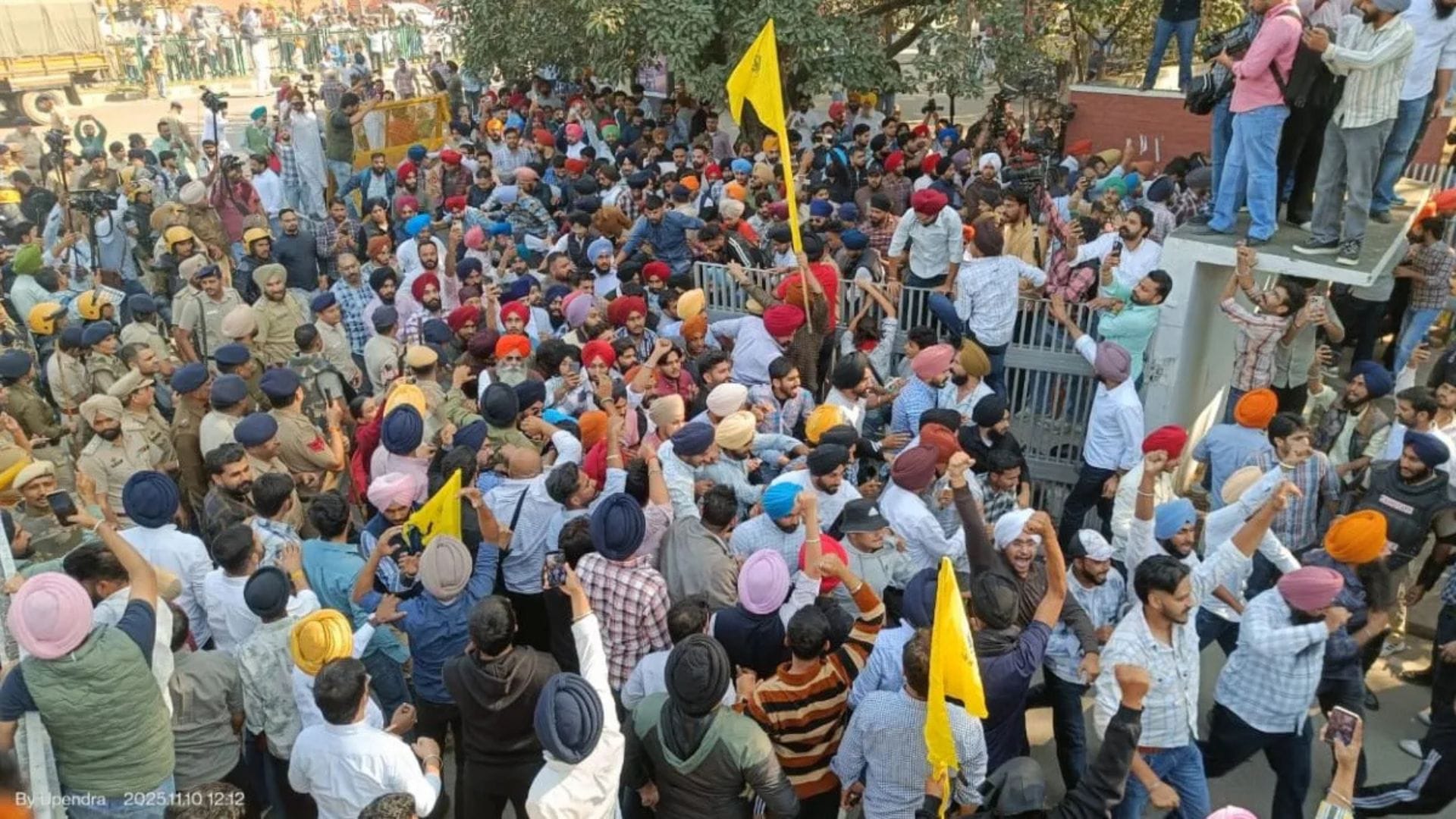
CHANDIGARH, November 11, 2025 – The fight for democracy at Panjab University (PU) has entered a new, volatile phase. What began as a student demand for immediate Senate elections escalated dramatically on Monday, spilling out of the classrooms and onto the streets, and has now found its way into the courtroom. Despite the Union Ministry of Education rescinding its controversial order to restructure the Senate last week, students and political stakeholders are refusing to back down, insisting that the government must provide a concrete date for the long-pending elections. The lack of a firm schedule has fueled a deep distrust, culminating in a dramatic ‘university shutdown’ and mass mobilization that signals a profound struggle for institutional autonomy. Monday’s Showdown: Storming the Campus Monday was marked by an unprecedented surge of protestors who broke through police barricades and scaled the main gates of the university. It was a chaotic scene where student dissent was rapidly overtaken by external political and Panthic elements: The Incursion: Led by the Panjab University Bachao Morcha (PUBM), thousands—many identified as farmers, Panthic activists, and leaders from political parties—overran the campus. The Chandigarh Police, despite heavy deployment, resorted to a brief lathicharge but ultimately struggled to contain the massive crowds. The Shift in Slogans: The Vice-Chancellor, Renu Vig, expressed outrage, stating that the protest had ceased to be about the Senate. Slogans like “Go Back, Chandigarh Police” were quickly supplemented by cries of “Panjab University, Punjab Di,” turning the governance dispute into a major political and identity issue. The Continued Agitation: Students and supporting organizations, including the Samyukta Kisan Morcha (SKM), have vowed to continue their agitation until the election schedule for the original 91-member Senate is officially announced. The Status Today: A Waiting Game As of Tuesday, November 12, the situation remains a tense standoff: Campus Security: Heavy security remains deployed across the campus, particularly near the Vice-Chancellor’s office, though normal academic activity remains impacted. The Schedule is Submitted: University authorities have confirmed that they have prepared a detailed Senate election schedule and have submitted it to the Vice-President of India, C P Radhakrishnan (the Chancellor of the University), for final approval. Students’ Skepticism: The Vice-Chancellor’s announcement has done little to placate the protestors, who recall past delays and political interference. Their unified stance is: “We want action, not promises.” Taking the Fight to the High Court The crisis has also landed in the Punjab and Haryana High Court. Two petitioners approached the court yesterday, requesting an immediate order for the university to announce the Senate election dates. Their plea warns that the continued absence of an elected Senate—whose term ended over a year ago—leaves all governing power concentrated in the hands of the Vice-Chancellor, violating the university’s democratic statutes. The High Court is expected to take up the matter soon, injecting a legal dimension into a fight that has until now been purely political. The fate of PU’s 143-year-old democratic tradition now hangs in the balance, resting between the Chancellor’s pen, the High Court’s ruling, and the continued resolve of the students on the ground.   ❓ Frequently Asked Questions (FAQ)   Q1: Why are the students protesting now, even after the Centre rescinded the restructuring order? The students are protesting because, while the Centre withdrew the controversial order (which would have reduced the Senate’s size and abolished elected seats), the university administration has still not announced the date for the Senate elections. The elections have been pending since the last Senate’s term expired in October 2024. Students view the continued delay as a deliberate attempt to undermine the democratic body. Q2: What is the Panjab University Senate and why is it so important? The Senate is the highest governing body of Panjab University. It comprises professors, principals, teachers, and crucially, members elected by registered university graduates. It is responsible for making policy, approving the budget, and safeguarding the university’s academic autonomy and democratic character. Q3: Who is currently holding up the election schedule? The university administration has submitted the proposed election schedule to the Chancellor of Panjab University, who is the Vice-President of India. The schedule requires his final approval before it can be formally announced. Q4: Which external groups have joined the protest? The core protest is led by student bodies under the Panjab University Bachao Morcha (PUBM). However, the movement has been joined by powerful external groups, including various Farmer Unions (like the SKM), Panthic outfits, and politicians from various parties, broadening the issue into one of Punjab’s administrative control over the university. Outgoing Links (Conceptual and Informative) Read More on the Centre’s Withdrawal of the Senate Notification (The Indian Express) Details on the Plea Filed in the Punjab and Haryana High Court (Hindustan Times) Vice-Chancellor’s Statement on the Senate Schedule Submission (Times of India)
Panjab University Protest

“Go Back Chandigarh Police”: Panjab University Erupts as Students Storm Campus Gates Demanding Election Date

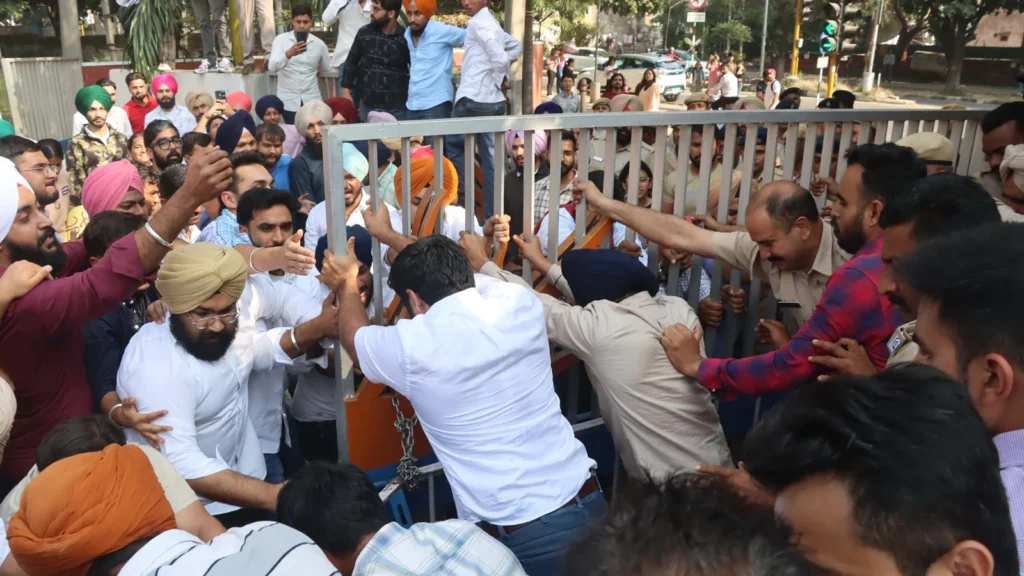
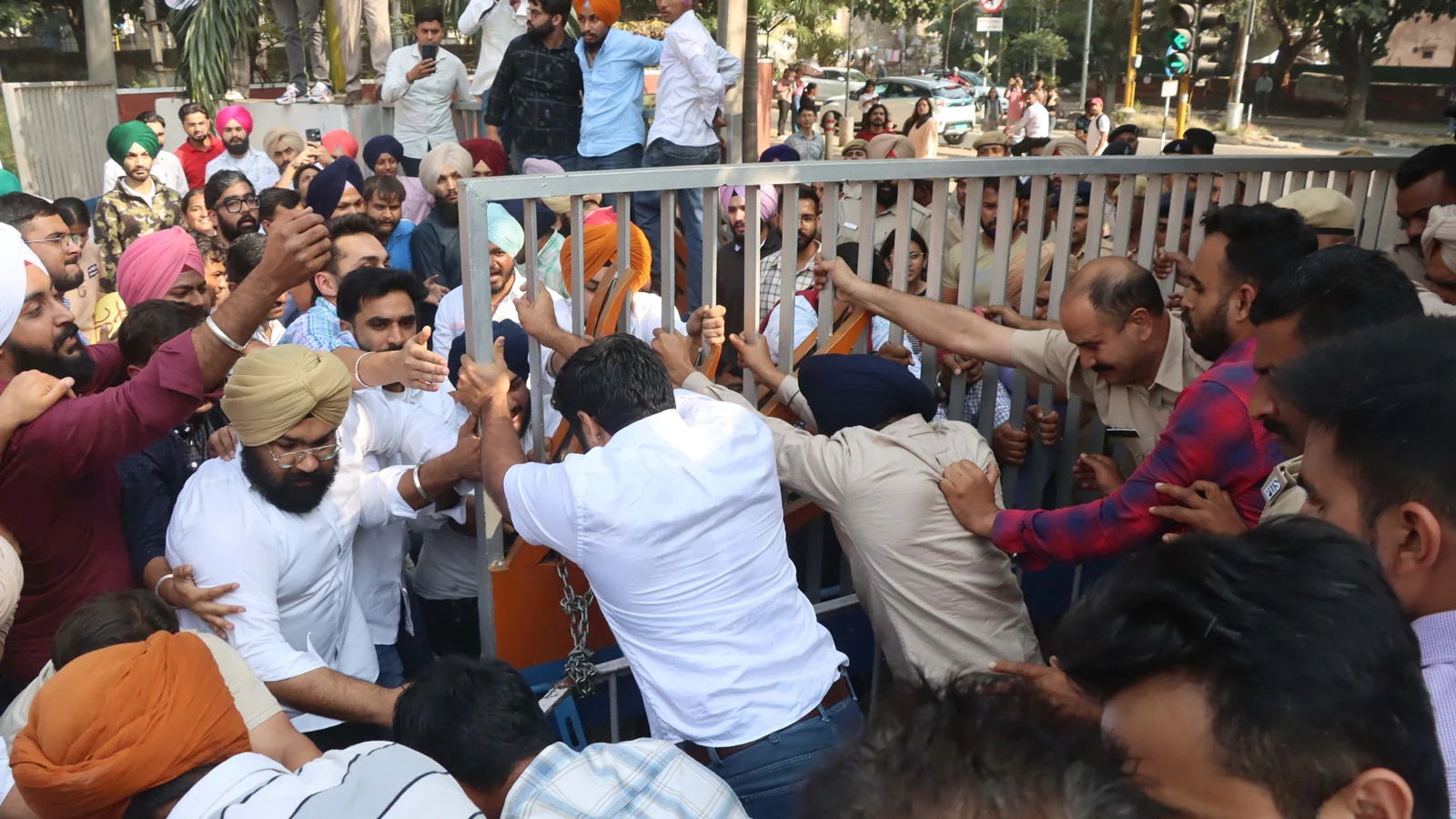
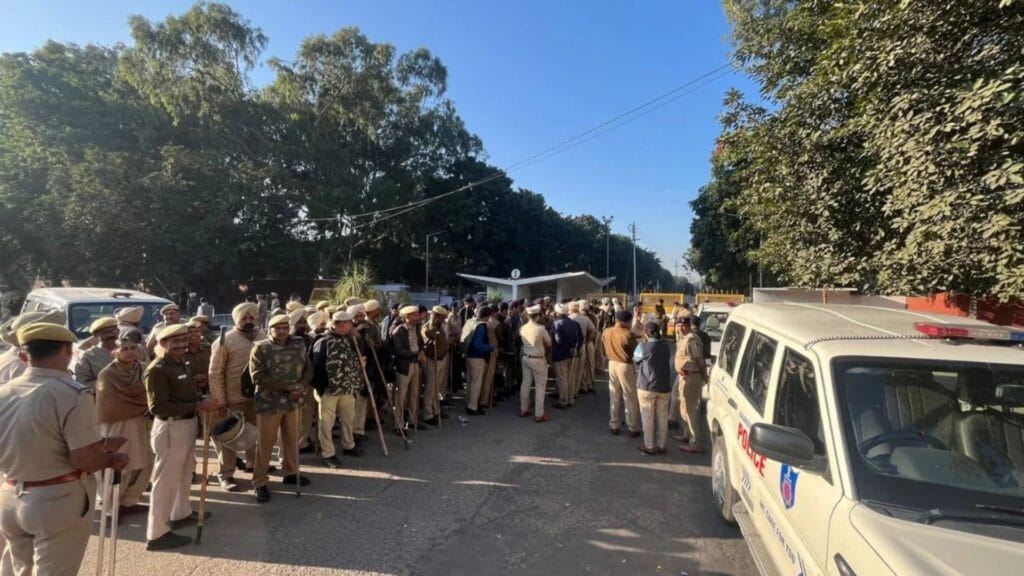
CHANDIGARH, November 11, 2025 – Panjab University (PU) was transformed into a protest battleground yesterday as thousands of students and external supporters demanding immediate Senate elections burst through police barricades, storming the campus and engaging in clashes with security officers. The mobilisation, led by the Panjab University Bachao Morcha (PUBM), was a decisive show of strength aimed at forcing the university administration and the Central government to commit to a date for the long-awaited elections.   The Breach of Gates Despite heavy deployment of Chandigarh Police and multiple layers of protection, the massive crowd proved unstoppable. Protesters, including student leaders, farmer union members, and alumni, surged past security at Gate No 1. The situation quickly escalated into chaos: Protesters mounted the main gates. They successfully tore down barricades set up by police. Reports indicate that some protestors stole police canes, which were used for crowd control. In response, a lathi charge was reportedly used by the police to eventually disperse and control the surging crowd. The chants that echoed across the campus were defiant: “Go Back, Chandigarh Police!” Protesters accused the administration of using police force to stifle a democratic movement and deny students their right to protest.   The Core Demand: An End to Election Delay The immediate trigger for Monday’s confrontation is the continued stalling of the Senate elections, which have been postponed since the previous Senate’s term expired in October 2024. The protest intensified following a series of events regarding the university’s governance: The October 28 Notification: The Union government attempted to fundamentally restructure PU’s Senate and Syndicate, proposing to drastically reduce the number of elected members and replace them with nominated officials. The ‘Half-Hearted’ Rollback: Following immense political and student pressure, the Ministry of Education twice rolled back the controversial order (on November 5 and again on November 7). The Continuing Crisis: Student groups, however, deemed the withdrawal “half-hearted.” While the old democratic structure was nominally restored, the university administration has failed to provide a firm schedule for the long-pending elections.   Administration Claims Action, Students Demand Proof In the lead-up to Monday’s shutdown, university officials made a key announcement: the Senate election schedule had been drafted and sent to the Vice-President of India, the Chancellor, for final approval under the previous 91-member structure. However, student leaders remained deeply skeptical, choosing to proceed with the protest. “We want action, not promises,” a student leader stated. Student unions have insisted that their struggle will continue until the official, public declaration of the election schedule is made, fearing that continued silence will only lead to further deliberate delay and political interference. The dramatic storming of the campus gates was clearly designed as a “decisive show of strength” to accelerate the administrative process. The confrontation at PU is now less about the Centre’s structural reforms and more about a fundamental demand for the restoration of democratic rights and accountability on campus.

Panjab University Protest

The Hypocrisy of Absence: Why Punjab’s Top Leaders Rarely Attended the Panjab University Senate

Chandigarh: The current political storm over the Central government’s move to dismantle the democratic structure of the Panjab University (PU) Senate is not just a fight over institutional autonomy—it’s a stark confrontation exposing decades of political indifference by the Punjab government itself. While the state fiercely defends the Senate’s historic structure today, public records paint a picture of severe, almost non-existent engagement by its highest officeholders. A review of Senate proceedings over the last two decades reveals that the Chief Minister and the State Education Minister, both mandatory ex-officio members, have been consistently absent from the very meetings they are now fighting to save.   Near-Zero Attendance: A Political Habit For the past 20 years, spanning multiple administrations from different political parties (SAD, Congress, and AAP), the pattern has remained shockingly consistent: The Ex-Officio Ghost Members: The Chief Minister of Punjab and the State Education Minister are legally required to be members of the Senate. However, the minutes of Senate meetings—which occur several times a year—almost universally list these top leaders in the section detailing members who “could not attend the meeting.” The Rarity of Presence: Attendance by a sitting Chief Minister is considered extremely rare, if not entirely absent, over the last two decades. The same holds true for the Education Minister, whose representation is often delegated to a senior bureaucrat or, more often, is entirely absent. The Bureaucratic Band-Aid: Only senior administrative officials, such as the Director of Higher Education (DHE), show sporadic attendance, demonstrating a lower-level administrative link rather than a commitment from the state’s political leadership. The prevailing trend confirms that these top-level Senate seats were treated as purely ceremonial, lacking any active political commitment from the state’s leadership.   The Cost of Apathy: Losing the Moral High Ground The absence of Punjab’s political heavyweights has had a profound impact, weakening the state’s position in the ongoing battle with the Centre: Administrative Vacuum: This systemic indifference over two decades created an administrative vacuum within the Senate, giving the Central government an opening to argue for “reform”—which in this context meant replacing elected representatives with appointed nominees. Diminished Stake: The political leaders who now vociferously defend the Senate structure have almost never participated in its functions, budget reviews, or policy-making. This long-standing detachment undermines their argument that the body is truly vital to the state’s governance and destiny. A Self-Inflicted Wound: Critics argue that had successive Punjab governments taken their Senate seats seriously—using them to actively push for more funding, address the university’s financial deficit, or champion academic causes—the Central government would have found it far more difficult to challenge the Senate’s relevance or its right to exist. In essence, the fierce political battle being waged today to save the PU Senate is overshadowed by the history of neglect. While the fight for autonomy is just, the state government finds itself with little moral authority to argue for the preservation of a democratic body it demonstrably chose to ignore for the past 20 years. URL: https://senatesyndicate.puchd.ac.in/senate-updates.php

Panjab University Protest

PU Protest Hijacked: Why Khalistani Slogans Drowned Out Demands for Campus Autonomy

Chandigarh: The recent Panjab University (PU) protest, originally a fight by students for democratic governance, has dramatically morphed into a volatile collision of academia and radical identity politics. What began as a demand against the Central government’s move to dismantle the elected Senate and Syndicate—the university’s highest decision-making bodies—quickly saw the entry of Sikh and Panthic organizations, some with alleged pro-Khalistan leanings, fundamentally changing the nature of the agitation. The core student issue was the Ministry of Education’s notification seeking to replace the autonomous, elected governance structure with a largely nominated one. Student unions united under the banner of the Panjab University Bachao Morcha to defend the university’s 143-year-old democratic tradition. The Ideological Bridge: Autonomy and Identity The student cause created a perfect ideological opening for Panthic and separatist groups to mobilize. Here is why these external forces became involved: 1. Framing the Fight as an Attack on Punjabi Identity Panjab University, established in Lahore in 1882, holds immense historical and emotional significance for Punjab. The move by the Central government to unilaterally restructure its governance was widely perceived as a direct assault on the institution’s autonomy and, by extension, on Punjab’s claim and influence over the institution (especially since Chandigarh remains a contested Union Territory). Panthic and Sikh organizations, including those that champion the cause of greater Sikh autonomy, immediately seized on this narrative. They framed the defense of the Senate not merely as an academic issue but as a crucial battle to protect a key Punjabi cultural and political asset from perceived “Central domination.” Slogans quickly shifted from campus-specific demands to political cries of “Panjab University Punjab Di” (Panjab University belongs to Punjab).   2. High-Profile Mobilization and Religious Symbolism The sheer scale of the student mobilization provided a powerful, high-visibility platform for these external groups. Key Figures: Prominent figures associated with radical and separatist movements joined the protests. This included Tarsem Singh, the father of jailed pro-Khalistan activist and MP Amritpal Singh. Panthic Outfits: Groups like the All India Sikh Students Federation (AISSF) played a significant role in escalating the protest. Members of the AISSF, led by figures like Kanwar Charat Singh (grandson of a former Damdami Taksal chief), were reportedly seen pushing past police barricades and storming the university gates. Symbolic Slogans: The shift in focus was most evident in the slogans raised, such as “Raj Karega Khalsa” (The Khalsa Shall Rule), which tied the democratic student demand to a radical political and religious identity. The sight of a Nihang on horseback entering the campus—as witnessed during the peak of the unrest—added a dramatic, martial, and explicitly religious dimension to what began as a university protest.   3. Leveraging Anti-Establishment Sentiment Student groups, particularly those on the left, are inherently anti-establishment, especially when opposing government measures that impact their democratic rights. Groups with a pro-Khalistan ideology share a fundamental anti-Centre and anti-establishment stance. This shared opposition to the ruling government at the Centre created an immediate, albeit temporary, alliance where the external groups could lend manpower and political weight to the agitation. Conclusion: A Crisis of Governance While the initial trigger for the protest—the dissolution of the Senate—had broad support across the political spectrum in Punjab, the involvement of radical elements turned it into a crisis of law and order and identity politics. The presence of these groups suggests an opportunistic move to leverage a mainstream grievance for their own political objectives, projecting an image of organizational strength and pushing their specific ideology onto the national stage. The result is a university campus that has become the latest battleground for a decades-old regional political struggle. Police Deployed as Students Stage Protest Over Senate Elections at Panjab University: Police Deployed as Students Stage Protest Over Senate Elections at Panjab University. This video shows the security arrangements and the scale of the protest demanding Senate elections at Panjab University.  

Panjab University Protest

Panjab University Protest Grows, Sees Clash: Why the Issue is Bigger Than Just PU, Chandigarh

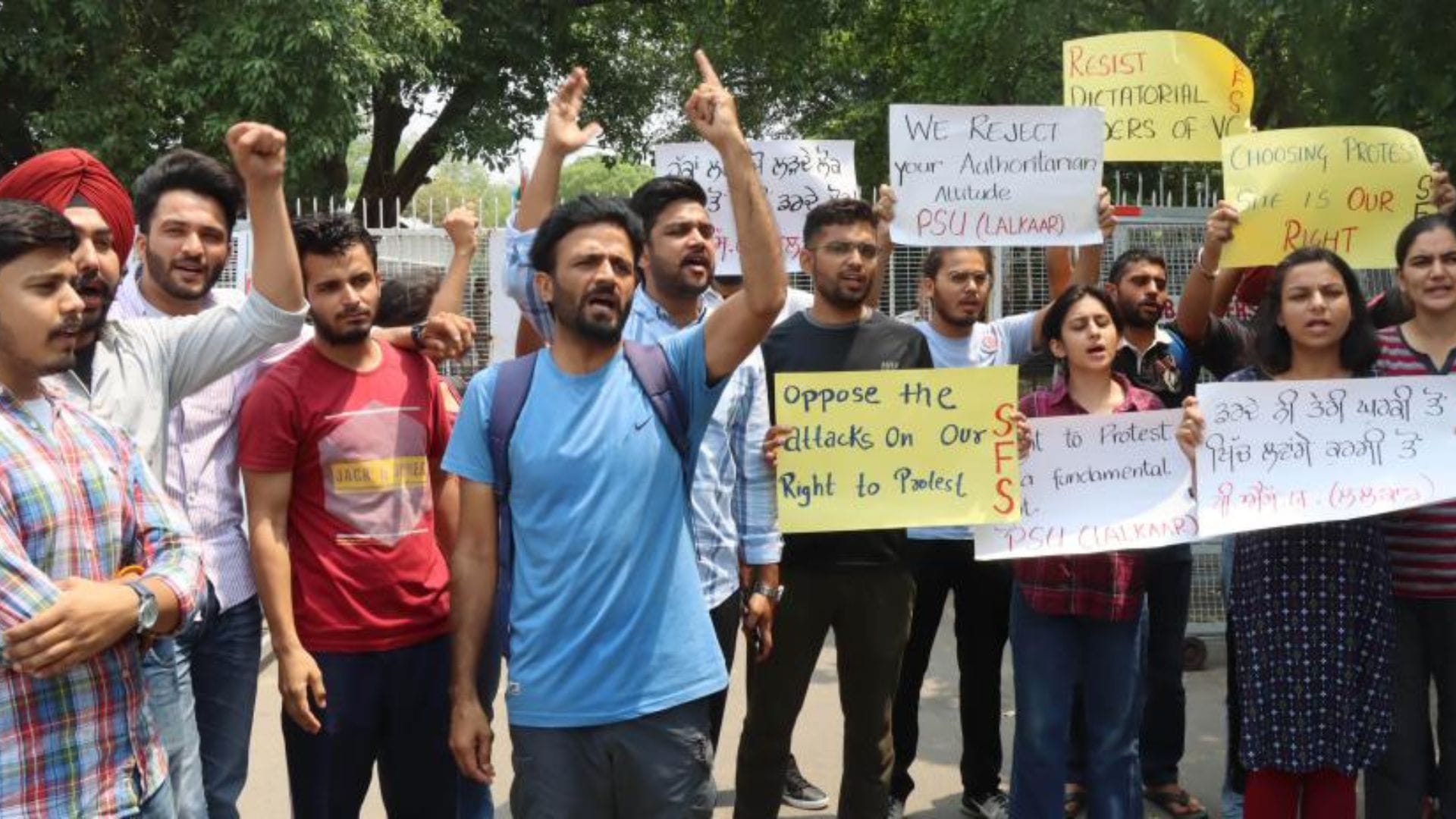
Chandigarh: The hallowed grounds of Panjab University (PU) in Chandigarh recently transformed into a theatre of confrontation, witnessing one of its largest mobilizations in decades. What began as a student hunger strike quickly escalated, culminating in thousands of protestors—including students, political leaders, and social activists—breaching campus gates in a forceful assertion of dissent. While the immediate flashpoint was the clash between protestors and police, the real story brewing on the PU campus is not just about a local law-and-order situation. It is a critical battle for the soul of Indian public higher education, touching upon issues of institutional democracy, federal balance, and the alarming erosion of student voices nationwide.   The Spark: An Attack on Autonomy The current turmoil is rooted in two key administrative moves, both perceived as an attempt to centralize power and suppress dissent:   1. The Undermining of Governance The most significant issue was the Union Ministry of Education’s notification to radically restructure the University’s apex governing bodies: the Senate and the Syndicate. The Senate’s strength was set to be drastically reduced from 91 to 31. The elected nature of the bodies, which ensures representation for students, faculty, and alumni, was to be replaced with a system dominated by nominated and ex officio members. Protestors argued this move effectively dismantled the 59-year-old democratic structure of PU, stripping the university of its unique autonomy and converting it into a centrally controlled entity.   2. The Affidavit of Silence A secondary, though equally controversial, demand was the withdrawal of a mandatory ‘no-protest affidavit’ required from students. Students condemned this as an “undemocratic” attempt to criminalize and pre-empt legitimate student activism and dissent on campus. The student movement achieved an early victory when the university was forced to formally withdraw this controversial affidavit. The Clash: A Political Show of Force The student-led ‘Panjab University Bachao Morcha’ (Save Panjab University Front) called for a campus shutdown, which quickly drew support from outside. On the day of the escalation, a massive crowd—swelled by representatives from Punjab-based political parties, farmer organisations, and Sikh groups—stormed the gates. Barricades were pushed aside, and Gates No. 1 and 2 were breached. The Vice-Chancellor, Renu Vig, publicly lamented that the situation had ceased to be a student issue and had turned into a “political mobilisation by external elements,” warning against turning the academic institution into a “theatre for power contests.” This dramatic physical confrontation brought the crisis into the national spotlight, demonstrating the scale of popular resistance against the proposed administrative changes.   The Bigger Issue: Why PU is a National Microcosm The Panjab University saga is a reflection of three crucial national challenges facing public higher education: 1. The Battle for Institutional Democracy The attempt to replace the Senate’s elected majority with nominated members is symptomatic of a broader trend of “de-democratisation” in higher education across India. By reducing the size and elective strength of governing bodies, critics argue the government is implementing governance reforms suggested by the National Education Policy (NEP) 2020 in a way that minimizes independent oversight and consolidates control under central authorities, stifling the collective voice of the academic community. 2. Federal Tussle and Regional Identity Panjab University holds a unique position as an inter-state body corporate, funded by the Centre and the state of Punjab. It is viewed by many as a symbol of Punjab’s historical and cultural legacy. Punjab Chief Minister Bhagwant Mann was vocal in his opposition, labelling the Central government’s notification as “unconstitutional” and an infringement on the state’s rights. The protest, therefore, became a demonstration of regional pride and federal resistance against perceived central overreach into an institution intrinsically linked to the history of Punjab. 3. The Crisis of Public Funding Beneath the governance issue lies the chronic financial instability of PU, which struggles with a significant deficit. Critics argue that moves toward centralized control often pave the way for a shift in funding models—potentially leading to higher fees, reduced access for economically weaker sections, and a move toward privatization. Students fear that a nominated body, insulated from the needs of the stakeholders, will be more inclined to enforce unpopular decisions like fee hikes to manage the funding crunch imposed by constrained Central grants. Conclusion: A Temporary Retreat, A Continuing War Following intense criticism and mass protests, the Union Ministry of Education was eventually compelled to rescind the notification that immediately brought the Senate amendments into effect, effectively putting the changes on hold. This is a victory for organized student dissent and the coalition of forces that supported the ‘Panjab University Bachao Morcha’. However, the substance of the amendments remains drafted, and the underlying issues—PU’s funding crisis and the national debate over autonomy versus centralization in higher education—are far from resolved. The events in Chandigarh serve as a stark reminder that the fight for affordable, accessible, and democratically governed public universities is an ongoing struggle across India, one that extends far beyond the perimeter of the Panjab University campus.

Scroll to Top