














News Unwrapped

Thursday, January 15, 2026 11:01 AM
Hot News

Infrastructure & Development

Infrastructure & Development

Is India Building ‘Make In India’ Products In The Renewable Energy Sector?

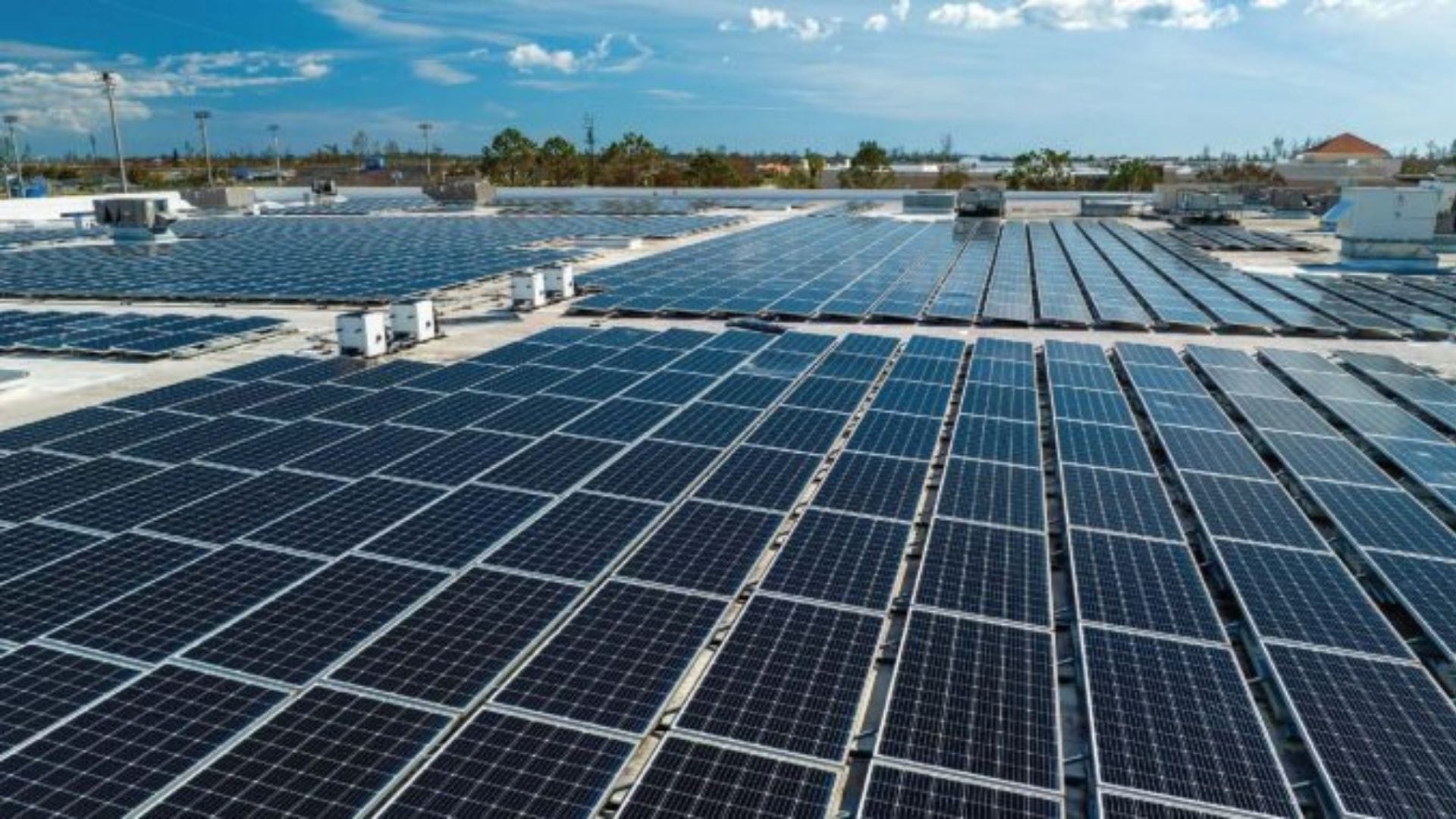
Yes, The Solar and Wind Manufacturing Boom is Underway, But Challenges Remain.   India’s ambitious goal of achieving 500 GW of non-fossil fuel capacity by 2030 is rapidly transforming its energy landscape. At the core of this transition is the ‘Make in India’ initiative, which is aggressively pushing the country to move from being an importer of renewable energy components to a self-reliant global manufacturing hub. The progress is undeniable, but so are the strategic challenges that need to be overcome to achieve true dominance. The Renewable Energy Manufacturing Surge India has established itself as a global clean energy powerhouse, ranking 3rd in the world for solar power capacity and 4th for wind power capacity. The ‘Make in India’ push is now translating this deployment success into manufacturing prowess: 1. The Solar PV Manufacturing Tripling The most significant growth has been in the solar Photovoltaic (PV) sector. Domestic manufacturing capacity has seen a spectacular surge: Solar Module Capacity: India’s solar module manufacturing capacity has expanded exponentially, crossing the 100 GW mark as of late 2025, nearly tripling the capacity it held a year prior. Upstream Production: To reduce dependence on imports (primarily from China), India is aggressively developing its upstream supply chain. The launch of the country’s first ingot-wafer manufacturing facility marks a critical milestone, moving towards indigenous production of cells, wafers, and polysilicon. 2. Wind Energy: A Global Export Hub India is a mature player in the wind energy sector, with a manufacturing capacity exceeding 20 GW for Wind Turbine Generators (WTG). The country is already positioned as a key global export hub for onshore wind components. Domestic manufacturers account for a significant portion of global nacelle manufacturing capacity. The government is urging domestic value addition in wind components to rise from current levels to as high as 85% to strengthen global competitiveness and capture a larger share of the international supply chain. Policy Power: The Drivers of Self-Reliance This manufacturing momentum is not organic; it is a direct result of strong government policies aimed at creating a protected and incentivized domestic market: Production Linked Incentive (PLI) Scheme: This flagship scheme offers financial incentives to manufacturers of high-efficiency solar PV modules for five years post-commissioning. The significant capital outlay has been the primary catalyst for the rapid expansion of solar factory capacity. Basic Customs Duty (BCD): The imposition of BCD on imported solar cells and modules acts as a protective shield for domestic producers, making foreign components more expensive and promoting local purchase. Domestic Content Requirement (DCR): Under key government schemes like PM-KUSUM and Grid-connected Rooftop Solar, it is mandatory to source solar PV cells and modules from approved domestic manufacturers, guaranteeing a baseline demand for local products. The Roadblocks to True Self-Sufficiency Despite the impressive progress, India’s quest for true self-reliance faces structural challenges: Challenge Detail Upstream Import Dependency While module manufacturing (assembly) capacity is high, India still relies heavily on foreign imports for raw materials like polysilicon and silicon wafers. Without complete vertical integration, the country remains vulnerable to global supply chain disruptions. Cost Competitiveness Indian-assembled modules are currently more expensive than fully imported Chinese modules. Without government incentives, Indian manufacturers struggle to compete on price, making sustained long-term growth dependent on continuous policy support and increased economies of scale. Risk of Overcapacity The rapid expansion driven by the PLI scheme means domestic solar module capacity (set to exceed 125 GW) is far greater than India’s annual domestic demand (around 40 GW). This creates a risk of inventory surplus and requires manufacturers to successfully pivot to major export markets like Africa, Latin America, and Europe. R&D and Technology To move beyond assembly and manufacturing and achieve global leadership, India needs significantly higher investment in Research and Development (R&D) to match the efficiency and technological standards of global leaders. Conclusion: A Global Manufacturing Alternative The answer is clear: India is building ‘Make in India’ products in the renewable energy sector. It is no longer just an ambition but an operational reality, particularly in the downstream assembly of solar modules and the manufacturing of wind components. The next phase of this journey will be about achieving vertical integration—moving from assembling modules to manufacturing wafers and polysilicon—and achieving cost parity. If India successfully diversifies its exports and strengthens its indigenous R&D, it has the clearest potential to become the most viable large-scale alternative to the Chinese-dominated global renewable energy supply chain.  

Infrastructure & Development

A Digital Leap: Adani Adopts Autodesk Cloud to Transform Global Infrastructure Projects

In a move set to redefine the landscape of global infrastructure development, the Adani Group has announced a three-year strategic partnership with design and make platform leader Autodesk. This major alliance will see the deployment of the Autodesk Construction Cloud (ACC) and expert Building Information Modeling (BIM) advisory services across the Adani Group’s extensive portfolio, aiming to create a digitally connected, sustainable, and future-ready infrastructure ecosystem. Unifying Data and Driving Efficiency The core objective of the partnership is to enhance efficiency, visibility, and collaboration by establishing a ‘single source of truth’ for project data across the Adani Group’s operations, both in India and overseas. By leveraging Autodesk’s end-to-end design and make solutions, Adani will unify information across its diverse business units, including ports, energy, logistics, and urban development. This digital integration is crucial for managing large-scale, complex infrastructure projects where data silos often lead to delays and inefficiencies. “Seamless collaboration and connected data are critical to executing complex infrastructure projects at scale,” said K.S. Rao, CEO, Adani Infra India Ltd. “By partnering with Autodesk, we are harnessing world-class technology to unify teams, enhance project visibility, and accelerate decision-making across our diverse business units. This partnership strengthens our ability to deliver sustainable, high-quality infrastructure efficiently, setting a new benchmark for design-led innovation across the Adani ecosystem.” The Power of BIM and the ‘Parivartaan’ Vision The strategic adoption of Autodesk Construction Cloud is central to the Adani Group’s flagship digital transformation initiative, “Parivartaan.” This program is designed to digitalize the entire project lifecycle, from conception and design through execution and operation. A key component of this overhaul is the extensive deployment of Building Information Modeling (BIM). BIM is a process that involves creating and managing digital representations of physical and functional characteristics of places, enabling improved planning, design, construction, and management of infrastructure assets. Beyond efficiency, the collaboration is focused on driving innovation in: AI and Automation: Utilizing digital tools to foster smarter, automated construction methodologies. Sustainability-led Project Delivery: Integrating sustainable practices from the design phase to minimize environmental impact. Building Capabilities for the Future The partnership extends beyond mere software licensing. It includes a comprehensive roadmap for capability building and process standardization, ensuring the digital transformation is deeply embedded across the organization. Key initiatives include: Process Standardization across diverse business units. BIM Capability Building for employees and partners. Partner Enablement Programs and Leadership Workshops. Upskilling Initiatives to equip the workforce with the necessary digital skills. Kamolika Gupta Peres, Vice President, India & SAARC, Autodesk, highlighted the broader significance of the alliance: “The Viksit Bharat 2047 vision is about designing and making a better future for India and that’s exactly what this partnership with Adani group represents. Together, we’re leveraging Autodesk’s Design and Make Platform to power a digital ecosystem that drives smarter, more sustainable growth—setting new benchmarks for how India designs and builds to serve the needs of today and the future.” The Adani-Autodesk partnership is poised to be a blueprint for large-scale digital construction in India, accelerating the nation’s journey towards building more resilient, efficient, and sustainable infrastructure.

Infrastructure & Development

3 Multibagger Contenders Gearing Up for India’s Next Infra Wave

The ₹11.21 Lakh Crore Opportunity: Why Now is the Time for India’s Infrastructure Suppliers India is on the cusp of an unprecedented infrastructure boom. With the government’s capital expenditure (capex) allocation hitting an all-time high of ₹11.21 lakh crore for FY 2025-26 and mega-projects like the PM Gati Shakti National Master Plan driving multi-modal connectivity, the foundation is being laid for a decade of robust growth. While large Engineering, Procurement, and Construction (EPC) companies hog the spotlight, the real multibagger potential often lies in the specialized equipment manufacturers and component suppliers—the companies that are crucial to every road, bridge, and metro line being built. Here are three companies, each a leader in its niche, that are perfectly positioned to capture India’s next infrastructure wave. Contender 1: BEML (Bharat Earth Movers Limited) BEML is a public sector giant undergoing a massive transition that is expected to re-rate its business. While historically a major player in mining and construction equipment, its future growth engine is increasingly pivoting towards the strategic sectors of Defence, Rail, and Metro. Growth Driver: The government’s relentless push for Aatmanirbhar Bharat (self-reliance) in Defence, Rail, and Metro is BEML’s primary tailwind. Strategic Shift: The company is aggressively expanding its Rail and Metro segment, which is set to rise significantly as a percentage of its total business. It is investing heavily—including an estimated ₹18 billion—to achieve an annual manufacturing capacity of 800 metro coaches. This massive capacity expansion is in anticipation of a huge order inflow from new and expanding metro projects across the country. Key Segment: The Defence and Aerospace segment is also poised for strong expansion due to reduced import dependency, securing BEML a pipeline of steady, high-value orders. Contender 2: Action Construction Equipment (ACE) ACE is a diversified construction equipment manufacturer that is practically synonymous with India’s material handling sector. It holds the title of the world’s largest Pick & Carry Crane manufacturer, commanding a market share of over 63% in the Mobile and Tower Crane segments in India. Growth Driver: ACE is a direct beneficiary of two major national themes: the infrastructure push and the “Make in India” and “China+1” strategies driving the Manufacturing & Logistics sectors. Diversified Portfolio: Its exposure is strategically split across Manufacturing & Logistics (45%), Infrastructure (35%), and Real Estate (13%). The company is poised to capitalize on the estimated $10 billion investment expected in the warehousing and logistics sector over the next 4-5 years. Market Position: With a broad product portfolio encompassing cranes, material handling, and construction equipment, ACE is a diversified play on the broader economic expansion, not just government capex. Contender 3: Ajax Engineering Ajax Engineering is a specialized player with an unshakeable market leadership in a critical piece of the construction puzzle: concrete equipment. The company is the undisputed leader in the Self-Loading Concrete Mixer (SLCM) segment in India, boasting a formidable 75% market share by volume. Growth Driver: Ajax is positioned to benefit from the general acceleration of all construction activities. As infrastructure projects (roads, housing, and commercial) move from planning to execution on the ground, the demand for concrete application equipment—from production to placement—surges. Core Strength: Its market dominance in SLCMs provides a high barrier to entry and strong brand recall. The company offers services across the entire concrete application value chain, ensuring it captures value at every stage of a project. Future Outlook: Despite near-term demand fluctuations, the medium-term outlook for equipment makers like Ajax remains highly encouraging. Their capacity expansion plans, coupled with an export push, are on track to support the robust growth expected from FY26 onwards as project momentum gathers pace. The Road Ahead India’s commitment to building world-class infrastructure is non-negotiable, offering a long-term structural tailwind for the entire ecosystem. While the short-term market may see subdued demand, companies like BEML, ACE, and Ajax Engineering, with their market leadership and strategic alignment with key government and industrial themes, are best positioned to deliver superior growth and potentially multibagger returns in the coming years.  

Infrastructure & Development

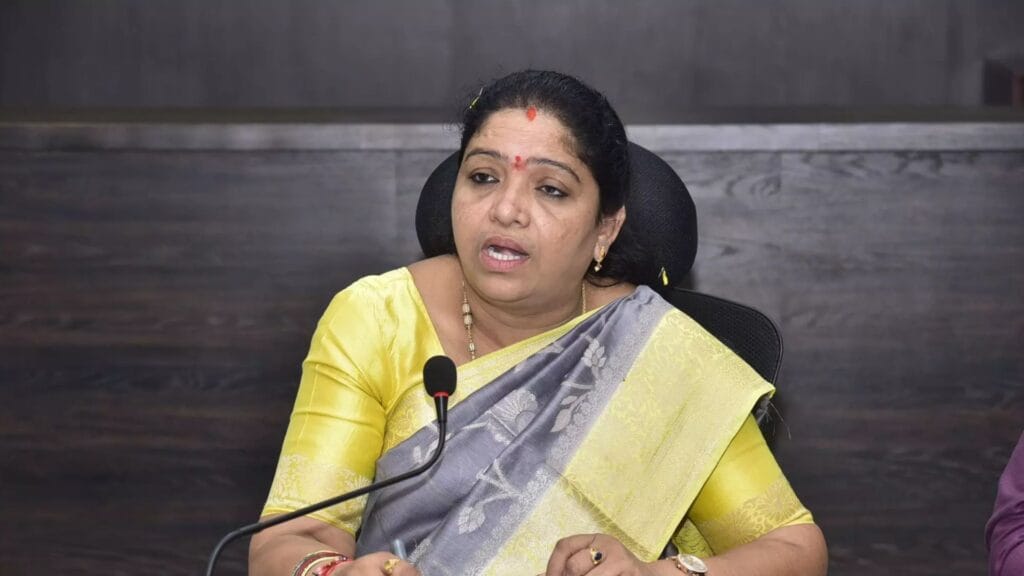
₹113 Crore Boost for Andhra Pradesh’s Tribal Education: Minister Sandhya Rani Announces Major Infrastructure Overhaul

VIJAYAWADA: In a significant move aimed at uplifting the standards of education for tribal students, Andhra Pradesh Minister for Women and Child Development and Tribal Welfare, Gummadi Sandhya Rani, announced that the state government has sanctioned ₹113 crore for the comprehensive improvement of infrastructure in tribal schools. The announcement underscores the government’s commitment to ensuring quality education and essential amenities reach students in the most remote areas of the state. Bridging the Infrastructure Gap in 757 Schools Minister Sandhya Rani stated that the massive fund will be utilized across 757 tribal schools located within the jurisdiction of the nine Integrated Tribal Development Agencies (ITDAs). The allocation is strategically divided to target different categories of residential schools: ₹83 crore has been earmarked for 558 tribal ashram schools. ₹30 crore will be channeled into 199 Gurukulam residential schools. The primary focus of this investment is to strengthen basic amenities and create a conducive learning environment for the students. Key facilities that will be upgraded or installed include: Purified Drinking Water: Installation of RO water plants in every school. Sanitation: Construction and renovation of clean washrooms. Work is already underway on 2,012 new toilets through the Swachh Andhra Corporation. Communication: Following a directive from the Chief Minister, prepaid and coin-operated telephones are being installed in all hostels, ensuring students can communicate with their parents daily. Focus on Quality and Human Resources Beyond physical infrastructure, the Minister highlighted that the government has also addressed the crucial need for human resources in these institutions: Adequate Staff: The recruitment of over 16,000 teachers through the District Selection Committee (DSC) has ensured that all tribal schools are now fully equipped with teaching staff. Contract Teacher Retention: The services of 1,100 existing contract teachers are being continued, ensuring no disruption to education.   Uplifting Higher Education and Welfare The Minister detailed several other welfare measures introduced to provide a holistic support system for the tribal community: Free Entrance Coaching: 150 meritorious tribal students are receiving free, intensive coaching for prestigious entrance exams like IIT, NIT, and NEET at specialized centers in Parvathipuram and Seethampeta, with plans to open another center in Visakhapatnam. Anganwadi Upgrades: Over 5,000 mini-Anganwadis have been upgraded to main Anganwadi centers, each now staffed with a teacher and an ayah (assistant). Economic Support: Funds have been sanctioned for cattle distribution (₹24 crore) and new loans through the Tribal Cooperative Finance Corporation (TRICOR) (₹20 crore) to support tribal livelihoods. Land Rights: Efforts are being expedited to distribute land titles to tribal communities engaged in podu (shifting) cultivation under the Forest Rights Act, 2006. It is worth noting that this latest sanction comes on the heels of ₹155 crore already spent on tribal school infrastructure development last year, solidifying the government’s sustained push for educational reform in tribal areas.

Scroll to Top