


News Unwrapped

Thursday, January 15, 2026 12:46 PM
Hot News

India

India

🚨 Major Blow to Drug Trafficking: Alleged Peddler Arrested in Ludhiana with Heroin

Ludhiana, Punjab: The Ludhiana Rural Police have registered another successful operation in their intensified campaign against narcotics, apprehending an alleged drug peddler and seizing a consignment of heroin. The operation, which was based on specific intelligence, led to the arrest of the accused and the seizure of both contraband and a vehicle used for transportation. The Arrest and Seizure Details The arrest was made following a targeted operation near the village of Tihara, falling under the jurisdiction of the Sidhwan Bet police station. | Detail | Information | |—|—| | Contraband Seized | 50 grams of heroin | | Accused Identified | Karamjit Singh (resident of Ward No. 6, Ferozepur) | | Seizure Location | Near Tihara bus stand, specifically at T-Point Patti Multani | | Vehicle Seized | One motorcycle | | Case Filed Under | Narcotic Drugs and Psychotropic Substances (NDPS) Act | Police officials confirmed they laid a trap after receiving a tip-off that the accused was moving a shipment of heroin from the Dharmkot Kishanpura area. The suspect, Karamjit Singh, was intercepted while driving his motorcycle. Motive Reveals a Disturbing Trend Preliminary interrogation of the accused has shed light on his transition to the illicit drug trade, highlighting a worrying social trend. 🗣️ Police Statement (ASI Sukhmander Singh): The accused, Karamjit Singh, disclosed that he had previously worked as a school van driver but resorted to drug peddling due to “low income.”   The revelation underscores the socio-economic factors often exploited by drug networks to lure vulnerable individuals into their operations. The police are continuing their investigation to trace the source of the heroin consignment and identify the full extent of the supply chain. Anti-Drug Drive Intensifies This latest arrest is part of a sustained crackdown by the Ludhiana police force across the district, targeting both major interstate drug networks and local peddlers. Police officials have pledged to maintain high levels of surveillance to completely dismantle the drug supply lines and rehabilitate those affected by the crisis. The accused remains in custody as authorities work to complete the legal process and gather further intelligence to expose the larger drug syndicate. Would you like an update on other major police crackdowns in Punjab, or are you interested in learning more about the provisions of the NDPS Act under which the ac cused has been booked?
India

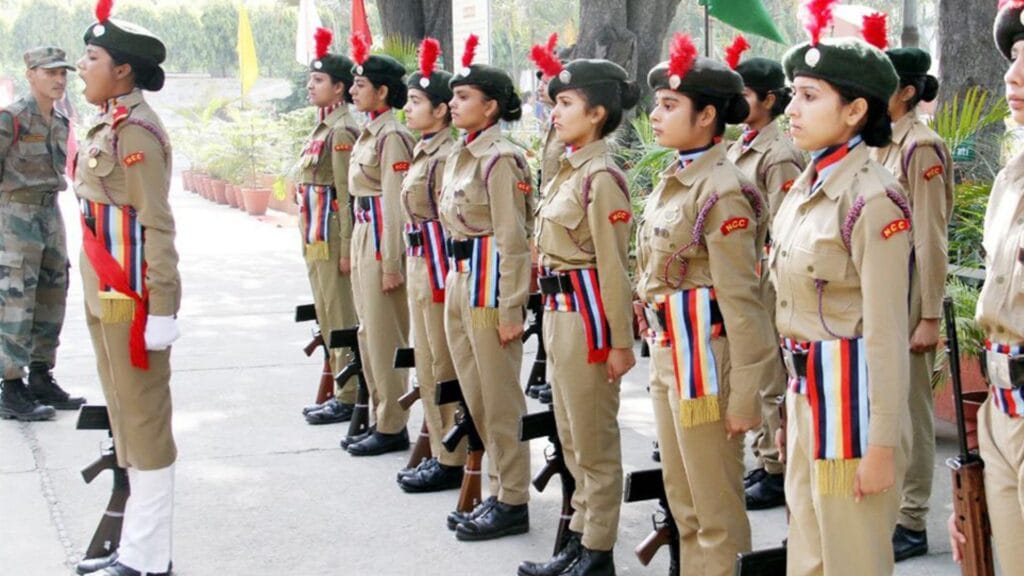
🌟 Cultural Pride Soars: Ludhiana NCC Girls Dazzle at Inter-Group Competition

Ropar, Punjab: The National Cadet Corps (NCC) cadets of the 3 Punjab (Girls) Battalion, Ludhiana, have brought immense pride to their group after delivering a stellar cultural performance at the recently concluded Inter-Group Competition–I (IGC-I), held at the NCC Academy in Ropar. This competition is a crucial preliminary stage for the selection of the prestigious Republic Day Camp (RDC) 2025-26 contingent. A Showcase of Talent, Discipline, and Diversity A contingent of 35 motivated cadets represented the Ludhiana Group, participating across various cultural categories including group song, ballet, and group dance. Their performances were noted for their exceptional quality, a testament to months of rigorous practice and dedicated coordination. * Group Song & Ballet: Both presentations were widely appreciated by the selection committee and officials for their creativity, synchronized movements, and profound themes, successfully conveying powerful messages. * The Highlight: Group Dance: The group dance segment was cited as the standout performance. The cadets leveraged vibrant energy and meticulous choreography to beautifully depict the rich cultural heritage and diversity of Punjab, Haryana, Himachal Pradesh, and Chandigarh. This act of cultural amalgamation showcased the “Unity in Diversity” spirit of the NCC. Colonel Lauds “Immense Talent and Teamwork” The Commanding Officer of the 3 Punjab (Girls) Battalion, Colonel R S Chauhan, expressed deep satisfaction and appreciation for the cadets’ efforts.  “The cadets delivered remarkable performances, showcasing immense talent, discipline, and teamwork,” said Colonel Chauhan. “Their hard work and enthusiasm have been widely acclaimed and truly reflect the core spirit of the National Cadet Corps. Their commitment is expected to yield excellent results in the competition.” The successful coordination of the group’s participation and the subsequent widespread praise underscores the commitment of the Ludhiana NCC Group to promoting not only military discipline but also cultural excellence and leadership among young women. The focus now shifts to the eventual RDC selection list, with high hopes that the Ludhiana girls’ compelling cultural display will secure them a prominent place in the final contingent that marches at the Republic Day Parade in New Delhi. Would you like to explore other stories related to youth achievements and discipline, such as the NCC’s role in social service or their other major national competitions?

India, Bihar Elections

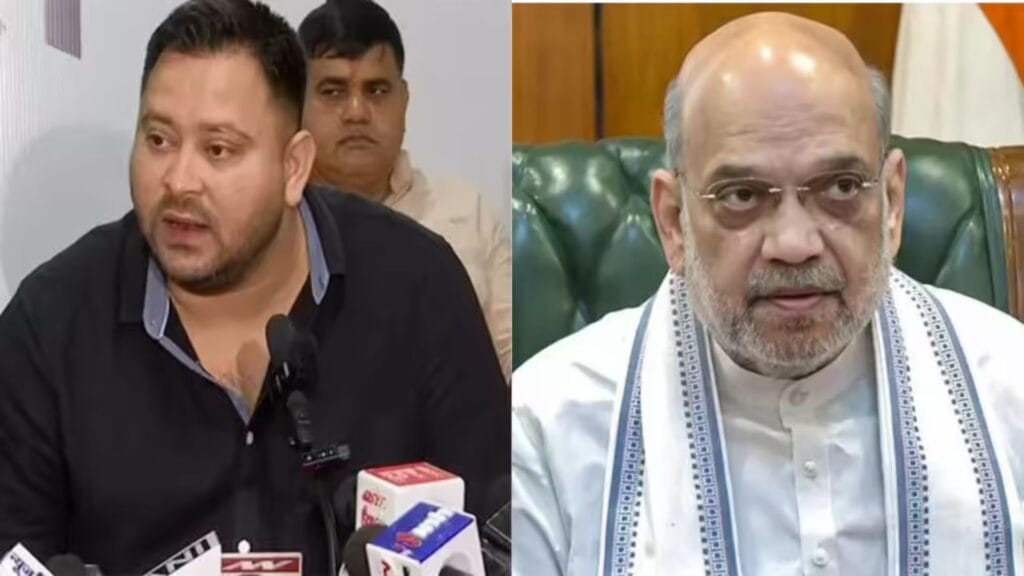
🔥 ‘Beedi’ Insult vs. ‘Favourite CM’: Amit Shah Launches Scathing Attack on Tejashwi Over Stalin Link

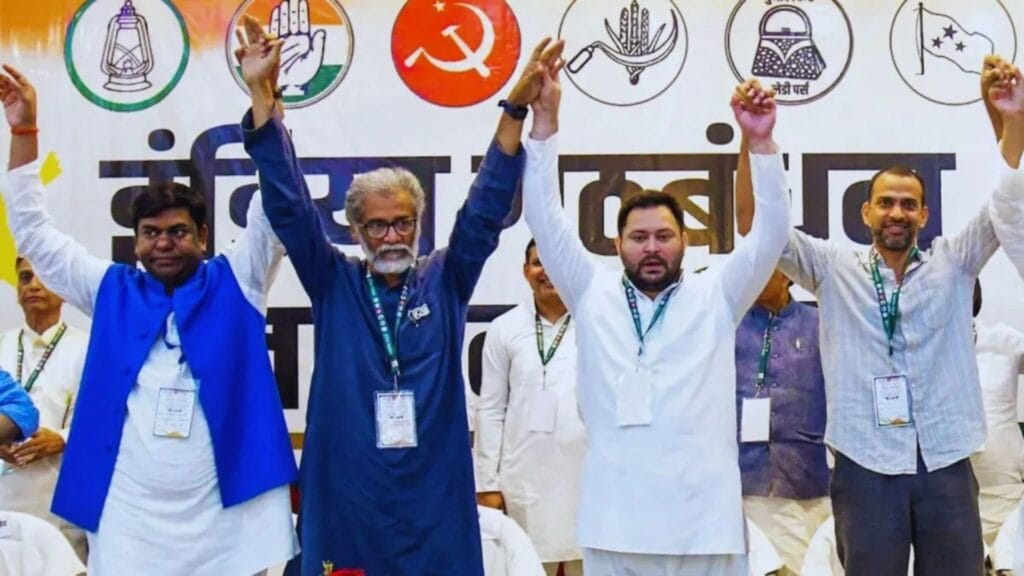
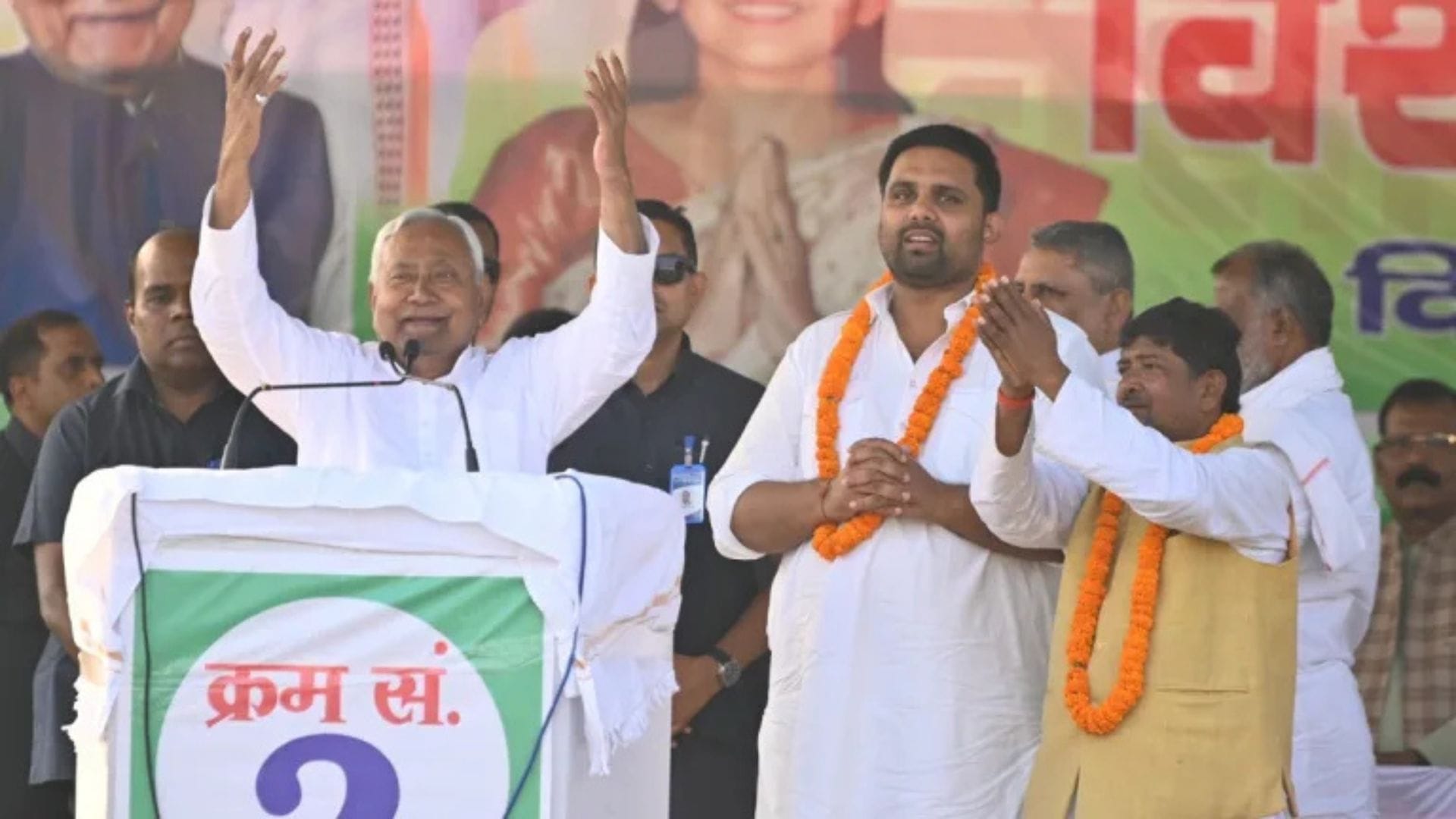
Bhagalpur, Bihar: The political temperature in Bihar’s election campaign soared today as Union Home Minister Amit Shah launched a blistering attack on RJD leader and Mahagathbandhan’s Chief Ministerial candidate, Tejashwi Yadav, over his public admiration for Tamil Nadu CM M.K. Stalin. Addressing a rally, Shah targeted the unity of the opposition INDIA bloc by connecting Tejashwi Yadav to controversial past remarks allegedly made by a leader from Stalin’s Dravida Munnetra Kazhagam (DMK) party, which is a key ally in the national coalition. The Heart of the Controversy: “Biharis Compared with Beedis” Amit Shah’s core claim centred on an alleged derogatory comparison against the people of Bihar. > 🎙️ Quote from Amit Shah’s Rally: > “Someone asked Lalu’s son [Tejashwi Yadav] who his favourite CM is. He said Stalin. Do you know who he is? His party compares Biharis with beedis! His party insults Biharis and disgraces them. Tejashwi’s favourite is this CM.” > This statement is a direct attempt by the NDA to leverage past regional and linguistic controversies to create a wedge between the Mahagathbandhan’s leader and the Bihari electorate, particularly those who have migrated for work. The reference is to previous disparaging remarks by certain DMK leaders that have been interpreted as demeaning to migrant workers from North Indian states, including Bihar. The Political Backlash: Why the Attack Matters Tejashwi Yadav has previously expressed admiration for the governance and social justice model of M.K. Stalin, and the two have shared the stage at recent INDIA bloc events, including the ‘Voter Adhikar Yatra’ in Bihar. By highlighting the alleged “beedi” remark, Amit Shah is attempting to turn this alliance into a liability for the RJD leader on his home turf. * Regional Sentiments: The attack taps into deep-seated regional pride and sensitivities, especially on the issue of dignity for Biharis working across the country. By portraying the DMK as ‘anti-Bihari,’ the BJP seeks to undermine the credibility of Tejashwi Yadav’s national alliance. * Welfare & Development: Shah countered Tejashwi’s focus on unemployment by shifting the narrative to regional pride and cultural issues. He also used the opportunity to reinforce the NDA’s development agenda and his party’s commitment to the construction of a Sita temple in Bihar, while accusing the DMK of insulting Sanatan Dharma and opposing the Ram Temple. * “Jungle Raj” Warning: Shah reiterated the NDA’s familiar warning against the return of ‘Jungle Raj’ (misrule) under an RJD-led government, linking Tejashwi’s politics to the alleged past terror of the Lalu Prasad era. The Mahagathbandhan and the DMK are yet to issue an official, detailed response to this specific allegation in the context of the Bihar elections. However, the BJP’s strategy is clear: paint the MGB as aligned with forces that disrespect the people and cultural values of Bihar, forcing Tejashwi Yadav to defend not just his party, but his allies as well. This high-profile political mudslinging demonstrates how national alliance dynamics are being intensely scrutinised and weaponized in the final phase of the Bihar Assembly polls. Would you like to know more about the broader campaign issues of the Bihar elections, such as the specific welfare schemes mentioned by Amit Shah or the RJD’s ’10 lak h jobs’ promise?

India, Bihar Elections

🤔 Bihar’s Turnout Conundrum: Advantage NDA or Mahagathbandhan

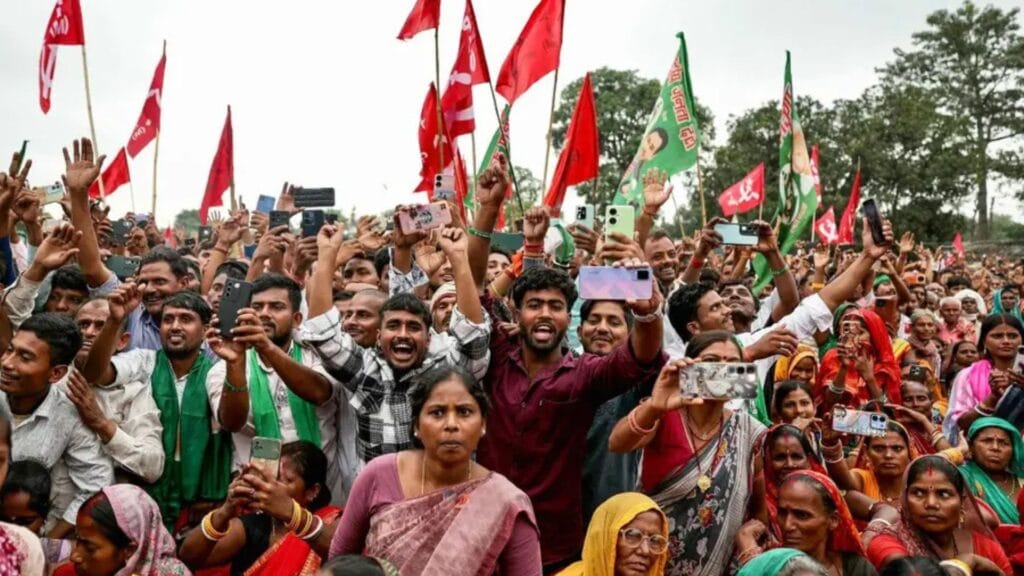
Bihar: The record-breaking voter turnout in the first phase of the Bihar Assembly elections has thrown the political analysis wide open, turning the counting day into a high-stakes guessing game. With voters queuing up in numbers the state hasn’t witnessed in decades (reaching a historic 64.66% in Phase 1), both the ruling National Democratic Alliance (NDA) and the opposition Mahagathbandhan (MGB) are confidently claiming the surge is in their favor. But what does this unprecedented enthusiasm truly signify? 📈 The High Turnout: A Dual-Sided Coin Historically in Bihar, a significantly high voter turnout has often been interpreted as a sign of anti-incumbency—a collective push by voters eager for a regime change. This narrative fuels the Mahagathbandhan’s hopes, led by a resurgent RJD, whose campaign has heavily focused on issues like unemployment and a desire for change, resonating strongly with the youth. However, the NDA is equally bullish. The ruling alliance, centered around the JD(U) and BJP, argues that the turnout is a demonstration of pro-incumbency enthusiasm, particularly among the beneficiaries of central and state welfare schemes. The noticeable increase in participation from women voters (often higher than men) and in seats reserved for Scheduled Castes (SCs) is a critical metric here, as these groups have often been targeted by the incumbent government’s social engineering and welfare policies. * Mahagathbandhan’s Hope: High turnout signals a yearning for parivartan (change), driven by anti-incumbency sentiments over issues like jobs and migration. * NDA’s Claim: High turnout reflects trust in the “double-engine” government’s development plank and is a vote of confidence from beneficiaries of welfare schemes, especially women and Dalits. 📊 The ‘60% Turnout Puzzle’ and Past Trends Political analysts often point to an intriguing trend related to the 60% mark: * Below 60% Turnout: All of Nitish Kumar’s clear victories (2005, 2010, 2015, and the close contest in 2020) were recorded when the final voter turnout remained below the 60% threshold. * Above 60% Turnout: A surge past this mark, as seen in the first phase, historically suggests a stronger possibility of a major political shift or a wave for change. This time, with the first phase crossing the 64% mark, the traditional pattern is being tested like never before. The jump is substantial—an over 8-percentage-point increase from the first phase of the 2020 Assembly polls. This indicates a high level of voter mobilization and excitement across the board. 🔑 The Decisive Factors: Demographics and Vote Split The 2020 election saw a razor-thin difference in vote share—a mere 0.03% separated the NDA’s total vote share from the MGB’s, yet the seat gap was significant (125 seats to 110). This underscores the fragility of Bihar’s First-Past-the-Post system, where small vote swings or a ‘spoiler’ candidate can disproportionately affect the seat tally. In the current context, the narrative has shifted to the surge in Dalit voter participation and the influence of new political entrants, whose candidates might act as spoilers, potentially fragmenting the anti-incumbency vote which typically favours the opposition. The eventual outcome will not just depend on how many people voted, but who they voted for. Whether the wave of first-time and enthusiastic voters was driven by a desire to unseat the incumbent or to reward them for their work will only be revealed on the counting day. What is your next question about the Bihar elections? Would you like an analysis on the key seats to watch in the subsequent phases or a breakdown of the core issues that dominated the el ection campaign?

Bihar Elections, India

Bihar Elections 2025 LIVE Updates: Campaigning Peaks Ahead of Final Phase, Battle for 122 Seats Intensifies

New Delhi With polling for the second and final phase of the Bihar Assembly elections set for November 11, 2025, the state has become the epicenter of a political blitzkrieg.1 Senior leaders from the ruling National Democratic Alliance (NDA) and the opposition Mahagathbandhan (Grand Alliance) are holding non-stop rallies in a feverish final push to woo voters across 122 crucial assembly constituencies.2 The ultimate outcome of the two-phase election—which saw voting for the first phase on November 6—will now be decided by voters in the final stretch, covering key regions like Seemanchal, Magadh, Shahabad, and Champaran.3     The NDA Push: Modi-Shah Blitzkrieg vs. ‘Jungle Raj’   The NDA, comprising the BJP and JD(U), has deployed its biggest firepower, with Prime Minister Narendra Modi and Union Home Minister Amit Shah leading the charge.4 Prime Minister Modi has addressed multiple rallies in districts like Aurangabad, Bhabhua, Saharsa, and Katihar, focusing heavily on development, national security, and the success of central welfare schemes.5 His core strategy revolves around contrasting the “good governance” (Sushasan) of the incumbent government with the alleged “jungle raj” of the RJD-led past.6 Key NDA Messages: Development & Governance: Promises of infrastructure (new expressways, airports, metro), and a blueprint for attracting investments to boost Bihar’s economic base. Women-Centric Schemes: Highlighting schemes like ‘Lakhpati Didis’ (aiming to make one crore women earn over ₹1 lakh annually) and other welfare packages. Job Creation: Pledging two crore new jobs over the next five years through large-scale investment and the establishment of global skilling centers.   Mahagathbandhan’s Counter: A Marathon for ‘Tejashwi’s Promise’   The Mahagathbandhan, spearheaded by Chief Ministerial candidate Tejashwi Yadav (RJD), has maintained a relentless, high-energy campaign, focusing overwhelmingly on the theme of youth aspiration and unemployment. Tejashwi Yadav has been conducting a series of marathon rallies, sometimes addressing 15-18 public meetings in a single day, cementing his image as the young challenger.7 He has been joined by senior Congress leaders, including Rahul Gandhi and Priyanka Gandhi, in areas like Banka, Bhagalpur, and Saharsa. Key Mahagathbandhan Promises: Jobs Law: The alliance’s biggest pledge is to pass a law guaranteeing one government job per household within 20 days of forming the government. Financial Aid: Promising ₹2,500 per month to women under the ‘Mai-Behin Maan Yojana’ and 200 units of free electricity per month for every household. Social Justice: Vowing to hike reservation quotas for Most Backward Classes and Scheduled Castes.   The Decisive Issues: Jobs vs. Development   The final phase has distilled the contest into a sharp narrative clash.8 Issue NDA (BJP/JD(U)) Stance Mahagathbandhan (RJD/Congress) Stance Employment Focus on long-term industrial investment and two crore jobs over five years; accuses RJD of failing on this issue historically. Focus on immediate relief with a guaranteed government job per family within a month of forming the government. Governance Emphasizes ‘Sushasan’ (Good Governance) under the incumbent CM and warns against a return to the ‘Jungle Raj’ of the RJD era. Accuses the NDA government of two decades of stagnation, migration, and paper leaks in recruitment exams. Welfare Highlights existing central schemes (free rations, health insurance) and targeted women’s empowerment programs. Promises direct financial aid (₹30,000 annually) for women and free electricity. As the political heat reaches its zenith, the fate of the next Bihar government hangs in the balance, resting entirely on how voters in the final 122 seats prioritize these core issues. The results for all 243 constituencies will be declared on November 14, 2025.9  

India

Air Traffic Chaos Ends: Delhi Airport Systems Fully Restored After Major Glitch Delays Over 800 Flights

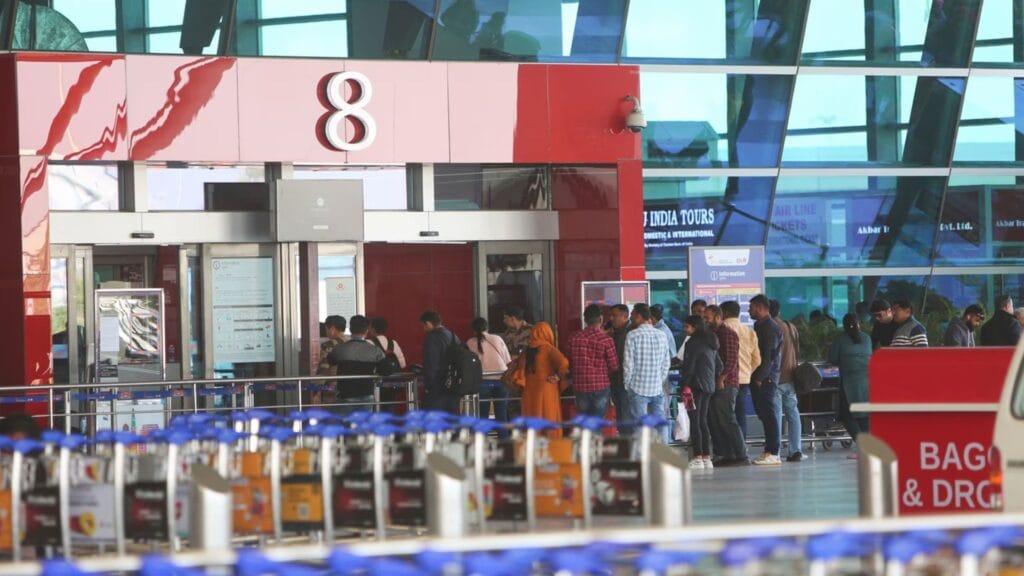
New Delhi, November 7, 2025 The Airports Authority of India (AAI) has confirmed that the technical glitch that crippled Air Traffic Control (ATC) operations at Delhi’s Indira Gandhi International Airport (IGIA) has been resolved. After hours of widespread disruption that delayed an estimated 800 flights and stranded thousands of passengers, the core air traffic systems are now reported to be fully functional. The malfunction, which began causing issues as early as late Thursday and escalated severely throughout Friday morning, brought India’s busiest aviation hub to a near standstill.   The Breakdown: AMSS Failure Forces Manual Operations   The root of the chaos was traced to a failure in the Automatic Message Switching System (AMSS). This critical system acts as the central communication network, automatically distributing flight plan data to the Air Traffic Controllers’ Auto Track Systems. When the AMSS went down, air traffic controllers were forced to abandon automation and revert to manual processing of all flight plans. This essential but slow procedure drastically reduced the number of flights that could be safely managed per hour, creating a massive bottleneck on the ground and in the airspace. “Controllers were preparing flight plans manually, which is taking significant time,” a senior airport source explained, as average departure delays climbed to over 50 minutes. The cascading effect was felt across the country, with delays and congestion reported at other major hubs, including Mumbai, Lucknow, and Jaipur.   AAI Confirms Stability, Focus Turns to Clearing Backlog   Following an urgent review and round-the-clock efforts by technical teams, including specialists from the Original Equipment Manufacturer, the AAI announced the successful restoration of the system late Friday evening. “The glitch has been fixed now, and the AMSS systems are up and functional,” the Airports Authority of India confirmed in a statement. “The AMSS has now been restored to normal functionality.” During the period of disruption, over 800 domestic and international flights were impacted, with reports of at least 20 cancellations as airlines struggled to manage the operational slowdown and crew duty time limits. While the technical crisis is over, airport authorities have cautioned that minor delays may persist temporarily as the system works to clear the substantial backlog of flights. Passengers are advised to maintain communication with their respective airlines for real-time updates on their flight status as operations slowly return to full normalcy. The incident underscores the heavy reliance of modern aviation on automated technology and the far-reaching consequences when a single critical system fails.

India, Bihar Elections

‘Bihar does not want katta sarkar’: Prime Minister Narendra Modi’s ‘dunaali, rangdaari’ jibe at Opposition

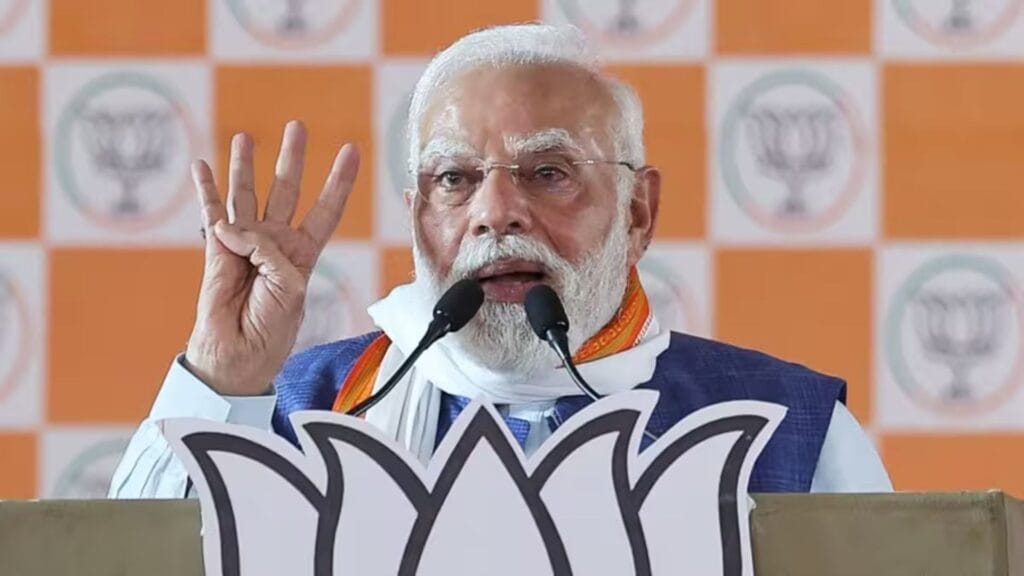
Aurangabad, Bihar – Prime Minister Narendra Modi escalated his attack on the Opposition’s Mahagathbandhan in Bihar on Friday, deploying a sharp, vernacular jibe to caution voters against returning to the state’s past era of lawlessness.1 Speaking at an election rally in Aurangabad, the Prime Minister asserted that the people of Bihar emphatically reject a ‘Katta Sarkar’—a government ruled by the gun—and have no desire to relive the days of ‘dunaali’ (double-barreled gun) and ‘rangdaari’ (extortion).2 The fiery rhetoric is part of the ruling National Democratic Alliance (NDA)’s strategy to frame the election as a contest between its vision of Vikas (development) and the Opposition’s alleged history of Jungle Raj (misrule), a term frequently used to describe the period of Rashtriya Janata Dal (RJD) rule between 1990 and 2005.3   The ‘Katta, Dunaali, Rangdaari’ Slur   The Prime Minister’s comments target the core of the RJD’s governance record.4 ‘Katta Sarkar’: The phrase translates to ‘gun government,’ symbolizing a regime defined by crime, corruption, and a complete breakdown of law and order. PM Modi stated clearly, “Bihar does not want a ‘Katta’ Sarkar.5 Bihar wants a government focused on development and good governance.” ‘Dunaali’ and ‘Rangdaari’: These two words paint a picture of a criminalized political environment. ‘Dunaali’ (double-barreled gun) emphasizes gun violence, while ‘Rangdaari’ means extortion or protection money, a practice that allegedly crippled businesses and caused a severe flight of capital and youth migration from the state during the ‘Jungle Raj’ years. PM Modi contrasted this imagery with the NDA’s track record, stating that his government and its allies, including Chief Minister Nitish Kumar, have replaced this atmosphere of fear with stability and progress.6 He highlighted key development projects, infrastructure growth, and welfare schemes as the NDA’s guarantee for a ‘Viksit Bihar’ (Developed Bihar).7   The Battle for Bihar’s Narrative   The Opposition, led by the RJD and the Congress, has been quick to dismiss the PM’s allegations. Senior leaders, including Congress President Mallikarjun Kharge, have hit back, calling the ‘Katta’ comments and other attacks on the Mahagathbandhan’s manifesto a bundle of “lies” designed to distract from the real issues of unemployment, poverty, and inflation.8 However, the NDA continues to push the narrative of law and order, a politically potent issue in the state. By constantly invoking the fear of a return to the past, the Prime Minister is making a direct appeal to the youth and women voters, who are seen as major stakeholders in maintaining peace and stability. As Bihar heads into the subsequent phases of polling, the debate remains starkly polarized: a choice between the NDA’s promise of continuity and development versus the fear of returning to the ‘katuta, krurta, kushasan’ (bitterness, cruelty, misrule) of the past, as articulated by the Prime Minister.9   The video provides relevant context on the opposition’s connection to the ‘Rangdari’ and ‘Jungle Raj’ narrative being pushed by the BJP leadership in the Bihar election. JP Nadda Tears Into RJD, Says Party Stands For ‘Rangdari’, ‘Jungle Raj’ & ‘Dadagiri’  

India

150 Years of Vande Mataram: The Timeless Anthem That Forged a Nation

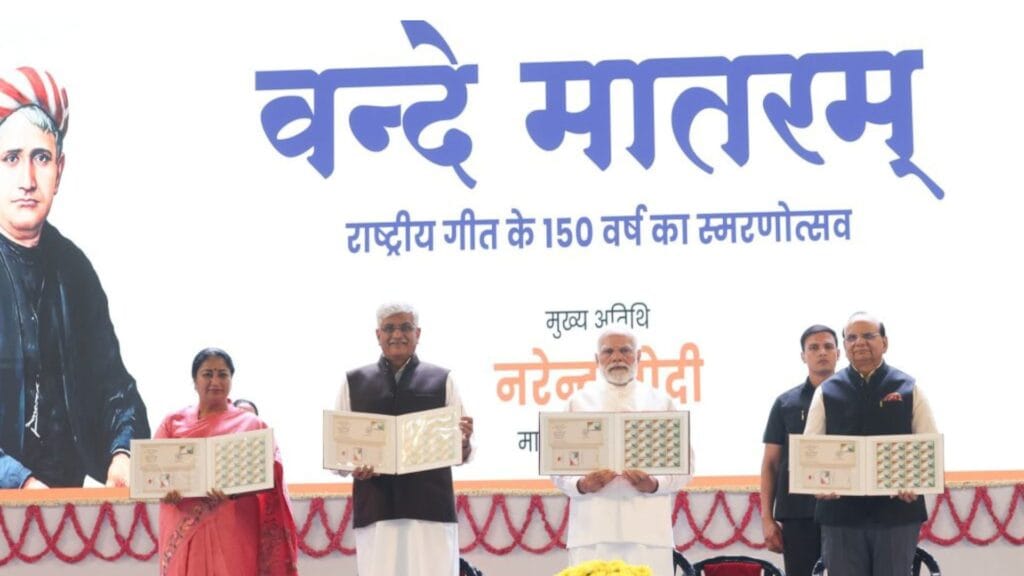
New Delhi | November 7, 2025 Today, November 7, 2025, marks a monumental milestone in India’s cultural and political history: the 150th anniversary of the composition of Vande Mataram, India’s cherished National Song. Across the nation, the anniversary is being celebrated with a year-long commemoration, launched today by the Prime Minister. The ceremonies, which included the release of a commemorative stamp and coin, highlighted the song’s enduring power as “a mantra, an energy, a dream, and a resolve.” The collective rendition of the anthem today reaffirms its timeless role as the heartbeat of Indian patriotism. But to truly appreciate the song’s legacy, one must journey back to its revolutionary origins.   The Genesis: A Hymn of the Motherland (1875)   Vande Mataram—meaning “Mother, I bow to thee”—was composed by the literary giant and poet-novelist Bankim Chandra Chatterjee in 1875. Written in Sanskrit, the hymn was revolutionary in its vision: it personified the Motherland (Maa Bharati) not just as a geographical entity, but as a divine goddess, a figure of strength, prosperity, and devotion. It was first published in Chatterjee’s Bengali literary journal Bangadarshan and later gained immortality when he incorporated it into his 1882 novel, Anandamath. Set against the backdrop of the Sannyasi Rebellion, the song became the sacred oath of the ascetics fighting for the nation, cementing the powerful concept of the “religion of patriotism.”   From Song to Slogan: The Battle Cry of Independence   While Bankim Chandra Chatterjee planted the seed, it was the nationalist movement that turned it into a forest fire. In 1896, Gurudev Rabindranath Tagore first sang Vande Mataram in a political session—the annual convention of the Indian National Congress in Calcutta. This public performance immediately elevated the hymn’s status. Its moment of true political transformation came in 1905 during the fiery Swadeshi and Anti-Partition movements in Bengal. As thousands gathered in Calcutta to protest Lord Curzon’s controversial partition plan, the two simple words—Vande Mataram!—became the unifying political slogan, instantly recognizable across linguistic and regional boundaries. The British colonial administration, recognizing its unparalleled ability to rally the masses, resorted to banning its public recital and arresting those who chanted it. However, the ban only intensified its significance, turning the song into an anthem of defiance. It was the rallying cry of revolutionaries, whispered by patriots on their way to the gallows, and even inscribed on the first version of the Indian flag unfurled by Madam Bhikaji Cama in Stuttgart, Germany, in 1907.   A Legacy of Equal Honour   The song’s profound contribution to the freedom struggle was formally acknowledged decades later. On January 24, 1950, the Constituent Assembly of India, while adopting Jana Gana Mana as the National Anthem, gave Vande Mataram an equally revered status. Dr. Rajendra Prasad, the then-President of the Assembly, declared that the song “shall be honoured equally” with the National Anthem. As India enters the 150th year of this majestic composition, we are reminded that Vande Mataram is more than just a song. It is the poetic articulation of India’s collective consciousness, a sacred link to the sacrifices of the past, and a powerful, enduring reminder of our national unity.

India, Information Technology

Street Smarts and AI: Why L&T Finance Rallied 9% to a New High in a Weak Market

Mumbai – While the broader market indices, including the BSE Sensex, struggled to hold their ground in a volatile trading session, shares of L&T Finance (LTF) staged a spectacular rally, surging over 9% to hit a new all-time high of ₹300.60. This exceptional performance, amidst an otherwise weak market, wasn’t driven by speculation—it was fueled by tangible business results and a powerful technological pivot that has radically transformed the Non-Banking Financial Company’s (NBFC) growth trajectory. Here is a breakdown of the key factors driving L&T Finance’s explosive momentum:   1. The Single Biggest Catalyst: Record-Breaking Retail Disbursements   The immediate trigger for today’s rally was the company’s announcement that it recorded its highest-ever monthly retail disbursement in October 2025. Massive Growth: Retail finance disbursement grew a robust 39% year-on-year (YoY) to ₹8,009 crore. Granular Focus: This growth was strong across key segments, with Urban finance up 49% and Rural finance up 42% YoY. The Retail Pivot Pays Off: The company’s strategy, which has seen it shift its focus almost entirely to the retail segment, now boasts a highly granular and diversified loan book, with 97% of its business concentrated in consumer and small business lending.   2. The Tech Edge: AI-Powered Underwriting and Digital Scale   L&T Finance isn’t just a traditional lender; it is rapidly transforming into a “risk-first, tech-first” financial powerhouse. Its recent Investor Digital Day highlighted significant milestones in its digital journey: Proprietary AI Systems: The company is leveraging advanced AI platforms like ‘Cyclops’ for AI-driven underwriting and ‘Nostradamus’ for automated portfolio management. These tools enhance efficiency, improve credit quality, and enable faster loan approvals, particularly in high-volume segments like two-wheelers and personal loans. Digital Partnerships: Strategic tie-ups with “digital behemoths” are expected to drive stronger, more sustainable retail loan growth by streamlining customer acquisition and journey automation.   3. The High-Yield Entry: Launching Gold Loans   To further diversify and enhance its margins, L&T Finance has strategically entered the secured gold loan market. Low-Risk, High-Yield: Gold loans are an attractive product, offering a high-yield coupled with relatively low risk due to the underlying collateral. Cross-Selling Potential: The company sees a large potential market by cross-selling secured gold loans to its extensive base of existing micro loan customers.   4. Strong Foundation: Solid Q2 Results   The rally is built on the foundation of a resilient quarterly performance (Q2 FY26) announced in mid-October: Highest-Ever PAT: L&T Finance reported its highest-ever quarterly Profit After Tax (PAT) of ₹735 crore, marking a 6% YoY increase. Retail Book Milestone: The consolidated retail loan book crossed the ₹1 lakh crore milestone, growing 18% YoY. Stable Asset Quality: Despite the strong growth in high-yield segments like Personal Loans (disbursements up 114% YoY), the company has maintained stable asset quality indicators, providing investors with confidence in its risk management. In Summary: L&T Finance’s stock surge is a clear example of the market rewarding demonstrable, technology-backed operational excellence. The record disbursement data validates the company’s aggressive and successful pivot to a retail-focused, digitally-enabled lending model, setting it apart from peers in an otherwise muted market environment.

India

A Father’s Burden Lifted: Supreme Court Assures Pilot’s Family, Vows Independent Crash Probe

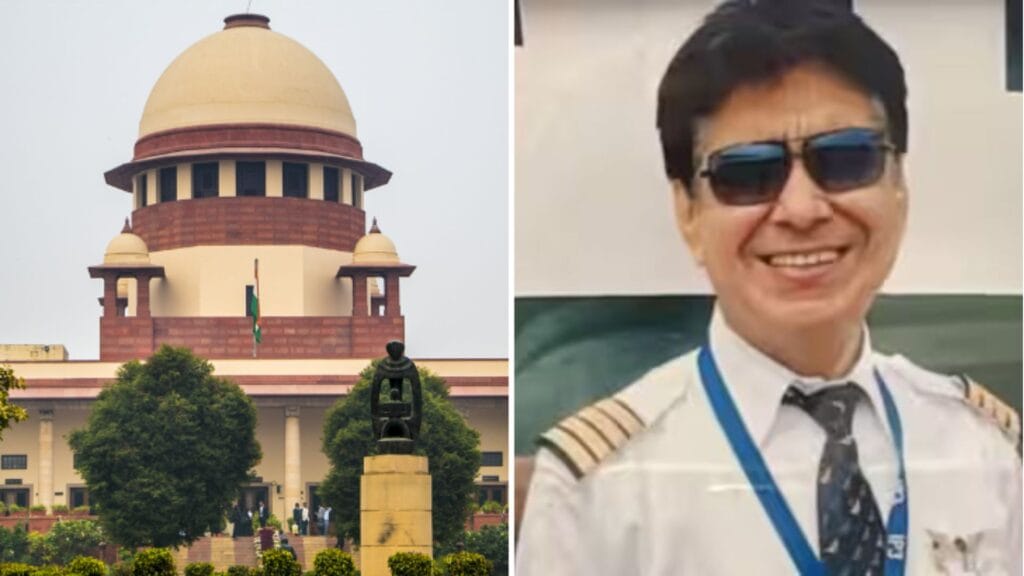
New Delhi,  – In a rare and emotional moment of judicial empathy, the Supreme Court of India today reassured the 91-year-old father of the pilot-in-command of the ill-fated Air India Boeing 787 Dreamliner, Captain Sumeet Sabharwal, that his son was not to blame for the tragic crash in Ahmedabad. Hearing a petition that demanded a fair and judicially monitored inquiry into the accident, the court addressed the grief-stricken father directly, telling him: “Don’t carry this burden on yourself. The pilot is not to be blamed for the plane crash. It was an accident.”   A Court’s Reassurance and Condemnation of Media Reports   The crash of Air India Flight AI-171 in June, which claimed over 260 lives, has been under intense scrutiny. Amid swirling speculation and preliminary reports, senior counsel for the petitioner, Pushkar Raj Sabharwal, raised concerns over foreign media articles, specifically citing a report in the Wall Street Journal that allegedly hinted at pilot error. The bench, comprising Justices Surya Kant and Joymalya Bagchi, firmly rejected this narrative. Justice Surya Kant stated, “No one in India believes it was the pilot’s fault.” Responding to the foreign media report, Justice Kant remarked, “It was nasty reporting only to blame India.” The court further clarified that the preliminary report by the Aircraft Accident Investigation Bureau (AAIB) contained “no insinuation” against Captain Sabharwal. The report only mentioned the cockpit voice recorder dialogue where one pilot was heard asking the other if they had moved a fuel cut-off switch, with the other pilot denying it.   The Call for a Judicially Monitored Probe   The core of the petition filed by Captain Sabharwal’s father and the Federation of Indian Pilots (FIP) is the demand for a “fair, transparent, and technically robust” investigation, overseen by a retired Supreme Court judge. The petitioners argued that: The ongoing probe by the AAIB is not independent and has been compromised. The sole objective of an aircraft accident investigation, per international norms (ICAO Annex 13), should be prevention of future accidents, not the premature apportionment of blame. Acknowledging the gravity of the matter and the constitutional right to life (Article 21) which includes aviation safety, the Supreme Court issued a formal notice to the Centre, the Directorate General of Civil Aviation (DGCA), and the AAIB, seeking their detailed responses. The court made it clear that if necessary, it would issue a clarification stating on record that the pilot cannot be blamed for the tragedy. The case is scheduled for further hearing next week, alongside other pending petitions related to the crash. Key Takeaways from the SC Hearing: Aspect Court’s Observation/Action Pilot’s Role “The pilot is not to be blamed for the plane crash… Nobody can blame him for anything.” Relief to Family Advised the 91-year-old father, “Don’t carry this burden on yourself.” Investigation Status Issued Notice to the Centre, DGCA, and AAIB on the plea for a judicially monitored, independent probe. Media Criticism Dismissed a foreign media report suggesting pilot error as “nasty reporting only to blame India.”

Scroll to Top