



News Unwrapped

Thursday, January 15, 2026 11:03 AM
Hot News

Bihar Elections

bihar exit poll 2025
Bihar Elections

The Verdict Before the Count: Exit Polls Predict a Decisive Victory for NDA in Bihar

PATNA, November 11, 2025 – As the curtain officially falls on the 2025 Bihar Assembly Elections, the first big verdict is in, and it’s a shockwave across the political landscape. A near-unanimous wave of exit polls released tonight predicts that the National Democratic Alliance (NDA) is headed for a strong, comfortable majority, securing another term for Chief Minister Nitish Kumar. If these projections hold true, the massive public engagement seen throughout the two phases—including a record-high voter turnout—has translated not into a vote for ‘Parivartan’ (change), but a strong endorsement of stability and governance.   The Numbers Speak: A Poll of Polls Summary The collective predictions from major pollsters like Matrize, P-Marq, People’s Pulse, and Dainik Bhaskar place the NDA well above the 122-seat majority mark in the 243-member Assembly.1   Pollster NDA Seat Projection Mahagathbandhan (MGB) Projection Jan Suraaj Projection Matrize 147 – 167 70 – 90 0 – 2 P-Marq 142 – 162 80 – 98 1 – 4 Dainik Bhaskar 145 – 160 73 – 91 0 – 3 Chanakya Strategies 130 – 138 100 – 108 0 POLL OF POLLS (Aggregate Estimate) ~147 Seats ~90 Seats ~1 Seat Disclaimer: These are exit poll projections, which have historically been tricky in Bihar. The actual results will be counted and declared on November 14.   What Went Right for the NDA? The exit polls suggest that the NDA successfully neutralized the opposition’s primary narratives. Key factors that appear to have swung the vote include: The Women’s Factor: Poll data strongly indicates that the state’s significant women voter base—a demographic frequently credited with supporting Nitish Kumar’s social schemes (like prohibition and conditional cash transfers)—consolidated firmly behind the NDA.2 Some polls suggested women voted for the NDA by a margin of over 2:1 compared to the MGB. The Stability Pitch: In a high-turnout election, voters seem to have favoured the promise of continuity and development over the risk associated with a generational leadership change. The Modi-Nitish Combination: The organisational machinery of the BJP, combined with the ground-level influence of the JD(U), proved to be an overwhelming electoral force, leveraging the popularity of the Prime Minister and the familiarity of the Chief Minister. The Tejashwi Test: Momentum Without Seats? For the Mahagathbandhan, led by Tejashwi Yadav, the projections are a significant disappointment. Despite a spirited, high-energy campaign focused on unemployment, anti-incumbency, and development, the numbers suggest their momentum failed to translate into a winning number of seats. Interestingly, one poll suggested that Tejashwi Yadav still leads Nitish Kumar as the preferred Chief Minister candidate among voters, hinting at a strong personal image that simply wasn’t enough to overcome the structural strength of the NDA alliance. Prashant Kishor’s Muted Debut The predictions are particularly grim for Prashant Kishor’s Jan Suraaj Party. After a year of intense groundwork and a statewide Padyatra, the political debut has been largely muted, with all major polls predicting his party will win only a handful of seats, if any.3 The Bihar electorate appears to have stuck firmly to the traditional binary choices. The next 48 hours will be a tense waiting game for all parties. While the exit polls paint a picture of an NDA celebration, Bihar’s history—most exit polls in 2020 incorrectly gave the edge to the MGB—means no political leader will truly rest easy until the last vote is counted on Thursday. ❓ Frequently Asked Questions (FAQ)   Q1: When will the actual Bihar election results be announced? The official counting of votes for all 243 Assembly constituencies will take place on Thursday, November 14, 2025. Results are typically announced throughout the day, with the final picture clear by the evening. Q2: How accurate have Bihar exit polls been in the past? Bihar has a notorious history of challenging exit poll accuracy: 2020 Assembly Election: Most exit polls incorrectly predicted a victory for the RJD-led Mahagathbandhan. The actual result was a narrow but clear win for the NDA (125 seats). 2015 Assembly Election: Most exit polls predicted a very close fight or an NDA victory. The actual result was a landslide victory for the then-Mahagathbandhan (RJD-JD(U)-Congress) with 178 seats—a major miss. Due to the complex interplay of caste, community, and last-minute swings, poll predictions in Bihar must always be viewed with caution. Q3: What is the magic number for forming the government in Bihar? The Bihar Legislative Assembly has a total of 243 seats. A party or coalition needs to secure a simple majority of 122 seats to form the government. Q4: What are the main alliances fighting this election? The election is primarily a direct fight between two alliances: NDA (National Democratic Alliance): Led by the JD(U) (Nitish Kumar) and BJP, along with LJP (Ram Vilas). Mahagathbandhan (INDIA bloc): Led by the RJD (Tejashwi Yadav), along with Congress and Left parties. Outgoing Links (Conceptual and Informative) Read the Full Matrize & People’s Pulse Exit Poll Data (The Indian Express) Analysis of Past Bihar Exit Poll Accuracy (Times of India) ECI Official Website: Bihar Election Results Counting on November 14

Bihar Elections

Bihar Election – Voting Surge in the Final Lap: Bihar Records 60.40% Turnout in Phase 2

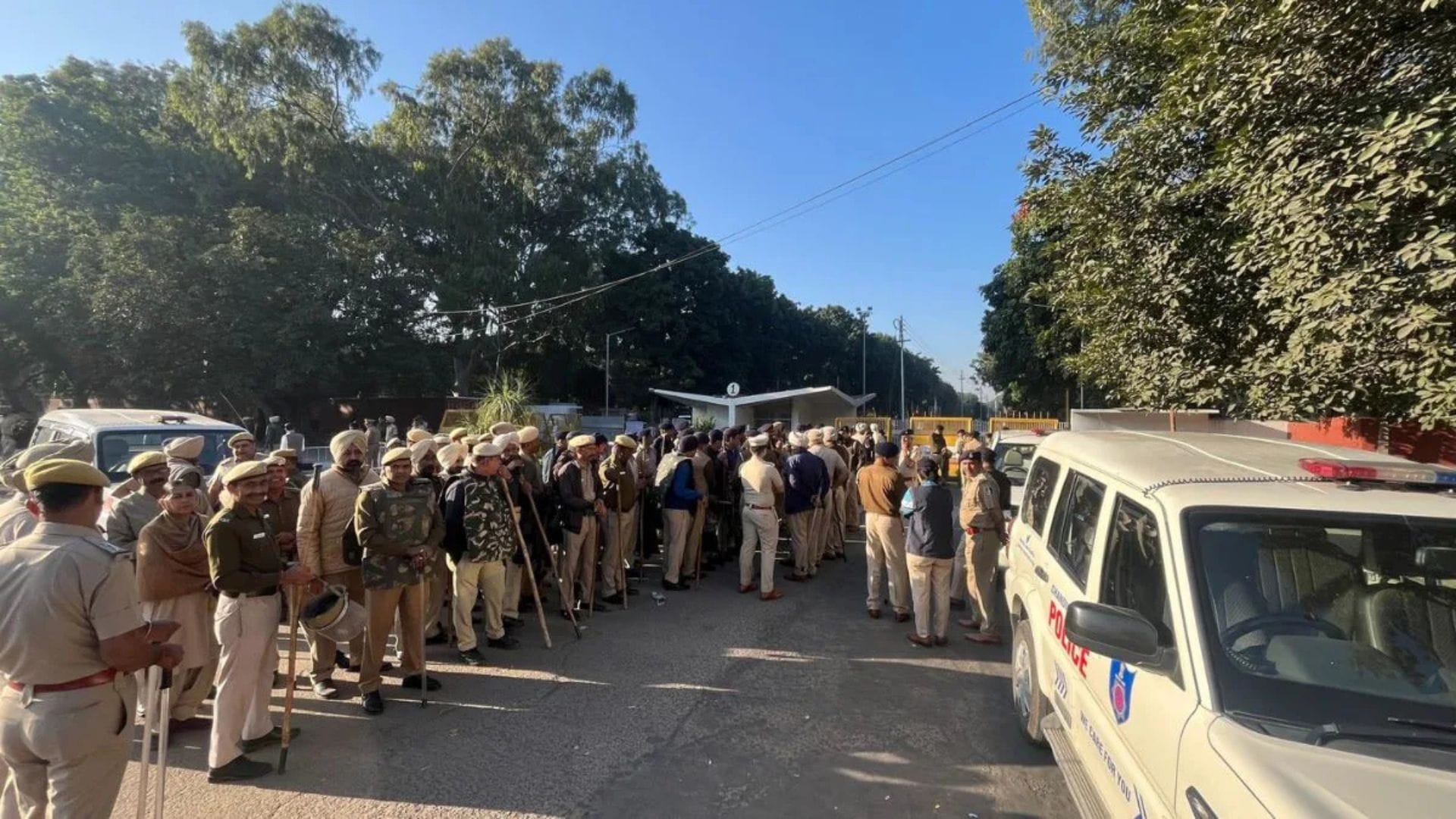
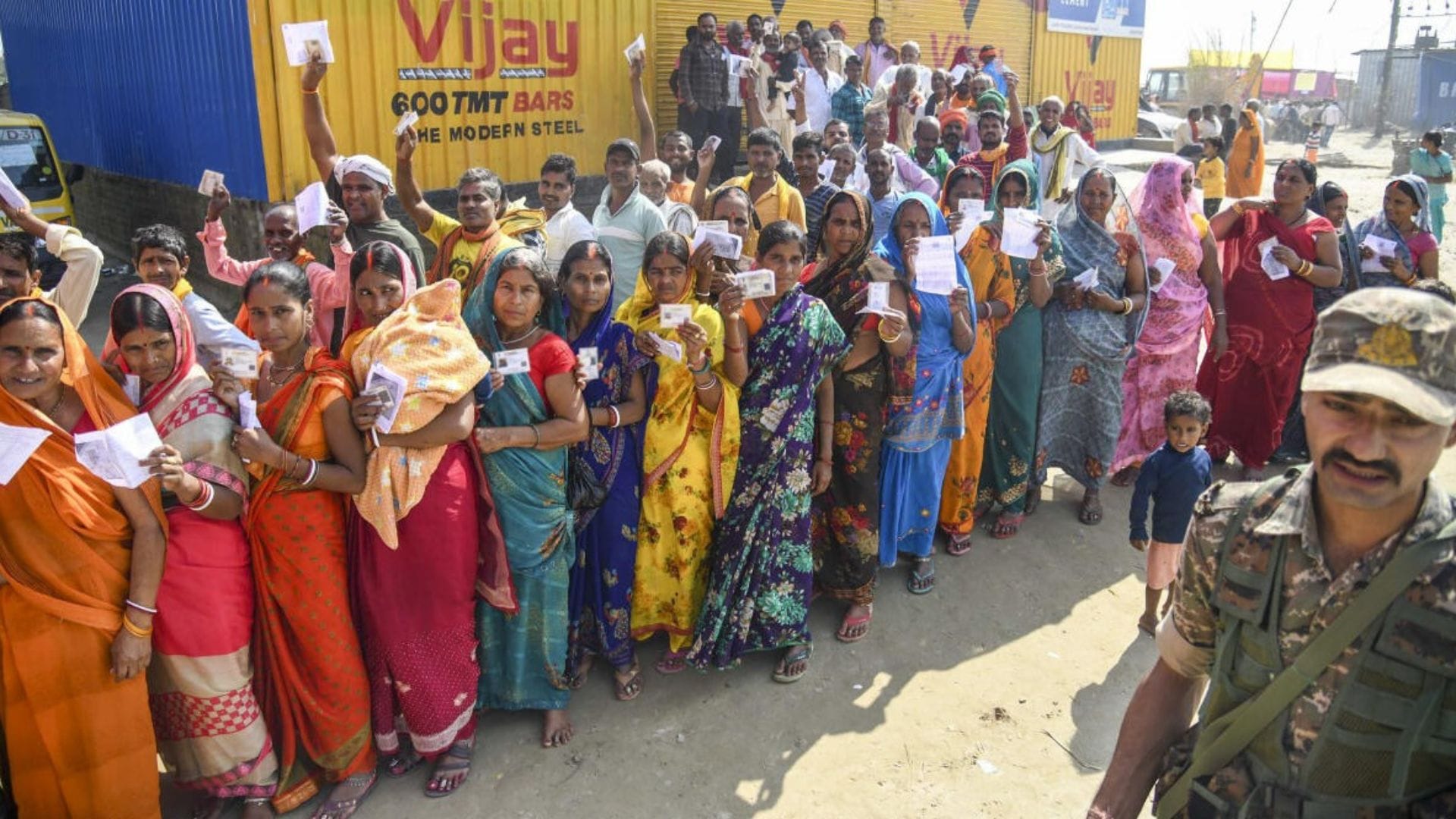
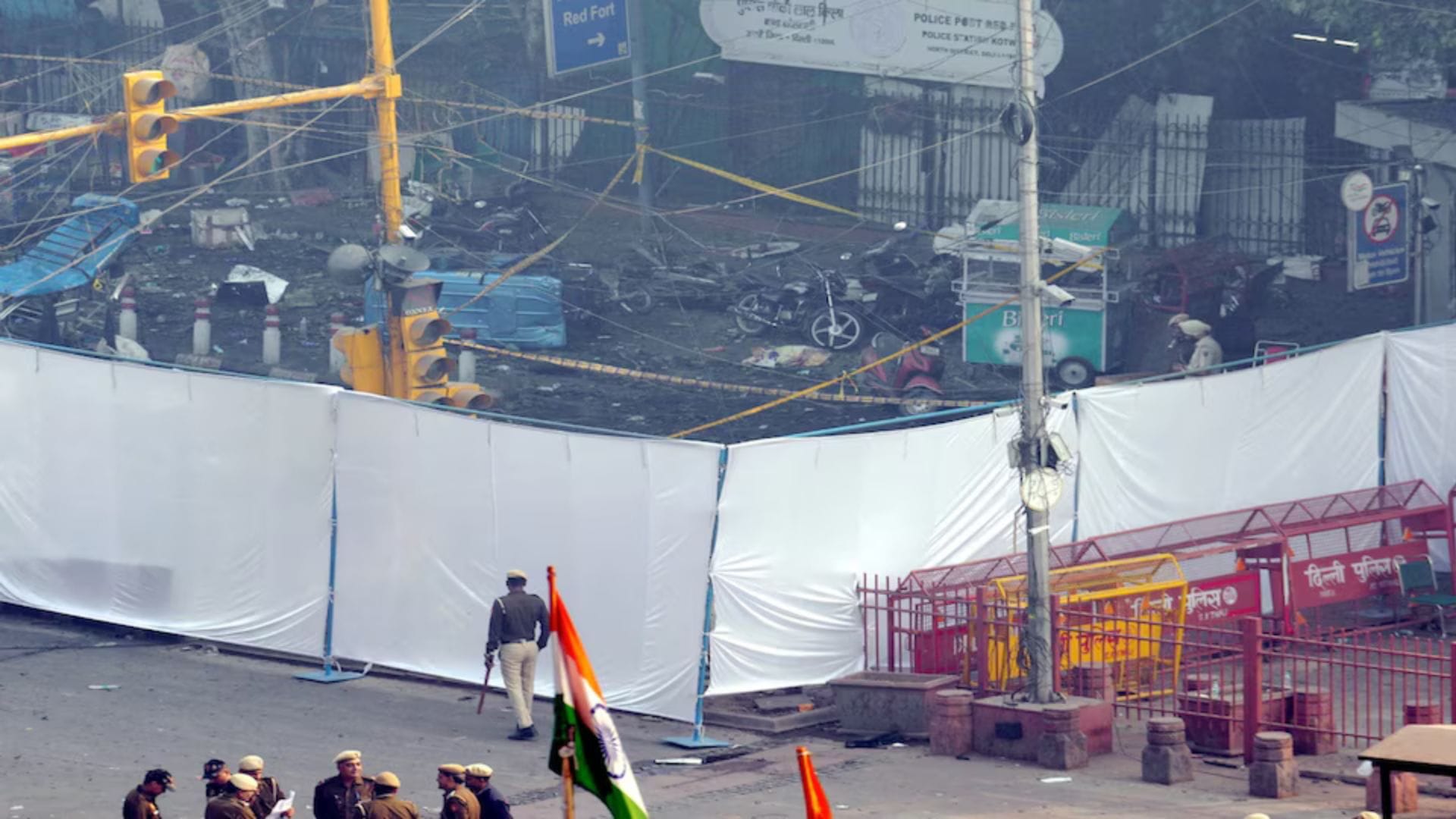
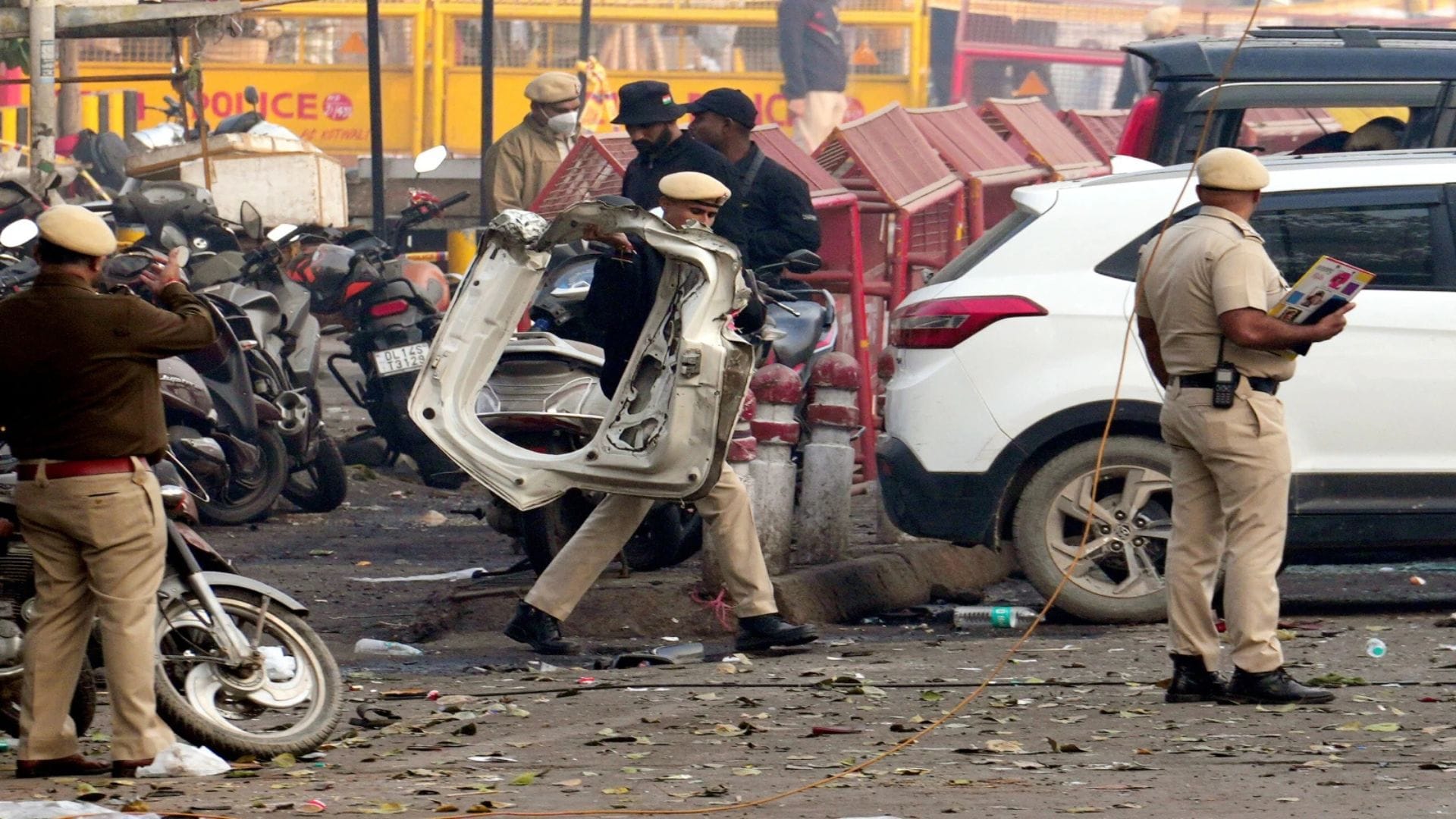
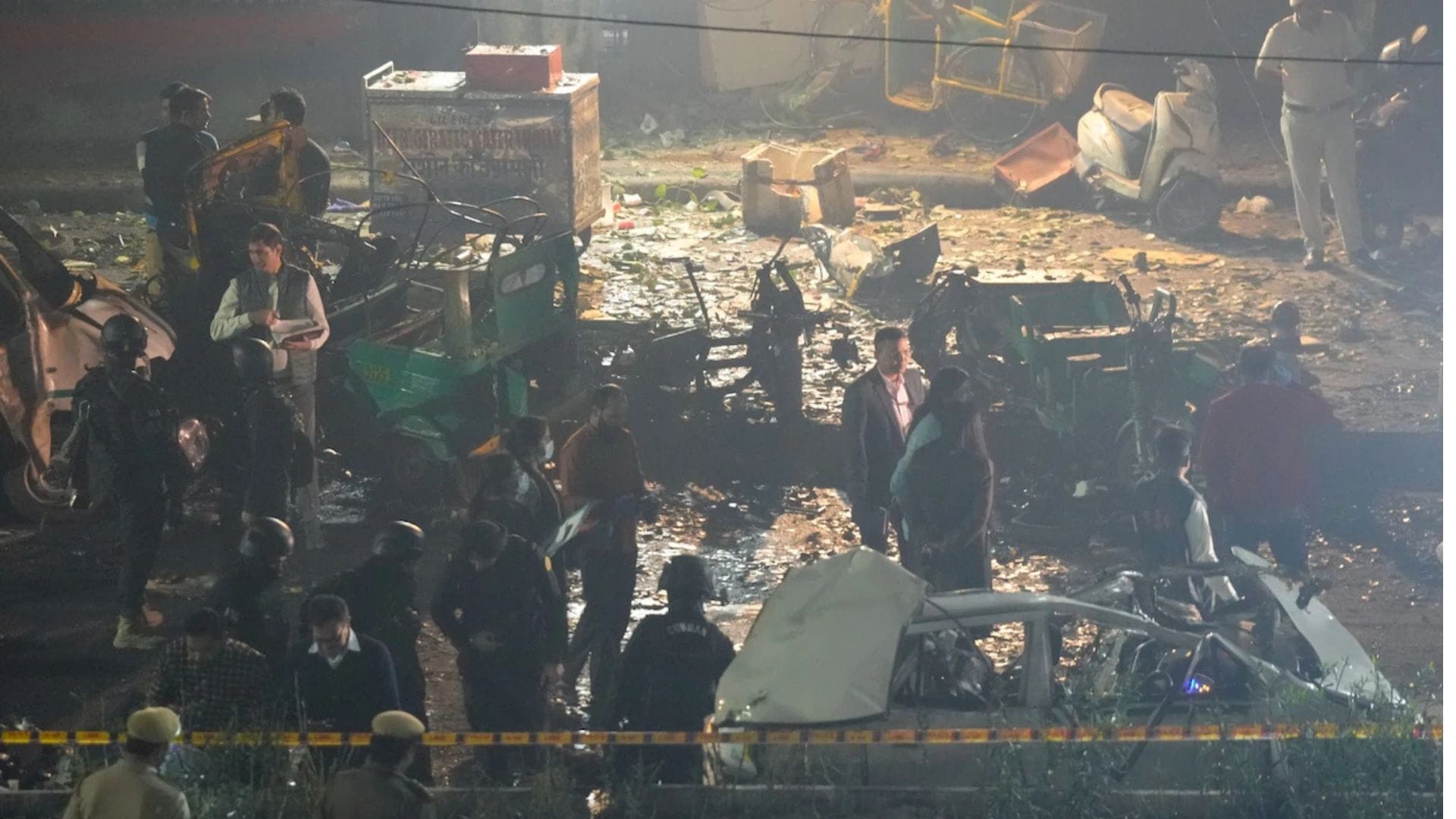
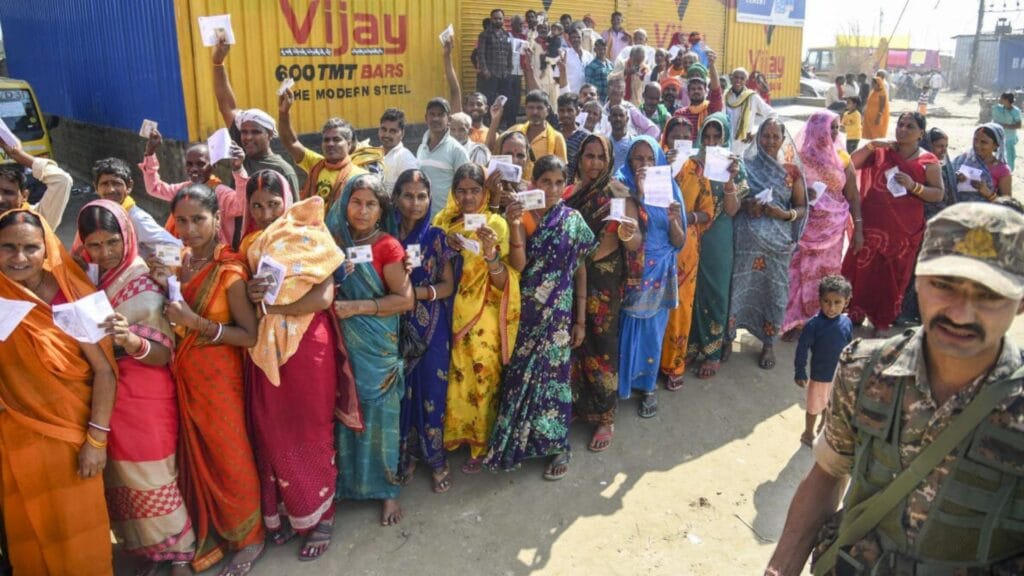
  PATNA, November 11, 2025 – Bihar’s electoral destiny is rapidly being sealed today as the state registers an impressive turnout in the second and final phase of the Assembly Elections.1 By 3:00 PM, the Election Commission of India (ECI) reported a substantial 60.40% voter turnout across the 122 constituencies in fray, indicating a strong surge in participation that could potentially surpass the record set in the first phase.2 This final stage of polling covers critical regions including the Kosi belt, Mithila, Magadh, and the politically vital Seemanchal area, where voter enthusiasm is defining the last chapter of this high-stakes contest.3 Phase 2: High Turnout Amidst Tight Security The second phase of voting, which began at 7:00 AM, saw brisk polling activity throughout the day, suggesting that the final turnout figure will be significant.4 Comparison to Phase 1: The 60.40% recorded by 3 PM in this phase is considerably higher than the 42.31% recorded by the same time in Phase 1 (held on November 6). However, Phase 1 ultimately closed with a historic 64.66% turnout.5 Analysts suggest Phase 2 is positioned to match or even exceed that figure. Seemanchal Region Leads: Districts in the Seemanchal region, with its high concentration of minority voters and intense multi-cornered contests, are driving the surge. Early trends indicated Kishanganj leading the pack, followed closely by Purnia and Katihar. Security on High Alert: Polling is being conducted under a heavy security umbrella.6 In the wake of Monday’s car blast near the Red Fort in Delhi, the Bihar Police placed its forces on high alert. The state’s international border with Nepal was sealed for 72 hours as a preemptive measure to ensure a peaceful election process.7  Key Candidates and Regions in Focus This final phase will decide the fate of 1,302 candidates and test the political strength of both the ruling NDA and the opposition INDIA bloc.8   Region Significance Key Candidates in the Fray Seemanchal Crucial region with high Muslim voter concentration; key battleground for the INDIA bloc. Bijendra Prasad Yadav (JD-U), Tarkishore Prasad (BJP), Mehboob Alam (CPI-ML). Magadh Belt Includes key urban and semi-urban seats like Gaya Town (Prem Kumar, BJP). Prem Kumar (BJP), Jitan Ram Manjhi (HAM), Snehlata Kushwaha (RLM). Mithila Region Home to several incumbent ministers. Leshi Singh (JD-U), Sheela Mandal (JD-U), Renu Devi (BJP).   The Political Stakes Both major alliances are claiming the high turnout is a vote in their favour: NDA’s Hope: The ruling alliance, led by JD(U)’s Nitish Kumar, is relying on the high turnout of women voters, a demographic often credited with supporting the CM’s welfare schemes.9 INDIA Bloc’s Claim: RJD leader Tejashwi Yadav, the INDIA bloc’s chief ministerial candidate, claims the “record voting” reflects a “big wave of change” and a public desire for “results” over “hollow rhetoric” and job creation. With polling set to continue until 5:00 PM (and for those already in queues), the political fate of Bihar for the next five years is being decided.10 The counting of votes for both phases is scheduled for November 14th.

India, Bihar Elections, Important News

📸 From Brazil to Bihar: New Viral Photo Fuels ‘Vote Theft’ Claims, Sparking Fresh Controversy

New Delhi/Patna: A fresh controversy has erupted around the Opposition’s “vote theft” claims, which were initially ignited by the circulation of a Brazilian woman’s photograph allegedly appearing multiple times in the Haryana voter list. Now, an image of an Indian woman with inked finger, reportedly from Pune, Maharashtra, has gone viral on social media, further fueling the political slugfest during the ongoing Bihar Assembly elections. The photo, bearing the caption ‘Will vote in Bihar…’ or similar context, is being circulated by political commentators and citizens, suggesting a continuation of the kind of electoral anomalies alleged by the Congress party. The Latest Viral Image The current wave of controversy centers on an Indian woman’s picture, taken after she had cast her vote (identifiable by the indelible ink mark on her finger). * The Allegation: The photo’s virality stems from unverified claims that it is being associated with duplicate voter entries, echoing the much-publicised case of the Brazilian woman. Social media users and some opposition affiliates have used the image to keep the conversation about alleged electoral manipulation alive as Bihar goes to the polls. * The Context: The image is reportedly of a woman from Pune, Maharashtra. Its use in the context of the Bihar elections, suggesting the photo is being misused in a different state, has generated fresh scrutiny on the integrity of the electoral data across India. The Brazilian Connection: The Original Spark This new incident follows the massive row created when Congress leader Rahul Gandhi presented a dossier alleging widespread voter fraud in the recent Haryana Assembly elections. * The Claim: Gandhi alleged that a single stock photograph of a Brazilian woman (identified as Larissa) was used repeatedly—reportedly 22 times across 10 booths—in the Haryana voter list under different names like ‘Seema’, ‘Sweety’, and ‘Saraswati’. * The Brazilian’s Reaction: The woman, a Brazilian influencer and hairdresser named Larissa, reacted with shock in a viral video, confirming the photo was an old stock image and clarifying, “I have absolutely nothing to do with politics in India. It’s not me, I’ve never even been to India.” * Ground Reality Check: Subsequent media investigations into the Haryana list found multiple anomalies, including cases where voters confirmed that their IDs had carried photo misprints (like the Brazilian woman’s image), but they denied any “vote theft,” stating they cast their votes using other verified IDs like Aadhaar. Disturbingly, one voter whose record carried the viral photo was found to be deceased since 2022, highlighting serious flaws in voter roll maintenance. 🗳️ Election Commission and Political Response The Election Commission of India (ECI) has strongly denied the allegations, calling them “baseless.” They assert that the Special Intensive Revision (SIR) exercise has, in fact, “purified” the voter list. However, the Opposition is using these viral images to intensify its political campaign, particularly in Bihar, where a close contest is underway: * Congress’s Stand: The Congress maintains that the ECI is engaged in “systemic manipulation” to remove the names of Dalit, Muslim, and women voters, particularly in close-contest Assembly seats in Bihar. * BJP’s Rebuttal: The ruling party has dismissed the claims as “propaganda” and an excuse for the Opposition’s anticipated electoral defeat, defending the ECI’s revision exercise. The recurrence of viral photos in this high-stakes election season has successfully pushed administrative data errors—and the accompanying allegations of manipulation—to the forefront of the public discourse, casting a shadow over the polling process. Given the intense debate over electoral integrity, would you like to see a breakdown of the specific allegations made by the Congress regarding the deletion of women’s names from the Bihar voter list?

India, Bihar Elections

🔥 ‘Beedi’ Insult vs. ‘Favourite CM’: Amit Shah Launches Scathing Attack on Tejashwi Over Stalin Link

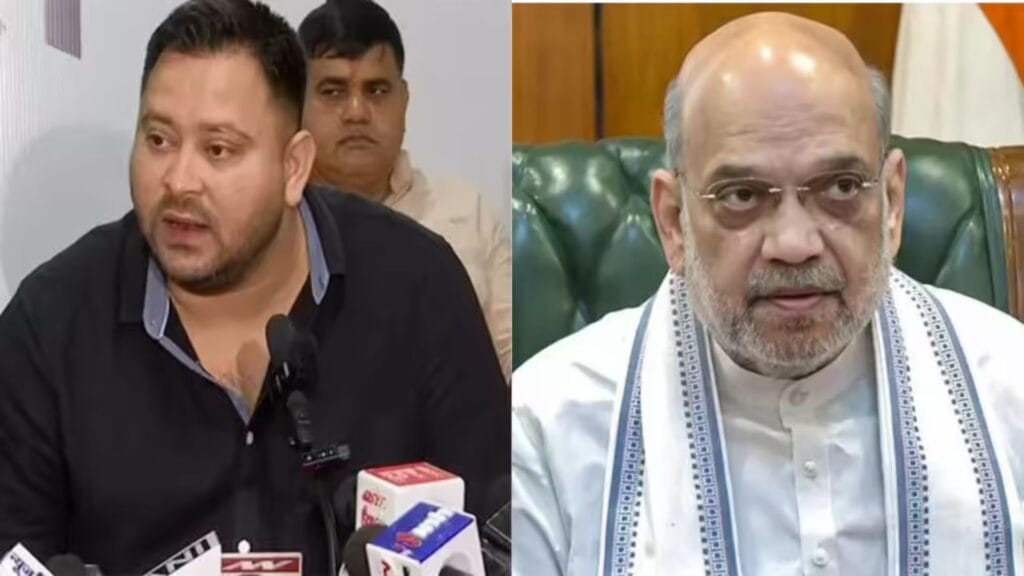
Bhagalpur, Bihar: The political temperature in Bihar’s election campaign soared today as Union Home Minister Amit Shah launched a blistering attack on RJD leader and Mahagathbandhan’s Chief Ministerial candidate, Tejashwi Yadav, over his public admiration for Tamil Nadu CM M.K. Stalin. Addressing a rally, Shah targeted the unity of the opposition INDIA bloc by connecting Tejashwi Yadav to controversial past remarks allegedly made by a leader from Stalin’s Dravida Munnetra Kazhagam (DMK) party, which is a key ally in the national coalition. The Heart of the Controversy: “Biharis Compared with Beedis” Amit Shah’s core claim centred on an alleged derogatory comparison against the people of Bihar. > 🎙️ Quote from Amit Shah’s Rally: > “Someone asked Lalu’s son [Tejashwi Yadav] who his favourite CM is. He said Stalin. Do you know who he is? His party compares Biharis with beedis! His party insults Biharis and disgraces them. Tejashwi’s favourite is this CM.” > This statement is a direct attempt by the NDA to leverage past regional and linguistic controversies to create a wedge between the Mahagathbandhan’s leader and the Bihari electorate, particularly those who have migrated for work. The reference is to previous disparaging remarks by certain DMK leaders that have been interpreted as demeaning to migrant workers from North Indian states, including Bihar. The Political Backlash: Why the Attack Matters Tejashwi Yadav has previously expressed admiration for the governance and social justice model of M.K. Stalin, and the two have shared the stage at recent INDIA bloc events, including the ‘Voter Adhikar Yatra’ in Bihar. By highlighting the alleged “beedi” remark, Amit Shah is attempting to turn this alliance into a liability for the RJD leader on his home turf. * Regional Sentiments: The attack taps into deep-seated regional pride and sensitivities, especially on the issue of dignity for Biharis working across the country. By portraying the DMK as ‘anti-Bihari,’ the BJP seeks to undermine the credibility of Tejashwi Yadav’s national alliance. * Welfare & Development: Shah countered Tejashwi’s focus on unemployment by shifting the narrative to regional pride and cultural issues. He also used the opportunity to reinforce the NDA’s development agenda and his party’s commitment to the construction of a Sita temple in Bihar, while accusing the DMK of insulting Sanatan Dharma and opposing the Ram Temple. * “Jungle Raj” Warning: Shah reiterated the NDA’s familiar warning against the return of ‘Jungle Raj’ (misrule) under an RJD-led government, linking Tejashwi’s politics to the alleged past terror of the Lalu Prasad era. The Mahagathbandhan and the DMK are yet to issue an official, detailed response to this specific allegation in the context of the Bihar elections. However, the BJP’s strategy is clear: paint the MGB as aligned with forces that disrespect the people and cultural values of Bihar, forcing Tejashwi Yadav to defend not just his party, but his allies as well. This high-profile political mudslinging demonstrates how national alliance dynamics are being intensely scrutinised and weaponized in the final phase of the Bihar Assembly polls. Would you like to know more about the broader campaign issues of the Bihar elections, such as the specific welfare schemes mentioned by Amit Shah or the RJD’s ’10 lak h jobs’ promise?

India, Bihar Elections

🤔 Bihar’s Turnout Conundrum: Advantage NDA or Mahagathbandhan

Bihar: The record-breaking voter turnout in the first phase of the Bihar Assembly elections has thrown the political analysis wide open, turning the counting day into a high-stakes guessing game. With voters queuing up in numbers the state hasn’t witnessed in decades (reaching a historic 64.66% in Phase 1), both the ruling National Democratic Alliance (NDA) and the opposition Mahagathbandhan (MGB) are confidently claiming the surge is in their favor. But what does this unprecedented enthusiasm truly signify? 📈 The High Turnout: A Dual-Sided Coin Historically in Bihar, a significantly high voter turnout has often been interpreted as a sign of anti-incumbency—a collective push by voters eager for a regime change. This narrative fuels the Mahagathbandhan’s hopes, led by a resurgent RJD, whose campaign has heavily focused on issues like unemployment and a desire for change, resonating strongly with the youth. However, the NDA is equally bullish. The ruling alliance, centered around the JD(U) and BJP, argues that the turnout is a demonstration of pro-incumbency enthusiasm, particularly among the beneficiaries of central and state welfare schemes. The noticeable increase in participation from women voters (often higher than men) and in seats reserved for Scheduled Castes (SCs) is a critical metric here, as these groups have often been targeted by the incumbent government’s social engineering and welfare policies. * Mahagathbandhan’s Hope: High turnout signals a yearning for parivartan (change), driven by anti-incumbency sentiments over issues like jobs and migration. * NDA’s Claim: High turnout reflects trust in the “double-engine” government’s development plank and is a vote of confidence from beneficiaries of welfare schemes, especially women and Dalits. 📊 The ‘60% Turnout Puzzle’ and Past Trends Political analysts often point to an intriguing trend related to the 60% mark: * Below 60% Turnout: All of Nitish Kumar’s clear victories (2005, 2010, 2015, and the close contest in 2020) were recorded when the final voter turnout remained below the 60% threshold. * Above 60% Turnout: A surge past this mark, as seen in the first phase, historically suggests a stronger possibility of a major political shift or a wave for change. This time, with the first phase crossing the 64% mark, the traditional pattern is being tested like never before. The jump is substantial—an over 8-percentage-point increase from the first phase of the 2020 Assembly polls. This indicates a high level of voter mobilization and excitement across the board. 🔑 The Decisive Factors: Demographics and Vote Split The 2020 election saw a razor-thin difference in vote share—a mere 0.03% separated the NDA’s total vote share from the MGB’s, yet the seat gap was significant (125 seats to 110). This underscores the fragility of Bihar’s First-Past-the-Post system, where small vote swings or a ‘spoiler’ candidate can disproportionately affect the seat tally. In the current context, the narrative has shifted to the surge in Dalit voter participation and the influence of new political entrants, whose candidates might act as spoilers, potentially fragmenting the anti-incumbency vote which typically favours the opposition. The eventual outcome will not just depend on how many people voted, but who they voted for. Whether the wave of first-time and enthusiastic voters was driven by a desire to unseat the incumbent or to reward them for their work will only be revealed on the counting day. What is your next question about the Bihar elections? Would you like an analysis on the key seats to watch in the subsequent phases or a breakdown of the core issues that dominated the el ection campaign?

Bihar Elections, India

Bihar Elections 2025 LIVE Updates: Campaigning Peaks Ahead of Final Phase, Battle for 122 Seats Intensifies

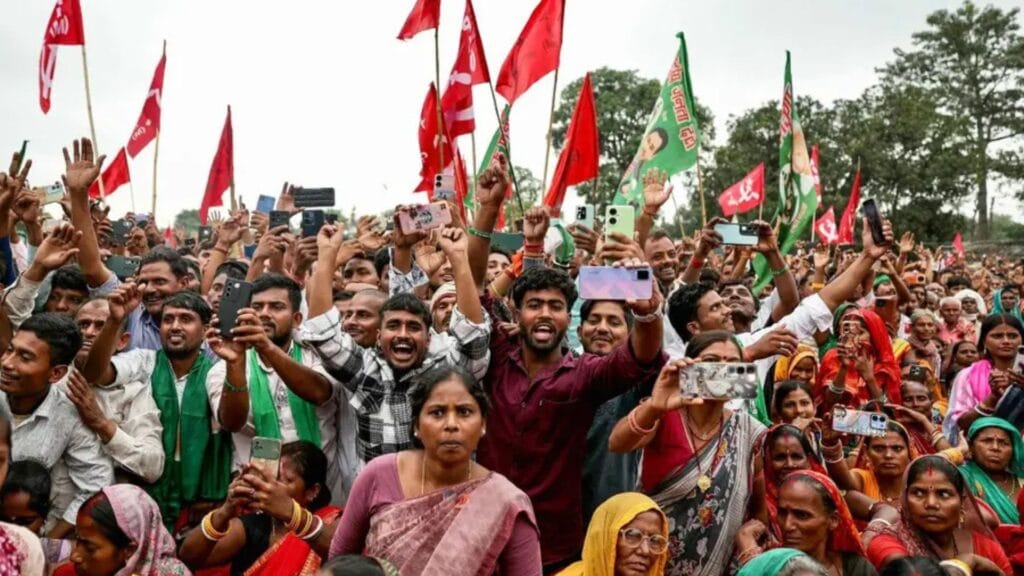
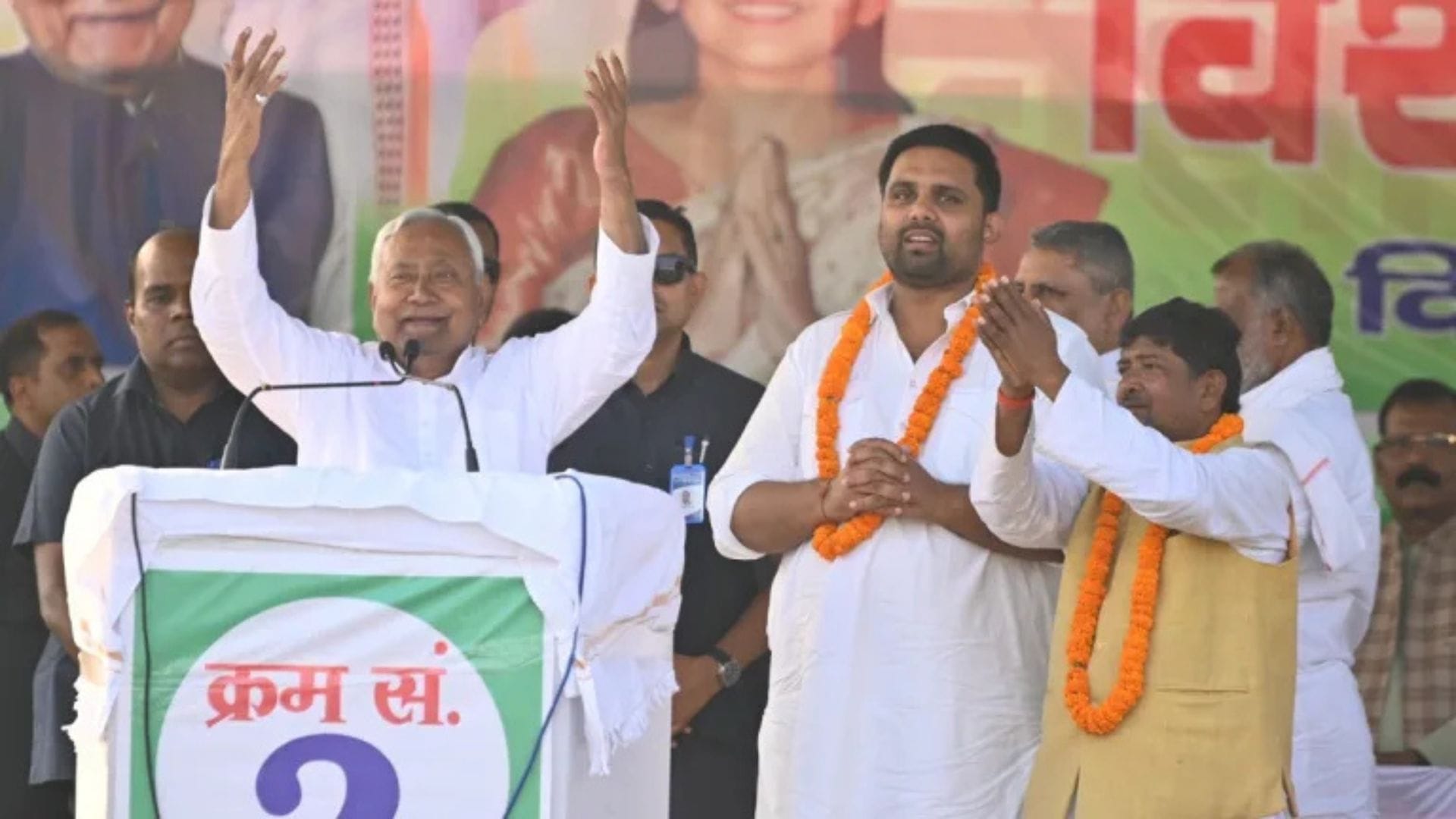
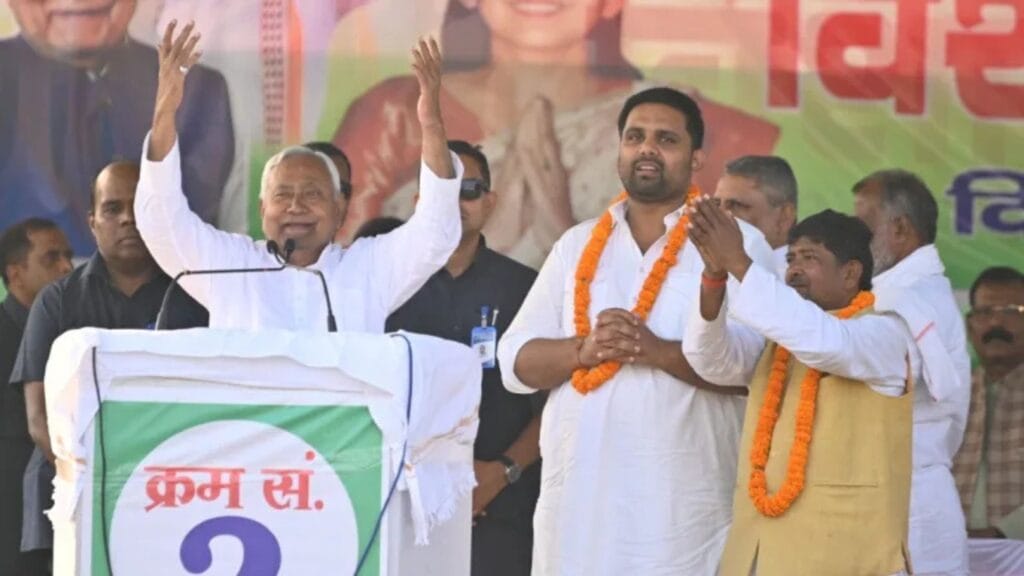
New Delhi With polling for the second and final phase of the Bihar Assembly elections set for November 11, 2025, the state has become the epicenter of a political blitzkrieg.1 Senior leaders from the ruling National Democratic Alliance (NDA) and the opposition Mahagathbandhan (Grand Alliance) are holding non-stop rallies in a feverish final push to woo voters across 122 crucial assembly constituencies.2 The ultimate outcome of the two-phase election—which saw voting for the first phase on November 6—will now be decided by voters in the final stretch, covering key regions like Seemanchal, Magadh, Shahabad, and Champaran.3     The NDA Push: Modi-Shah Blitzkrieg vs. ‘Jungle Raj’   The NDA, comprising the BJP and JD(U), has deployed its biggest firepower, with Prime Minister Narendra Modi and Union Home Minister Amit Shah leading the charge.4 Prime Minister Modi has addressed multiple rallies in districts like Aurangabad, Bhabhua, Saharsa, and Katihar, focusing heavily on development, national security, and the success of central welfare schemes.5 His core strategy revolves around contrasting the “good governance” (Sushasan) of the incumbent government with the alleged “jungle raj” of the RJD-led past.6 Key NDA Messages: Development & Governance: Promises of infrastructure (new expressways, airports, metro), and a blueprint for attracting investments to boost Bihar’s economic base. Women-Centric Schemes: Highlighting schemes like ‘Lakhpati Didis’ (aiming to make one crore women earn over ₹1 lakh annually) and other welfare packages. Job Creation: Pledging two crore new jobs over the next five years through large-scale investment and the establishment of global skilling centers.   Mahagathbandhan’s Counter: A Marathon for ‘Tejashwi’s Promise’   The Mahagathbandhan, spearheaded by Chief Ministerial candidate Tejashwi Yadav (RJD), has maintained a relentless, high-energy campaign, focusing overwhelmingly on the theme of youth aspiration and unemployment. Tejashwi Yadav has been conducting a series of marathon rallies, sometimes addressing 15-18 public meetings in a single day, cementing his image as the young challenger.7 He has been joined by senior Congress leaders, including Rahul Gandhi and Priyanka Gandhi, in areas like Banka, Bhagalpur, and Saharsa. Key Mahagathbandhan Promises: Jobs Law: The alliance’s biggest pledge is to pass a law guaranteeing one government job per household within 20 days of forming the government. Financial Aid: Promising ₹2,500 per month to women under the ‘Mai-Behin Maan Yojana’ and 200 units of free electricity per month for every household. Social Justice: Vowing to hike reservation quotas for Most Backward Classes and Scheduled Castes.   The Decisive Issues: Jobs vs. Development   The final phase has distilled the contest into a sharp narrative clash.8 Issue NDA (BJP/JD(U)) Stance Mahagathbandhan (RJD/Congress) Stance Employment Focus on long-term industrial investment and two crore jobs over five years; accuses RJD of failing on this issue historically. Focus on immediate relief with a guaranteed government job per family within a month of forming the government. Governance Emphasizes ‘Sushasan’ (Good Governance) under the incumbent CM and warns against a return to the ‘Jungle Raj’ of the RJD era. Accuses the NDA government of two decades of stagnation, migration, and paper leaks in recruitment exams. Welfare Highlights existing central schemes (free rations, health insurance) and targeted women’s empowerment programs. Promises direct financial aid (₹30,000 annually) for women and free electricity. As the political heat reaches its zenith, the fate of the next Bihar government hangs in the balance, resting entirely on how voters in the final 122 seats prioritize these core issues. The results for all 243 constituencies will be declared on November 14, 2025.9  

India, Bihar Elections

‘Bihar does not want katta sarkar’: Prime Minister Narendra Modi’s ‘dunaali, rangdaari’ jibe at Opposition

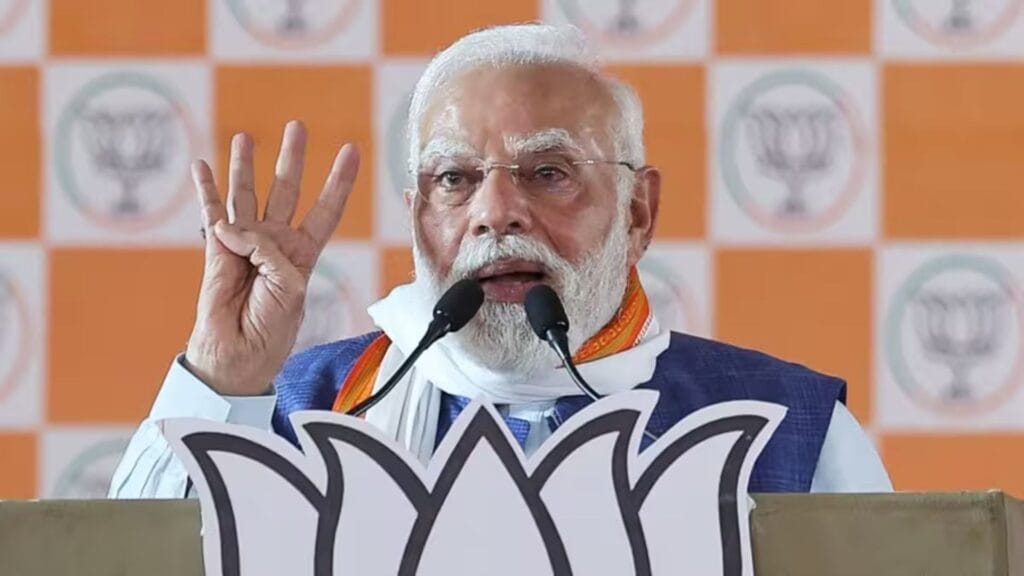
Aurangabad, Bihar – Prime Minister Narendra Modi escalated his attack on the Opposition’s Mahagathbandhan in Bihar on Friday, deploying a sharp, vernacular jibe to caution voters against returning to the state’s past era of lawlessness.1 Speaking at an election rally in Aurangabad, the Prime Minister asserted that the people of Bihar emphatically reject a ‘Katta Sarkar’—a government ruled by the gun—and have no desire to relive the days of ‘dunaali’ (double-barreled gun) and ‘rangdaari’ (extortion).2 The fiery rhetoric is part of the ruling National Democratic Alliance (NDA)’s strategy to frame the election as a contest between its vision of Vikas (development) and the Opposition’s alleged history of Jungle Raj (misrule), a term frequently used to describe the period of Rashtriya Janata Dal (RJD) rule between 1990 and 2005.3   The ‘Katta, Dunaali, Rangdaari’ Slur   The Prime Minister’s comments target the core of the RJD’s governance record.4 ‘Katta Sarkar’: The phrase translates to ‘gun government,’ symbolizing a regime defined by crime, corruption, and a complete breakdown of law and order. PM Modi stated clearly, “Bihar does not want a ‘Katta’ Sarkar.5 Bihar wants a government focused on development and good governance.” ‘Dunaali’ and ‘Rangdaari’: These two words paint a picture of a criminalized political environment. ‘Dunaali’ (double-barreled gun) emphasizes gun violence, while ‘Rangdaari’ means extortion or protection money, a practice that allegedly crippled businesses and caused a severe flight of capital and youth migration from the state during the ‘Jungle Raj’ years. PM Modi contrasted this imagery with the NDA’s track record, stating that his government and its allies, including Chief Minister Nitish Kumar, have replaced this atmosphere of fear with stability and progress.6 He highlighted key development projects, infrastructure growth, and welfare schemes as the NDA’s guarantee for a ‘Viksit Bihar’ (Developed Bihar).7   The Battle for Bihar’s Narrative   The Opposition, led by the RJD and the Congress, has been quick to dismiss the PM’s allegations. Senior leaders, including Congress President Mallikarjun Kharge, have hit back, calling the ‘Katta’ comments and other attacks on the Mahagathbandhan’s manifesto a bundle of “lies” designed to distract from the real issues of unemployment, poverty, and inflation.8 However, the NDA continues to push the narrative of law and order, a politically potent issue in the state. By constantly invoking the fear of a return to the past, the Prime Minister is making a direct appeal to the youth and women voters, who are seen as major stakeholders in maintaining peace and stability. As Bihar heads into the subsequent phases of polling, the debate remains starkly polarized: a choice between the NDA’s promise of continuity and development versus the fear of returning to the ‘katuta, krurta, kushasan’ (bitterness, cruelty, misrule) of the past, as articulated by the Prime Minister.9   The video provides relevant context on the opposition’s connection to the ‘Rangdari’ and ‘Jungle Raj’ narrative being pushed by the BJP leadership in the Bihar election. JP Nadda Tears Into RJD, Says Party Stands For ‘Rangdari’, ‘Jungle Raj’ & ‘Dadagiri’  

Bihar Elections

Bihar Assembly Election 2025 Live Updates: NDA wants to form govt in Bihar through ‘vote chori’, says Priyanka Gandhi

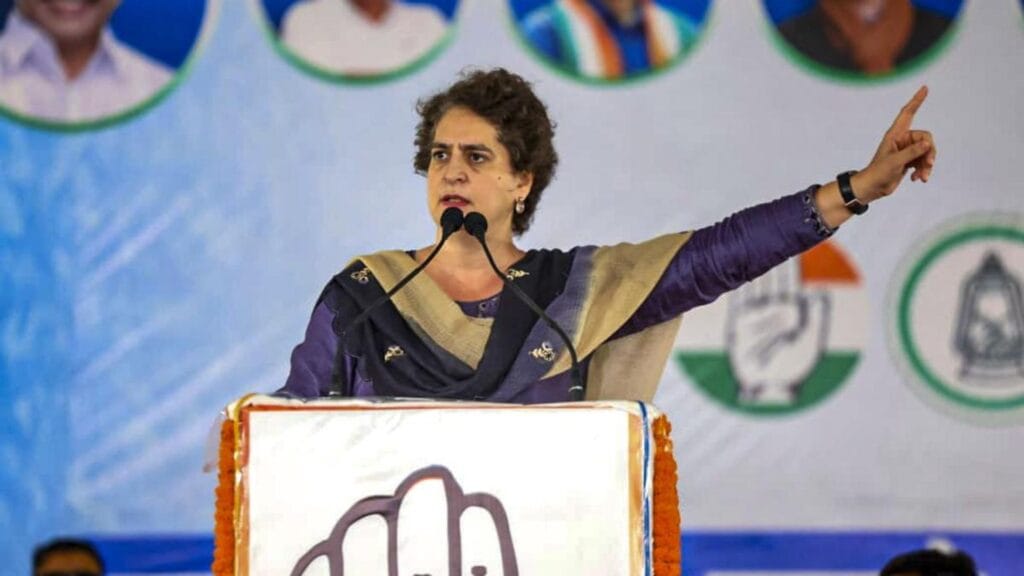
DATE: November 5, 2025 PATNA: With campaigning for the first phase of the Bihar Assembly elections drawing to a close, the political atmosphere has become intensely charged, with the Opposition’s core message centering on an explosive allegation of “vote theft.”2 Congress General Secretary Priyanka Gandhi Vadra launched a fierce attack on the National Democratic Alliance (NDA) on Wednesday, accusing the ruling alliance of attempting to subvert the democratic process to secure a victory. Addressing a public rally in Valmiki Nagar, West Champaran, Ms. Gandhi claimed, “The NDA wants to form the government in Bihar through ‘vote chori’ (vote theft).” The ‘Vote Chori’ Allegation: Targeting Electoral Rolls The Congress leader detailed the basis of her allegation, specifically pointing to the systematic revision of electoral rolls. She claimed that the names of approximately 65 lakh people, including a large number of women, have been deleted from the voter lists through the Systematic Information Revision (SIR) process. “They have put your vote in danger,” Ms. Gandhi told the crowd, stating that ‘vote chori’ is a “new way to suppress people” and a deliberate effort to undermine democracy. She urged the electorate to recognize their power and act against the alleged manipulation. “Why are you silent? Why don’t you recognise your power—change them, drag their government out and make a new government,” she exhorted the voters. Backing Rahul Gandhi’s ‘H-Files’ Priyanka Gandhi’s remarks came just hours after her brother and Leader of the Opposition in Lok Sabha, Rahul Gandhi, held a press conference in Delhi, releasing what he called the “H-Files.” This document alleged widespread and systematic voter irregularities in the recent Haryana Assembly elections, claiming the Congress’s victory was “converted into a BJP win” through planned manipulation. Priyanka Gandhi strongly supported her brother’s claims, asserting that the pattern of alleged vote-theft was not an isolated incident but part of a larger, systemic plan that extends to Bihar. NDA Fires Back: ‘HIRA’ vs. ‘Jungle Raj’ The ruling NDA, comprising the BJP and the JD(U), has vehemently denied the allegations and swiftly mounted a counter-offensive, dismissing the claims as a desperate attempt by a losing opposition to question democratic institutions. J.P. Nadda’s Development Pitch: BJP National President J.P. Nadda, while campaigning in Bettiah and Motihari, rejected the opposition’s rhetoric and presented the NDA’s vision for the state, stating that “NDA stands for HIRA” (Highway, Internet, Railway, and Airport). He credited Prime Minister Narendra Modi and Chief Minister Nitish Kumar for moving Bihar from the “lantern era to the LED era” and warned the state against a return to the “jungle raj” of the RJD’s past rule. Questioning Institutions: Union Minister Kiren Rijiju also slammed Rahul Gandhi’s “H-Files,” accusing the Congress leader of targeting “not just the BJP, but our country’s system and the credibility of its institutions,” calling it a “well-planned conspiracy.” Campaigning Wraps Up Ahead of Phase One The war of words has set the stage for a tense electoral battle. The high-octane campaign for the first phase of the Bihar Assembly elections ended on Tuesday, setting the stage for polling on Thursday, November 6, for 121 seats. The second phase of voting for the remaining 122 seats will take place on November 11, with the results for all 243 seats scheduled to be declared on November 14, 2025. The election has now turned into a direct clash between the NDA’s focus on development and stability under the double-engine government, and the Opposition’s charge of a compromised democracy, unemployment, and an urge to “chase them out of power.”  

Bihar Elections

Poll Position: ‘Clear Wave in Favour of NDA,’ Claims Rajnath Singh, Predicting Two-Thirds Majority in Bihar 2025 Elections

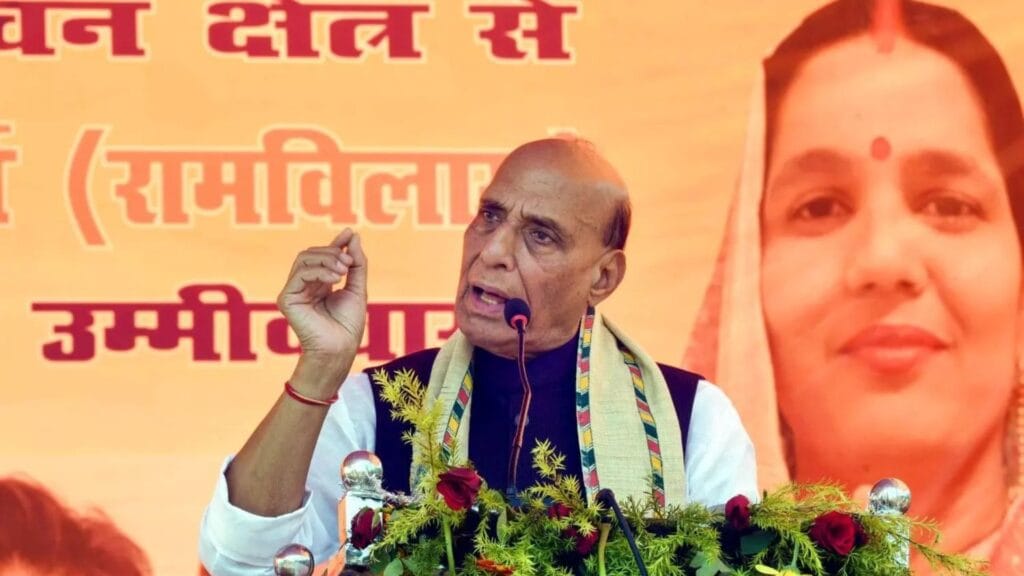
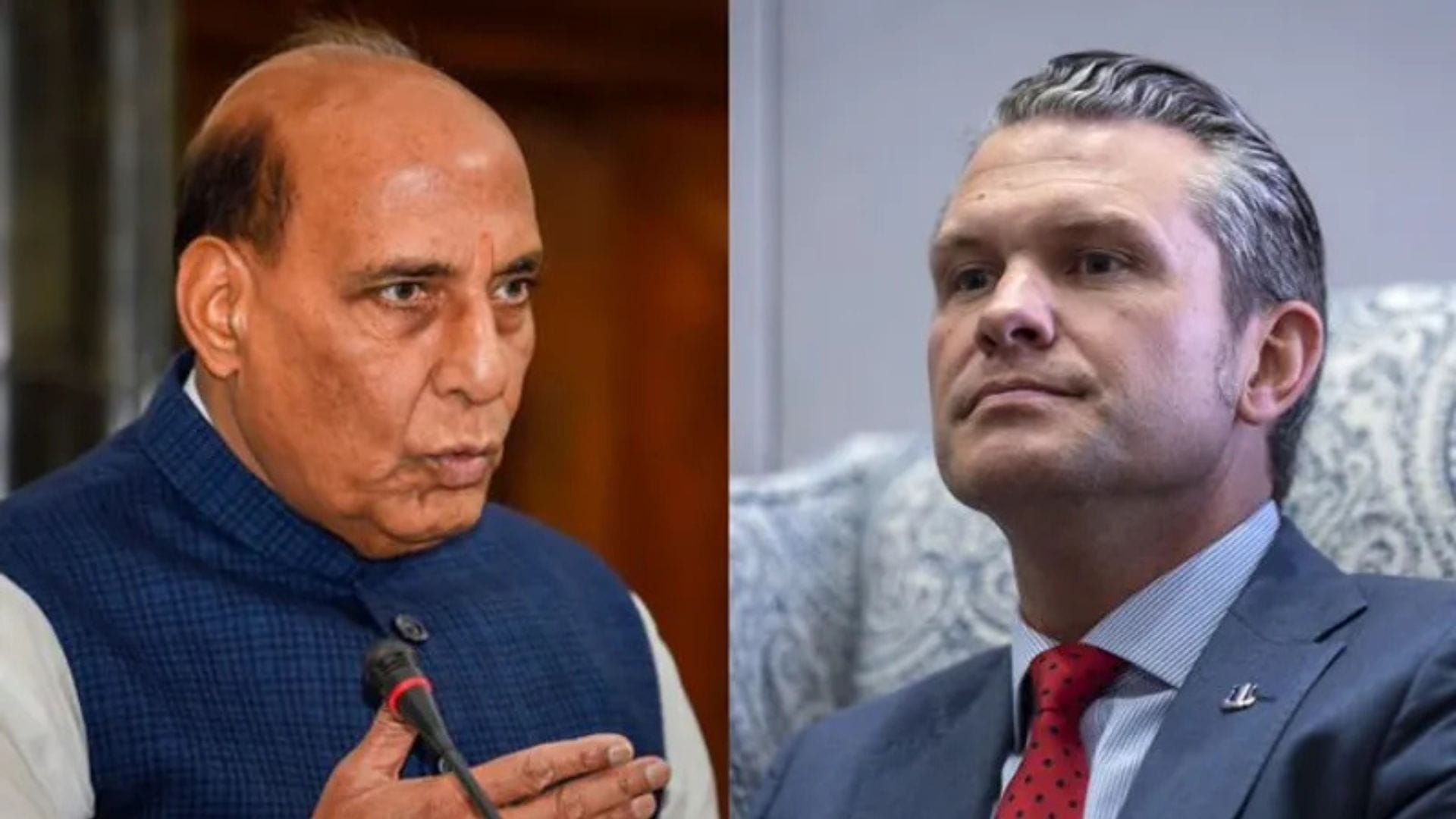
Patna, Bihar – With the crucial first phase of voting for the Bihar Assembly Elections 2025 just hours away, the political temperature has soared. In a major claim designed to galvanize the ruling coalition, Union Defence Minister and senior BJP leader Rajnath Singh asserted that the National Democratic Alliance (NDA) is set to sweep the polls, predicting a formidable victory with a two-thirds majority. Addressing a public rally, Singh expressed supreme confidence in the electoral mood of the state, attributing the projected win to the development work steered by Chief Minister Nitish Kumar and the central leadership of Prime Minister Narendra Modi. A ‘Clear Wave’ and a Promise of Stability “There is a clear wave in favour of the NDA ahead of the first phase of voting. We will form the next government with a two-thirds majority,” Singh declared, speaking in Banka. The Defence Minister’s strong assertion is part of the final push by the NDA, which includes the Bharatiya Janata Party, Janata Dal (United), Lok Janshakti Party (Ram Vilas), Hindustani Awam Morcha (Secular), and Rashtriya Lok Morcha. Singh highlighted two main pillars of the NDA’s campaign: development and clean governance. Praising Nitish Kumar: He pointed out, “There is not a single corruption case against Bihar CM Nitish Kumar,” crediting him with accelerating development over the last two decades. Targeting the Opposition: Singh launched a sharp attack on the opposition Mahagathbandhan, particularly the Rashtriya Janata Dal (RJD), alleging that the previous governments created a “crisis of trust” due to a constant “discrepancy between their words and actions.”7 He accused RJD leaders of having threatened people during their rule and failing to work for the state’s progress, a clear reference to the opposition’s campaign focusing on issues like “jungle raj.” Development Agenda and National Pride Singh tied the Bihar polls to the national context, emphasizing that the NDA would work for a ‘Viksit’ (Developed) Bihar. He stressed that the alliance does not discriminate based on caste, creed, or religion. Furthermore, he praised the central NDA government’s performance, stating that India has rapidly progressed to the world’s fourth-largest economy under PM Modi and is poised to climb to the third spot soon. The Two-Phase Battle The Bihar Assembly elections for the 243-seat legislative body are being held in two phases: Phase 1: Voting for 121 constituencies will take place on November 6. Phase 2: Voting for the remaining 122 constituencies will be conducted on November 11. Result Day: The counting of votes is scheduled for November 14. The main political contest is between the ruling NDA and the Mahagathbandhan, led by the RJD and also comprising the Congress, and several Left parties, including CPI (M-L), CPI, and CPM. While Rajnath Singh and other senior NDA leaders are projecting an overwhelming victory, the Mahagathbandhan’s leaders have countered with their own optimistic predictions, dismissing the two-thirds majority claim as “arrogance of power.” The actual results on November 14 will determine whether the alleged “NDA wave” has translated into a historic mandate.

Bihar Elections

Job War in Bihar: NDA’s 1 Cr Promise Meets Mahagathbandhan’s Guarantee

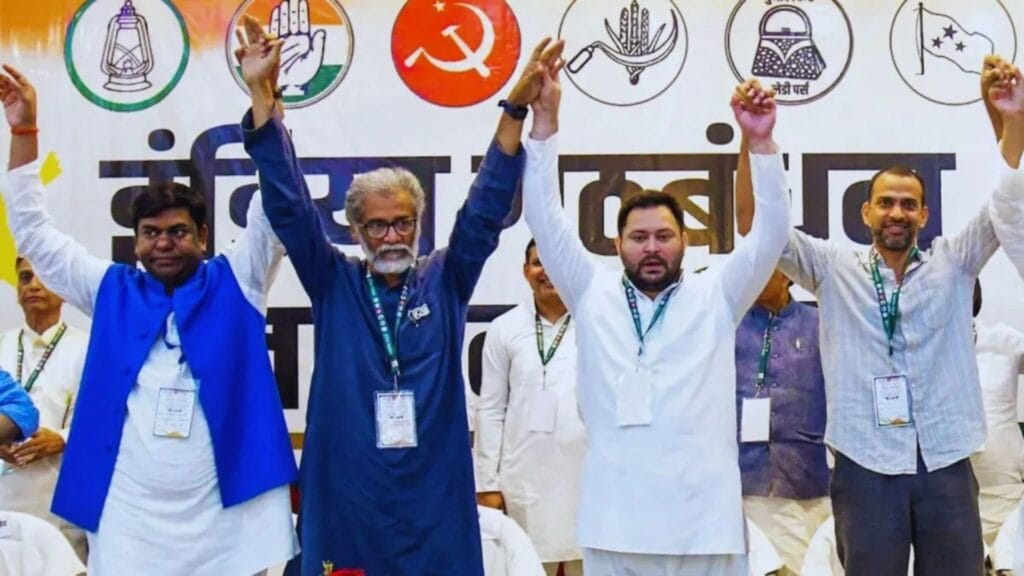
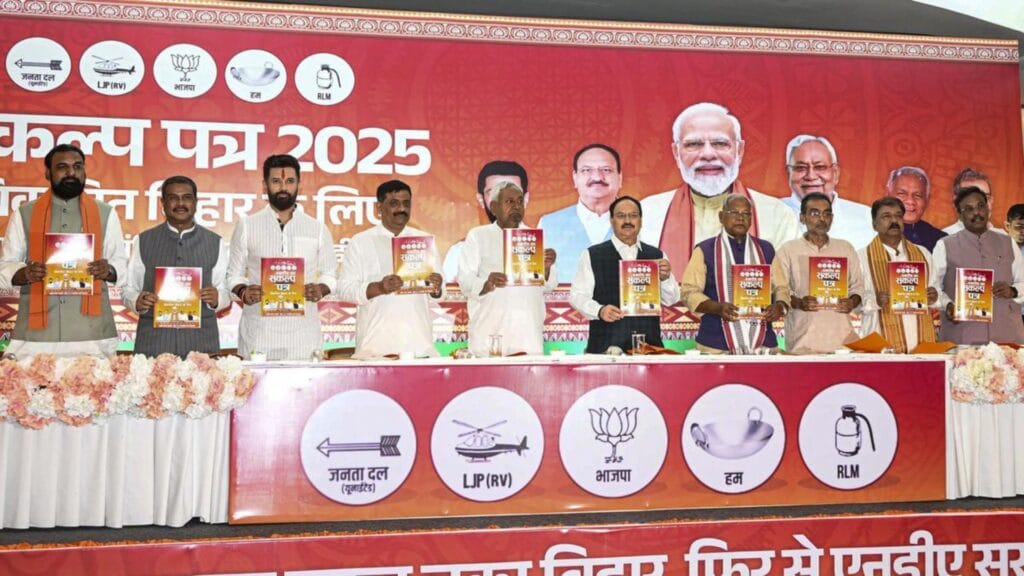
Patna, November 1: The Bihar election campaign saw major developments today as the National Democratic Alliance (NDA) released its ‘Sankalp Patra’ manifesto. Simultaneously, Mahagathbandhan leader Tejashwi Yadav escalated the political friction by publicly questioning the Election Commission’s silence regarding a recent murder in Mokama. The NDA’s manifesto launch event in Patna featured a unified front, including: BJP chief JP Nadda Chief Minister Nitish Kumar LJP (Ram Vilas) chief Chirag Paswan HAM(S) leader Jitan Ram Manjhi RLM chief Upendra Kushwaha The general election schedule remains as planned: Voting Dates: November 6 and 11 (Two Phases) Results: November 14 The electoral battle is set between the NDA (BJP, JD(U), LJP(RV), HAM(S), RLM) and the RJD-led Mahagathbandhan (Congress, CPI, CPI(M), CPI(ML), VIP), which has already released its job-focused manifesto, ‘Bihar Ka Tejashwi Pran’.  

Scroll to Top