News Unwrapped

Thursday, January 15, 2026 12:46 PM
Hot News

Global

Global

Explosion Rocks Jakarta Mosque During Friday Prayers, Injuring 54 People; Cause Under Investigation

JAKARTA, Indonesia – A powerful blast shook a mosque located inside a school complex in North Jakarta during Friday prayers, injuring at least 54 people, according to police officials. The incident, which occurred around midday in the Kelapa Gading area, has prompted a major security and forensic investigation as authorities work to determine the cause. City police chief Asep Edi Suheri confirmed the casualty figures, stating that the injured have been admitted to local hospitals with injuries ranging from minor to serious, including burns and wounds from glass fragments. No fatalities have been reported so far.   The Incident   The explosion occurred within the mosque situated on the grounds of a naval compound school complex. Witnesses reported hearing multiple loud blasts just as the Friday sermon was commencing, causing panic among the dozens of worshippers, many of whom are believed to be students and personnel associated with the compound. Images from the scene show armed police and military personnel quickly cordoning off the area. While initial reports suggest the mosque building did not sustain extensive structural damage, the shockwave and debris caused injuries to those inside.   Cause Remains Unknown   The Jakarta Metropolitan Police have deployed bomb disposal and anti-terror units, including the elite Special Detachment (Densus 88), to the site to conduct a thorough investigation. Police chief Suheri stated that the cause of the explosion is still under investigation, and authorities are not yet ruling out any possibilities. Early, unofficial speculation suggests the blast may have been caused by an electrical short circuit or a malfunctioning electronic device, potentially a loudspeaker near the rear section of the main hall. However, forensic experts are meticulously examining all evidence, which reportedly includes the discovery of suspicious objects like toy rifles and a toy gun found near the mosque, though their connection to the blast remains unconfirmed. The police have urged the public to refrain from speculation until the official investigation is concluded. Authorities have set up information posts at nearby hospitals to assist relatives of the injured. The incident is a stark reminder of Indonesia’s security challenges, though the focus is currently on determining whether the cause was technical, accidental, or linked to a malicious act.

Global

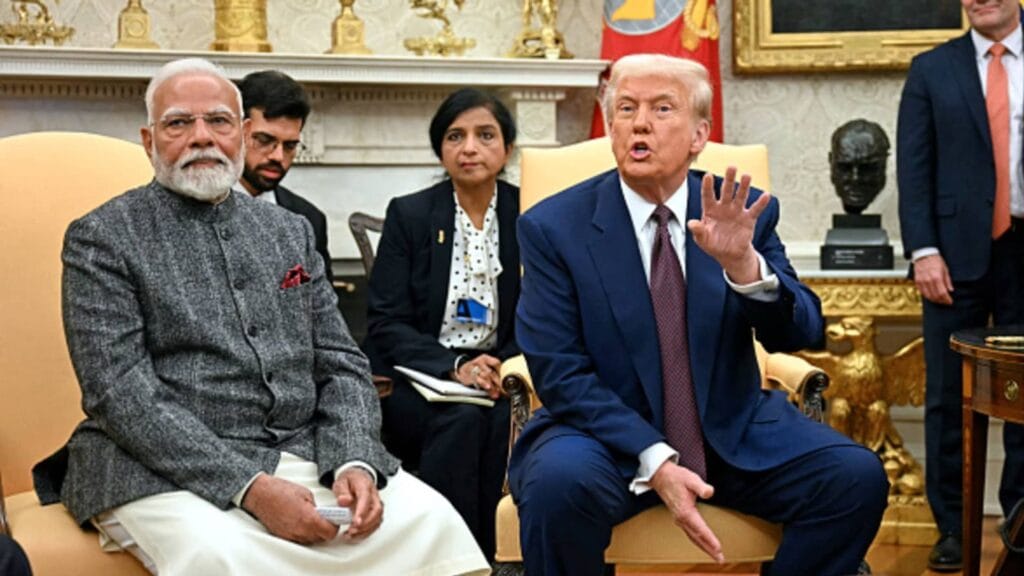
Trump Praises Modi, Hints at 2026 India Visit After Claiming New Delhi Has ‘Largely Stopped’ Russian Oil Purchases

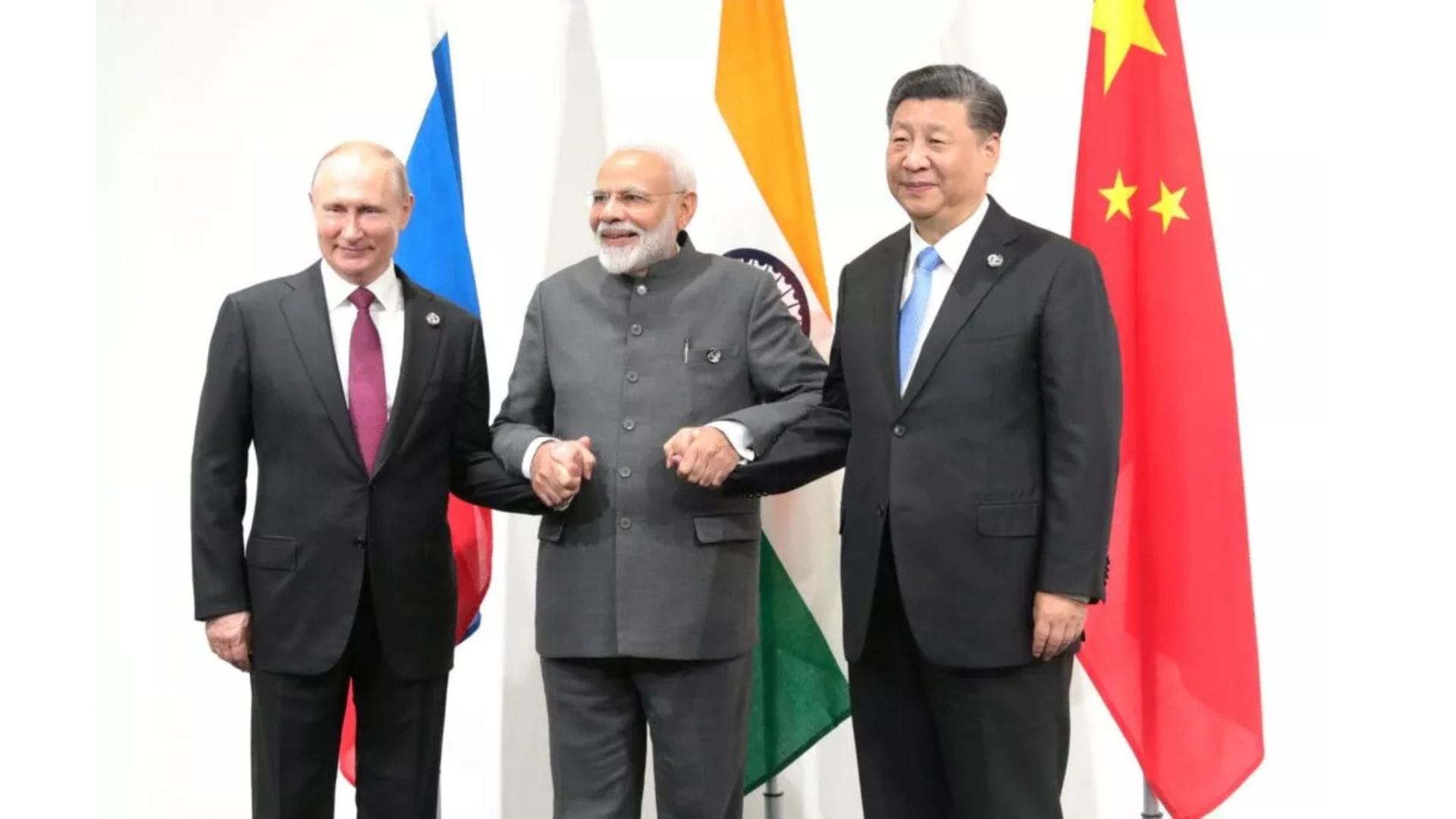
Washington D.C., – United States President Donald Trump on Thursday lauded Prime Minister Narendra Modi as a “great man” and claimed that India has “largely stopped” buying oil from Russia. His remarks came amid ongoing, high-stakes trade negotiations between the two countries, which are complicated by a US-imposed tariff linked directly to India’s energy imports from Moscow.1 In a brief interaction with reporters at the White House, President Trump expressed optimism about the bilateral relationship and the trade talks, while dropping a significant hint about a potential diplomatic visit.2   The Russian Oil Claim When asked about the status of trade discussions with India, President Trump commented: “They are going good; he [PM Modi] stopped buying oil from Russia largely.3 He is a friend of mine, and we speak.” When asked directly if he planned to travel to India next year (2026), he replied: “It could be, yes.” This is not the first time President Trump has made this claim. He had previously stated that PM Modi had assured him India would significantly reduce its Russian oil purchases by the end of the year.4   India’s Stance and Trade Tensions   The US President’s repeated assertion about the reduction in Russian oil imports remains a point of diplomatic ambiguity. India’s Official Position: India’s Ministry of External Affairs (MEA) has consistently maintained that its energy policy is guided solely by its national interest, specifically the need to ensure secure and affordable energy supplies for its large consumer base in a volatile global market.5 While India has diversified its energy sourcing, it has not officially confirmed a commitment to halt or substantially curb Russian oil imports based on a bilateral assurance to the US.6 Tariff Pressure: The topic is central to the current trade friction.7 The United States has imposed a 50 per cent tariff on certain Indian goods.8 This duty includes a 25 per cent base tariff and an additional 25 per cent duty explicitly linked by the US administration to New Delhi’s continued purchase of Russian crude oil.9 President Trump views the tariffs as a tool to leverage diplomatic outcomes and push India towards supporting the global isolation of Russia.10 Building Up to a 2026 Visit   The possibility of a presidential visit in 2026 underscores the strategic importance of the India-US partnership, despite current trade disputes. Trade Deal Momentum: Negotiators from both sides are intensely working to finalize a Bilateral Trade Agreement (BTA), a deal aimed at scaling up bilateral trade volumes from the current $191 billion to an ambitious $500 billion by 2030.11 A presidential visit is often viewed as the final political impetus needed to seal major agreements. Praise for PM Modi: President Trump referred to PM Modi as a “great man” and a “friend,” highlighting the strong personal rapport that defines the relationship between the two leaders.12 The speculated 2026 visit—potentially marking a major diplomatic engagement—will likely depend on progress made in both resolving the contentious tariff issues and aligning the two nations’ approaches to energy security and global geopolitics.

Global

Global News Roundup: Crypto Payroll Adoption Around the World

From Speculation to Salary: Why 25% of Businesses Are Now Paying in Crypto   In a shift that marks a major inflection point for digital assets, cryptocurrency has officially moved from a niche investment class to a critical piece of global financial infrastructure. The most recent data confirms that crypto payroll has reached a critical mass, with one in four companies worldwide now utilizing digital assets to compensate employees and contractors. This rapid adoption, which saw individual crypto payroll surge from just 3% in 2023, is being driven by a powerful combination of economic necessity, generational demand, and technological efficiency.   The Global Hotspots: Where Crypto Salaries Are Thriving Adoption is not uniform across the globe; it is being shaped by regional economic pressures and regulatory environments. The narrative is splitting into two distinct themes: the Inflation Hedge in emerging markets and the Talent Magnet in developed nations. Country/Region Primary Driver Key Trend/Status Argentina, Turkey, Brazil Inflation Hedge & Stability High inflation rates are pushing demand for stablecoins (USDC, USDT) to protect purchasing power, leading to a rising number of companies offering crypto salary options. India, Nigeria, Vietnam Financial Inclusion & Remittances Massive grassroots adoption, particularly among freelancers and remote workers, who use crypto to avoid high bank transfer fees and cross-border delays. United States, Canada, Germany Talent Magnet & Efficiency Driven by the tech and Web3 industries, companies are using crypto options to attract a young, tech-savvy workforce, with 75% of Gen Z workers reportedly preferring stablecoins as part of their pay. El Salvador Regulatory Pioneer Remains a global outlier after making Bitcoin legal tender, with a high percentage of local businesses accepting BTC for payments, setting a benchmark for national integration. The Core Drivers: Speed and Cost Savings For businesses operating globally, the efficiency gains of crypto payroll are too significant to ignore: Dramatic Cost Reduction: Companies are reporting cost reductions of up to 95% on international payroll. Traditional cross-border wires often involve fees of 6% or more; crypto payments through stablecoins can drop the cost to a few dollars per transaction. Near-Instant Settlement: Payroll settlement times, which used to take 3-5 business days across international banking rails, are now being completed in under 2 minutes. This 24/7 processing eliminates waiting periods over weekends or holidays. This combination of speed and cost reduction makes crypto a strategic business tool, not just a financial novelty, for managing a decentralized, global workforce. Powering the Shift: The Rise of the Crypto Payroll Stack The mass adoption is made possible by a new ecosystem of specialized platforms that handle the complexity of compliance and conversion. The Dominance of Stablecoins: Unlike the volatility associated with assets like Bitcoin or Ethereum, stablecoins (pegged 1:1 to a fiat currency like the US Dollar) are the engine of crypto payroll. They allow businesses to leverage the speed and low cost of blockchain technology while maintaining the stability required for predictable salary payments. In the first half of 2025 alone, stablecoins processed an astonishing $8.9 trillion in value. The Tech Enablers: A growing list of HR and payroll innovators are now offering robust solutions: Deel, Papaya Global, and Gloroots are leveraging their global Employer of Record (EOR) infrastructure to offer compliant crypto payouts via integrations with exchanges like Coinbase. Toku and Bitwage specialize in crypto-native compliance, managing everything from tax withholding to legal classification for employees and contractors across more than 100 jurisdictions. Furthermore, major Web3 companies like Coinbase, Kraken, and ConsenSys have long offered employees the option to be paid entirely or partially in digital assets, cementing the practice within the tech industry. The Outlook: The Future is Hybrid As regulatory clarity continues to improve in major markets like the U.S. and the EU, the trend toward hybrid compensation models is expected to accelerate. The typical modern paycheck is evolving to include: 50-80% in traditional fiat currency (USD, EUR, etc.) 20-50% in stablecoins (USDC, USDT) for flexibility and investment. Crypto payroll is no longer a fringe benefit for blockchain employees; it is becoming a standard feature of global commerce, redefining how, when, and where the world gets paid.

Global, Information Technology

IATA Global Passenger Survey 2025: Mobile-First and Biometric Travel Becomes the Passenger Expectation

The future of air travel is digital, seamless, and increasingly contactless. That is the clear message from the International Air Transport Association (IATA), which released the results of its 2025 Global Passenger Survey (GPS). The survey, which captures the sentiments of over 10,000 travelers across 200 countries, highlights two dominant trends redefining the passenger experience: the ubiquitous rise of mobile reliance and the accelerating adoption of biometric technology. “Passengers want to manage their travel the same way they manage many other aspects of their lives—on their smartphones and using digital ID,” said Nick Careen, IATA’s Senior Vice President of Operations, Safety and Security. 1. Mobile Reliance is Now the New Normal The smartphone is no longer just a communication device; it is the essential travel companion. The survey shows that more travelers than ever are managing every stage of their journey using their mobile devices, from initial booking to baggage claim. Key Mobile Trends: Direct-to-Airline Preference: Over half of travelers (54%) now prefer to deal directly with airlines, and they are increasingly doing so through mobile apps. Shift in Booking Channels: While airline websites remain the most popular booking choice at 31%, this figure is down from 37% in 2024. Conversely, the preference for mobile apps is trending upwards, a shift driven predominantly by younger travelers. Digital Wallet Dominance: Payment preferences are evolving rapidly. While credit and debit cards remain dominant (72%), the use of digital wallets has seen a significant jump, rising from 20% in 2024 to 28% in 2025. The All-in-One Digital ID: Passengers overwhelmingly want their smartphones to do more. A staggering 78% of passengers want to use a single smartphone solution that combines a digital wallet, a digital passport, and loyalty cards to book, pay, and navigate airport processes. 2. Biometric Adoption Accelerates with High Satisfaction The use of biometrics is expanding rapidly across airport checkpoints, and passengers are welcoming the change, prioritizing speed and convenience over traditional paper-based processes. Key Biometric Trends: Widespread Usage: Half of all passengers (50%) have now used biometrics at some point in their airport journey, up from 46% in 2024. This usage has increased by nearly 20 percentage points since 2022. Highest Satisfaction: Passengers who have used biometrics report high levels of satisfaction, with 85% saying they are happy with the experience. Willingness to Share Data: A strong majority, 74% of travelers, stated they would be willing to share their biometric information if it means they can skip showing a passport or boarding pass at checkpoints like check-in, security, border control, and boarding. Privacy Caveat: While the convenience is clear, privacy remains a key concern. However, there is a path to greater trust: 42% of passengers currently unwilling to share their biometric info said they would reconsider if data privacy was explicitly assured. IATA’s One ID initiative is the foundation for this transformation, aiming to allow passengers to use a single digital identity for all airport touchpoints. The Road Ahead: Seamless, Secure, and Digital The 2025 GPS survey signals a clear mandate for the aviation industry: invest in technology that reduces friction and provides a secure, streamlined experience. For this fully digital, border-to-border travel experience to become common practice, IATA emphasizes that governments must play a vital role by issuing digital passports and enabling their secure, standardized recognition across international borders. As the air travel industry moves toward a future where paper travel documents are obsolete, maintaining passenger trust through stringent cybersecurity and data protection measures will be paramount. The digital future of travel is here, and passengers are ready to embrace it.

Global

Democratic Sweep: A Midterm Warning Shot for Trump’s GOP

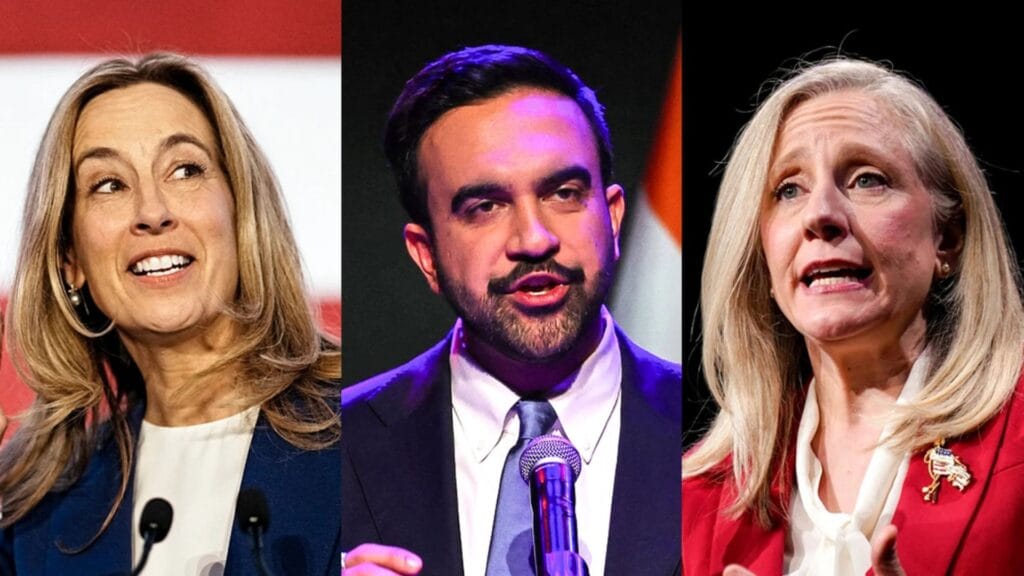
WASHINGTON, D.C. – Democrats are celebrating a decisive victory in the 2025 off-year elections, scoring critical wins across the country that have political analysts sounding the alarm for the Republican party and President Donald Trump ahead of the high-stakes 2026 midterms. The results, which saw Democrats claim major statewide and local offices and pass key ballot measures, are being widely interpreted as the first significant voter rebuke of the Trump administration since his return to the White House earlier this year. The Blue Wave: Key Victories The biggest headlines of the night came from a trifecta of crucial races: Virginia Governor’s Race: In a critical bellwether state, former U.S. Representative Abigail Spanberger (D) cruised to victory, defeating her Republican opponent by a double-digit margin to become Virginia’s first female governor. Her campaign, centered on economic issues and a message of “pragmatism over partisanship,” appears to have successfully pulled in suburban and independent voters. The Democrats also swept the state’s other statewide offices. New Jersey Governor’s Race: Democrat Mikie Sherrill (D), a former Navy pilot and Congresswoman, easily held the governorship for her party, overcoming a Republican challenge that had sought to capitalize on local economic anxieties. Sherrill strategically framed the race as a referendum on the Trump administration’s economic policies, which she argued were increasing the cost of living. New York City Mayoralty: In a massive upset, democratic socialist Zohran Mamdani (D) was elected mayor of America’s largest city. His victory, fueled by a grassroots movement and a platform focused on affordability, wealth redistribution, and an explicit anti-Trump message, signaled a massive surge of energy on the progressive left. Mamdani’s win has instantly made him a national figure and a symbol of the party’s ideological divide, with some national Democrats expressing concern that his far-left label could be exploited by Republicans in 2026. Beyond these major contests, Democrats also secured a crucial victory in California with the passage of Proposition 50. The measure allows the state legislature to temporarily redraw congressional maps, a direct response to GOP-led redistricting efforts in states like Texas. This move could potentially deliver the party up to five more U.S. House seats in the 2026 midterms, significantly boosting their chances of retaking control of the chamber.   Warning Signs for the GOP and President Trump The dominant performance by Democrats is shining a harsh light on potential vulnerabilities for the Republican party, particularly: The Economy is Top of Mind: Exit polls across the map, especially in Virginia and New Jersey, showed that economic concerns—namely, the rising cost of living, taxes, and jobs—were the number one issue for voters. Despite President Trump’s focus on cultural issues and a “Make America Great Again” platform, voters appeared to punish the party in power over pocketbook issues. The prolonged government shutdown, which was ongoing during the election, was also cited by analysts and outgoing Virginia Governor Glenn Youngkin as a major drag on the Republican ticket, especially in a state with a high population of federal employees. The Limit of the Trump Brand: While President Trump did not have his name on the ballot, his influence was a major component of the elections. Both Sherrill and the proponents of Prop 50 made their campaigns a direct rebuke of the administration. In his immediate reaction, President Trump attempted to distance himself from the losses, citing the government shutdown and the fact that he was not personally running as the reasons for the Republican defeat. However, his endorsement in New Jersey was not enough to save the GOP candidate. The Suburban Backslide: A key takeaway is the Democratic party’s strong performance in suburban areas, rural locales, and even among military-affiliated voters in states like New Jersey and Virginia. This suggests that the moderate, pragmatic approach championed by winners like Spanberger and Sherrill—focusing on public safety and economic stability while downplaying far-left progressive positions—may be the successful blueprint for challenging Republicans in 2026.   The Road to 2026: A Divided Democratic Message The 2025 results present a split message for the Democratic Party: The Pragmatic Path: The wins in the gubernatorial races of Virginia and New Jersey favor the party’s moderate wing, suggesting that a focus on kitchen-table issues and proven resumes (both Spanberger and Sherrill are former intelligence/military personnel) is the way to win swing elections. The Progressive Power: Zohran Mamdani’s commanding victory in New York City signals immense energy and enthusiasm on the progressive left. His ability to mobilize young, Asian, and Hispanic voters—groups that shifted toward Trump in the previous presidential election—shows the potential of a bold, socialist-inspired agenda in deep-blue urban centers. With the next midterm elections just a year away, the Democratic party will now have to navigate this ideological tension. Republicans, meanwhile, face the challenge of refining a national message to overcome voter concern about the economy and to effectively counter the Democratic opposition, which now has a significant boost of momentum and a new, more favorable electoral map in California.

Scroll to Top