












News Unwrapped

Thursday, January 15, 2026 11:09 AM
Hot News

Global

GEO Politics, Global

A Strategic Pact: India-US Defence Deal Brings Forth New Dimensions in Geopolitics

Last week’s signing of the expansive 10-year defense pact between India and the United States has sent a clear, powerful signal across the global strategic landscape. Far from a ceremonial renewal of existing ties, this new “Framework for the US-India Major Defence Partnership” is a forward-looking blueprint that officially ushers in a new era of defence technology sharing, co-production, and strategic alignment, fundamentally reshaping the geopolitics of the Indo-Pacific. Signed by Defence Minister Rajnath Singh and US Secretary of Defense Pete Hegseth on the sidelines of the ASEAN Defence Ministers’ Meeting-Plus (ADMM-Plus) in Kuala Lumpur, the agreement goes beyond the buyer-seller relationship to bring forth three critical new dimensions. New Dimension 1: The Quantum Leap in Technology Transfer   The most significant shift lies in the agreement’s focus on defence industrial collaboration and technology co-development. For years, India’s quest for state-of-the-art US technology has been stymied by Washington’s strict export control regimes. This pact promises to dismantle those barriers, aligning closely with India’s ambitious ‘Make in India’ and ‘Atmanirbhar Bharat’ (Self-Reliant India) initiatives. Jet Engine Technology: A centerpiece of this cooperation is the monumental agreement between India’s Hindustan Aeronautics Limited (HAL) and General Electric (GE) for the co-production of fighter jet engines. This transfer of high-end jet engine technology—which could potentially involve the GE-414 engine for India’s indigenous Tejas Mark 2 fighter—is an unprecedented gesture of trust, transforming India’s capabilities in high-tech manufacturing. Joint Production: The framework plans to greenlight the joint production of critical systems like Javelin anti-tank missiles, Stryker armoured personnel carriers, and deeper collaboration on emerging technologies like AI, unmanned aerial systems (drones), and cyber defence. Interoperability: By committing to enhanced information sharing and coordination, the agreement builds upon earlier foundational pacts (like LEMOA, COMCASA, and BECA), ensuring the two militaries can operate more cohesively during joint exercises and potential contingencies. For India, this promises a massive technological upgrade and a strategic diversification of its defense supply chains, reducing its historical dependency on Russia.   New Dimension 2: The Cornerstone of Indo-Pacific Security   The pact explicitly reaffirms the shared vision of a “free, open, and rules-based Indo-Pacific region.” This strategic language underscores the agreement’s role as a direct counterweight to China’s assertive military expansion in the region. Strategic Convergence: By institutionalizing a decade-long strategic roadmap, the pact elevates India’s status as the US’s indispensable partner in Asia. It is a powerful message that Washington is strategically investing in New Delhi to maintain a balance of power in the Indian Ocean Region and the wider Indo-Pacific theatre. Quad Strengthening: The bilateral synergy will inevitably strengthen the multilateral Quad grouping (India, US, Japan, Australia), reinforcing India’s position as a key regional security provider committed to resisting coercive maritime behavior. Enhanced Deterrence: Deeper collaboration in Maritime Domain Awareness (MDA) and complex joint military exercises (such as Malabar) will significantly improve the collective deterrence posture, particularly for protecting critical sea lanes and responding to regional crises.   Geopolitical Ripples: Alignments and Divisions   The “Strategic Pact” is already creating ripples that will influence regional dynamics: Actor Geopolitical Implication China The pact is perceived as a hardening of the security encirclement in the Indo-Pacific. China will view the deeper military integration and transfer of advanced technologies to India as a direct challenge to its regional ambitions. Russia While India-Russia defense ties remain significant (especially with deals like the S-400 missile system), the US pact accelerates India’s strategic pivot towards Western technology. This forces Moscow to recalibrate its long-term defense relationship with New Delhi. Pakistan Analysts in Islamabad are likely to view the pact with deep concern, seeing it as a tilt in Washington’s regional calculus. This may push Pakistan to deepen its defense and economic reliance on China, contributing to a more bipolar security alignment in South Asia.   A Decade of Partnership and Potential Challenges   The new framework is a testament to the maturing India-US relationship, demonstrating that strategic alignment can transcend current trade and tariff frictions. It guarantees a level of policy predictability and long-term coherence vital for both nations’ defense planning. However, challenges remain. For India, the delicate task is to balance this deep engagement with the US while maintaining its treasured strategic autonomy and managing sensitivities with its traditional partner, Russia. For the US, successful implementation hinges on easing export controls and navigating bureaucratic hurdles to ensure promised technology transfers are delivered on time and in full. In its scope, ambition, and explicit strategic intent, the India-US Defence Pact is more than a simple agreement; it is the strategic cornerstone of a new security architecture for Asia. The next ten years are set to witness India solidify its place as a pivotal global power and a crucial pillar in the rules-based international order.
GEO Politics, Global

Geopolitics in Flux: Why Central Asia Is Becoming China’s New Chessboard and India’s Strategic Test

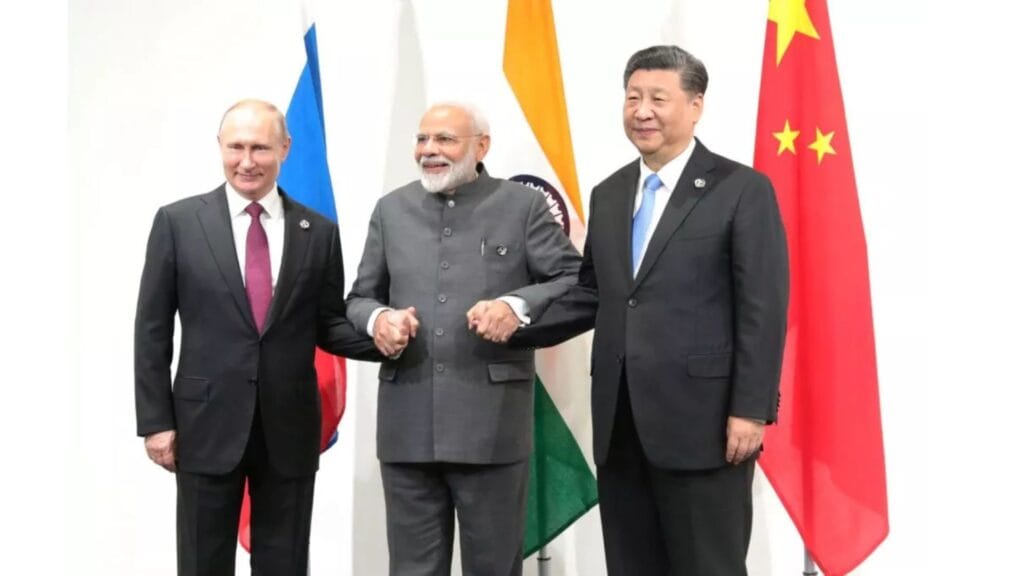
Central Asia, a region once viewed through the lens of Russian dominance, is rapidly emerging as the new nexus of global power competition. Comprising the five former Soviet Republics (Kazakhstan, Kyrgyzstan, Tajikistan, Turkmenistan, and Uzbekistan)—collectively known as the CARs—this strategic heartland of Eurasia is no longer a peripheral territory. It has transformed into a high-stakes chessboard where China is making a powerful geo-economic play, setting up a critical strategic test for India’s regional ambitions. The tectonic shift in the region’s power dynamics, accelerated by the war in Ukraine and the U.S. withdrawal from Afghanistan, has created a vacuum. This void is being rapidly filled by the two Asian giants, each employing distinct strategies to secure their interests in a pivotal region rich in resources, critical for continental connectivity, and vital for border security.   1. China’s Chessboard: The Geo-Economic Titan   For Beijing, Central Asia is the indispensable western anchor of its global vision. China’s strategy is not merely about influence; it is about continental-scale connectivity and securing its strategic backyard.   The Belt and Road Initiative (BRI) Anchor   China’s principal vehicle for engagement is the Silk Road Economic Belt (SREB), the overland component of the BRI. This initiative seeks to transform Central Asia from a landlocked region into a land-linked corridor, providing China with: Connectivity and Trade: A “land bridge” connecting China to Europe, the Middle East, and West Asia, bypassing vulnerable maritime chokepoints. China is now the top, or second-largest, trade partner for most CARs. Energy Security: Securing long-term access to energy supplies, including natural gas from Turkmenistan and Kazakhstan via the Central Asia-China gas pipelines. Border Security: Creating a stable buffer zone along its borders with Xinjiang. Beijing is focused on combating the “Three Evils”—terrorism, separatism, and religious extremism—often through security cooperation mechanisms under the Shanghai Cooperation Organization (SCO) and bilateral training of regional forces. To institutionalize its growing clout, China has elevated its diplomatic engagement through the C5+1 mechanism (China plus the five CARs). Through massive investments in infrastructure, digital networks, and industrial projects, China has established itself as the unquestionable economic hegemon, making a clear statement that its rise is inextricably linked to the prosperity of Central Asia.   2. India’s Strategic Test: The Connectivity Challenge   India’s primary challenge in Central Asia is geographical: the lack of a direct land route, blocked by Pakistan. Despite this hurdle, New Delhi recognizes the region’s significance for its energy security, counter-terrorism efforts, and strategic desire to establish an alternative developmental model to China’s.   The ‘Connect Central Asia Policy’ and INSTC   India’s policy, formalized in 2012, focuses on a multi-dimensional approach encompassing security, energy, trade, and cultural ties. The key pillars are: The International North-South Transport Corridor (INSTC): This multi-modal sea, rail, and road network aims to connect India to Iran, Azerbaijan, Russia, and Central Asia, drastically reducing transport time and costs compared to the Suez Canal route. Chabahar Port: Situated in Iran, this port is India’s “Golden Gate” to Central Asia, providing a crucial maritime bypass to Pakistan. Its operational success is vital to realizing the full potential of the INSTC. Soft Power and Capacity Building: India leverages its historical and cultural ties—rooted in the ancient Silk Road, Sufism, and Bollywood—to maintain influence. Programs like the Indian Technical and Economic Cooperation (ITEC) offer training and expertise, positioning India as a reliable partner focusing on human resource development rather than large-scale debt-fueled infrastructure. For the CARs, India offers a necessary counterbalance, allowing them to diversify their diplomatic and economic partnerships and avoid over-reliance on a single major power.   3. The Shifting Sands: Russia’s Wane and CARs’ Agency   The geopolitical flux has been dramatically accelerated by external shocks. US Retrenchment: The 2021 withdrawal of the United States from Afghanistan removed a key stabilizing presence, leaving a security vacuum that primarily concerns the southern CARs (Tajikistan, Uzbekistan, and Turkmenistan). Russia’s Distraction: Russia’s full-scale invasion of Ukraine in 2022 has severely curtailed its ability to project decisive military and economic power in Central Asia. Historically the primary security guarantor, Moscow is now seen as a less reliable, and even a cautionary, figure. In response, the Central Asian states have collectively asserted a more confident, ‘multi-vector’ foreign policy. They are diversifying alliances, strengthening intra-regional cooperation, and opening doors wider to China, Turkey, and other external powers to enhance their sovereignty and maximize economic gains while minimizing dependence on any single country. The region’s stability hinges on its success in maintaining this delicate balancing act between their traditional security partner (Russia), their primary economic partner (China), and the aspirational alternative (India).   Conclusion: A New Great Game Defined   Central Asia is now the stage for a new “Great Game,” fundamentally driven by the contrasting strategies of Asia’s two largest economies. China’s approach is defined by geo-economics—utilizing vast financial power and infrastructure projects to create dependency and secure strategic assets. India’s approach, constrained by geography, is focused on alternative connectivity, security cooperation, and soft power diplomacy to secure its energy interests and preserve strategic space. For India, the task is monumental: it must urgently operationalize the INSTC and Chabahar Port to compete with the velocity and scale of China’s BRI. For China, the challenge is to manage the perception of “debt-trap” diplomacy and avoid overt security competition with a retreating but still present Russia. The ultimate outcome will not be the domination of a single power, but a complex, fluid environment where the Central Asian republics themselves will determine their future by skillfully managing the competitive interests of the world’s rising giants. The heart of Eurasia is in play, and the world is watching.

GEO Politics, Global

Why Kazakhstan Joined the Abraham Accords: A New Geopolitical Balancing Act

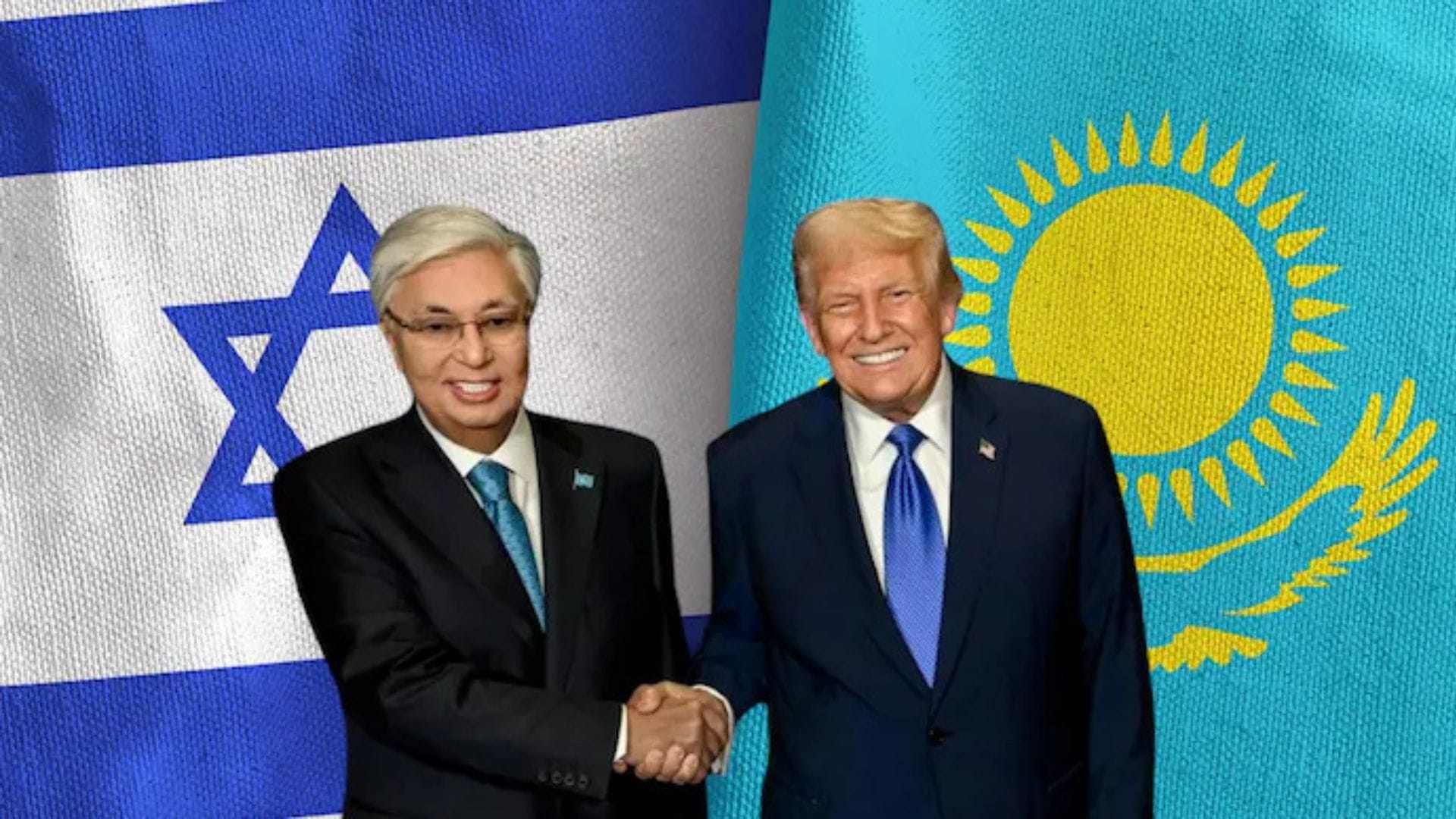
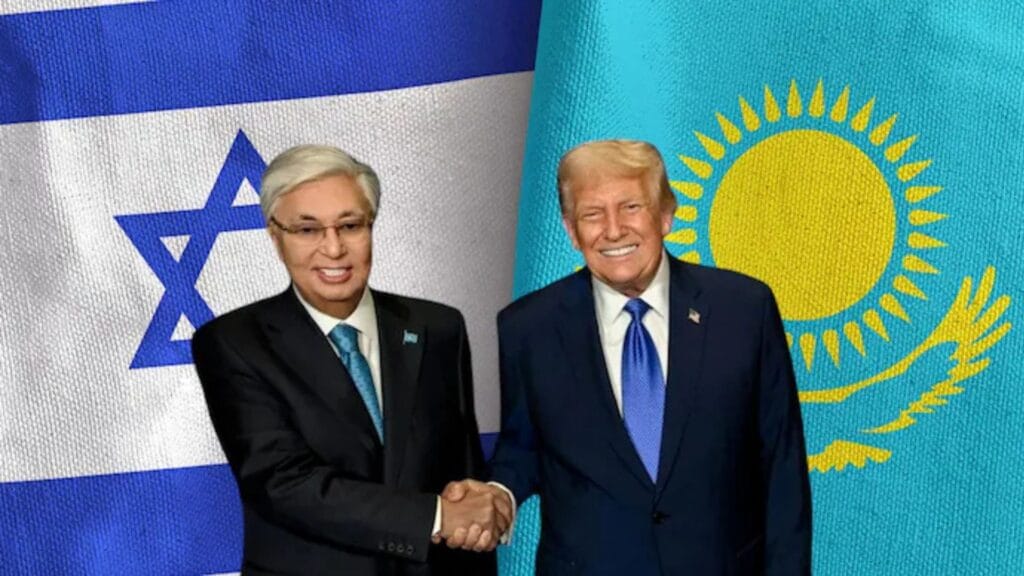
The Abraham Accords, once a diplomatic framework centered on the Middle East, have suddenly leapfrogged the map and landed in the heart of Central Asia. The official announcement that Kazakhstan—the region’s largest and wealthiest economy—will join the US-brokered pact with Israel is a quiet but seismic shift that redefines the country’s foreign policy and signals a new front in the global competition for influence. While Kazakhstan and Israel have maintained full diplomatic relations since 1992, Astana’s accession is far more than a simple diplomatic footnote. It is a calculated, low-cost, yet high-visibility move that perfectly encapsulates the nation’s long-standing “multi-vector” foreign policy: a masterful act of geopolitical balancing.   The Logic of the Steppe: Counterbalancing Two Giants   Kazakhstan is geographically sandwiched between two global powers, Russia and China. This reality necessitates a complex foreign policy that seeks maximum flexibility and independence. For years, Astana has delicately managed its relationship with Moscow (a key security partner) and Beijing (its largest trading partner). Joining the Abraham Accords represents a strategic maneuver to bring a powerful third pillar—the United States and its allies—firmly into its sphere of influence. Here’s why the move is a centerpiece of Kazakhstan’s balancing act: Gaining Washington’s Favor: The decision was announced during a high-profile C5+1 summit in Washington D.C. Accession to the Accords is a clear signal of preferential alignment with US strategic interests, generating goodwill with the Trump administration and paving the way for greater American investment. Economic Diversification and Technology: President Kassym-Jomart Tokayev has consistently emphasized the move’s economic rationale. Kazakhstan is eager to diversify its economy beyond oil and extractive industries. Israel, a global leader in high-tech fields like agritech, water management, cybersecurity, and defense, offers precisely the expertise needed for Kazakhstan’s modernization push. Furthermore, the move facilitates new cooperation on critical minerals, a key priority for the US to reduce its reliance on China. A Global Bridge Builder: By formalizing its role within the Accords, a pact that unites Muslim-majority nations with Israel, Kazakhstan reinforces its self-image as a moderate, stable Muslim nation and a diplomatic “bridge” between East and West. This status boosts its global soft power and separates it from the regional geopolitical rivalries of Russia and Iran.   Reinvigorating the Accords and Redrawing the Map   For the United States, Kazakhstan’s entry breathes new life into the Abraham Accords, which had slowed down amidst heightened tensions in the Middle East. It demonstrates that the diplomatic framework is a viable, expanding architecture of cooperation that transcends its original geography and remains relevant to the broader Muslim world. For Israel, the move is a significant diplomatic success. It expands the Accords’ reach into the strategically vital territory of Central Asia, offering a strategic foothold in a region historically dominated by Moscow and increasingly courted by Tehran. Every new Muslim nation that joins the Accords chips away at the narrative of Israel’s international isolation. Ultimately, Kazakhstan’s decision is less about creating a new relationship and more about placing an existing one into a new, powerful strategic architecture. It’s a pragmatic, utility-driven foreign policy choice designed to translate diplomatic symbolism into measurable economic and security gains. In the high-stakes chess match for influence across Eurasia, Kazakhstan has chosen its next move carefully, leveraging an initiative from the West to counterbalance the proximity of the East. The steppe has spoken: the future of Central Asian diplomacy will be decided through a new, complex, and high-tech balancing act.

Global, GEO Politics

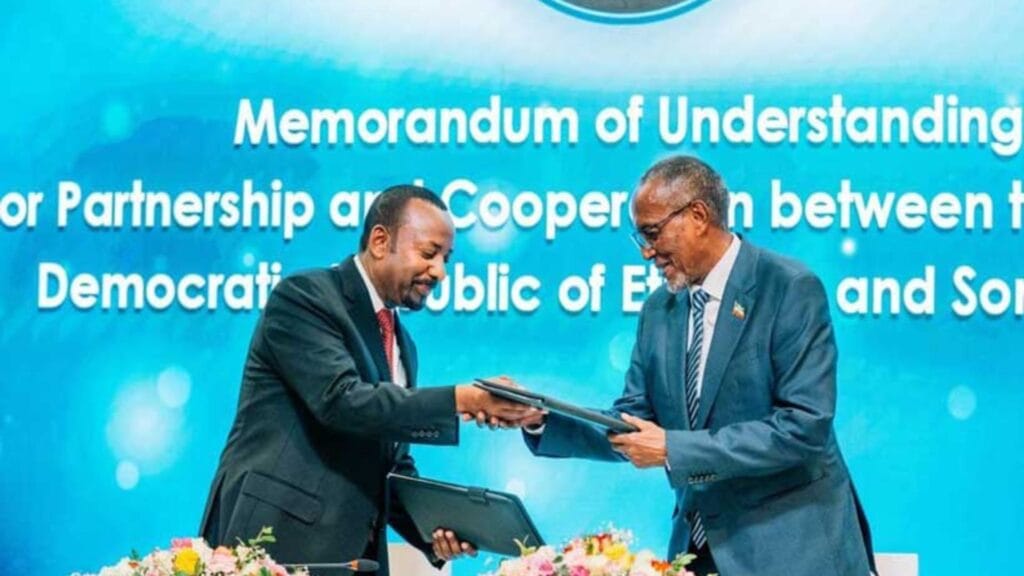
The Geopolitics of Ports: Re-evaluating Economic Interdependence in the Horn of Africa

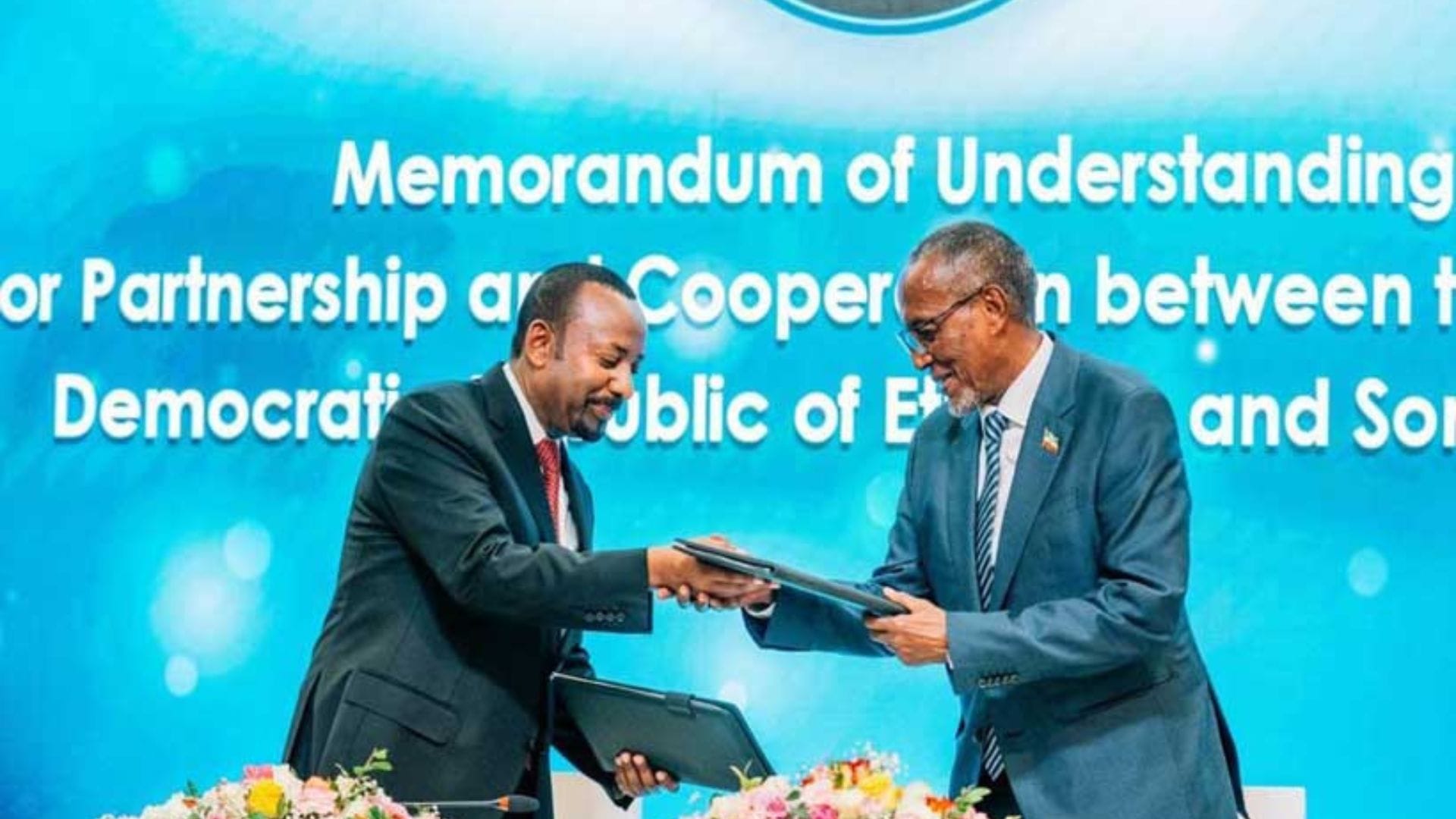
By Our Geopolitical Correspondent The Horn of Africa—a crucial crossroads where the Red Sea meets the Indian Ocean—is currently undergoing a dramatic re-evaluation of its economic and geopolitical landscape. Once primarily seen through the lens of internal conflict and instability, the region has transformed into a strategic chessboard where global and regional powers are using port investments to reshape economic interdependence, often blurring the lines between commerce and military influence. The once-clear promise of shared prosperity from upgraded infrastructure is now shadowed by intensifying geopolitical rivalries and risks to regional stability.   The New Maritime Silk Road: Key Ports and External Players   The strategic importance of the Horn of Africa is anchored in the Bab el-Mandeb Strait, one of the world’s most vital maritime chokepoints, through which an estimated 15% of global trade and a significant volume of oil transit. This geography has attracted major international players, with their influence manifesting most visibly in port infrastructure. Key Port Host Country/Territory Primary Foreign Investors/Operators Geopolitical Significance Djibouti (Doraleh) Djibouti China, France, USA Host to multiple foreign military bases (China’s first overseas base, US, France, Japan), making it the region’s premier logistics and military hub. Berbera Somaliland (unrecognized) UAE (DP World), Ethiopia Provides an alternative sea route for landlocked Ethiopia, challenging Djibouti’s monopoly, and offering the UAE a strategic foothold in the Gulf of Aden. Assab Eritrea UAE (past interest) Historically vital for Ethiopia; its development or control is a key factor in Eritrea’s regional strategy and the balance of power. Port Sudan Sudan Qatar (past interest), UAE (recent deals) A strategic target for Gulf states due to its position on the main Red Sea trade lane, influenced heavily by regional Gulf rivalries. Mogadishu Somalia Turkey (Albayrak Group), Qatar Turkey’s key entry point for humanitarian and commercial engagement, often counterbalancing Gulf influence in the region. The most assertive external actors are the United Arab Emirates (UAE) and China. The UAE, through its global port operator DP World, has sought to dominate maritime logistics from Berbera to Port Sudan, driven by commercial interests, food security concerns, and the need to secure maritime routes. China’s engagement, a core part of its Belt and Road Initiative (BRI), focuses on massive infrastructure financing, exemplified by the Doraleh Multipurpose Port and the adjacent military base in Djibouti, giving Beijing both commercial and strategic leverage.   Economic Interdependence: A Double-Edged Sword   For landlocked nations like Ethiopia, the quest for diversified sea access is an absolute economic imperative. Currently, over 95% of its foreign trade passes through the Port of Djibouti, costing the nation substantial port fees annually. This heavy reliance exposes Ethiopia to immense logistical costs and significant geopolitical vulnerability, as demonstrated by historical conflicts and policy shifts. The recent flurry of port-centric development was initially heralded as a path to greater economic interdependence, where a connected network of competing ports would reduce costs and foster shared prosperity. However, the reality has been more complex: Zero-Sum Competition: Instead of fostering collective development, port projects often become zero-sum games. Countries view maritime connectivity as a source of leverage, leading to overlapping, uncoordinated projects that intensify economic rivalry. Importing Foreign Rivalries: The region’s nations are aligning themselves with different foreign patrons—China, the UAE, Turkey, and Qatar—who often compete fiercely. This dynamic imports external geopolitical tensions (e.g., the intra-Gulf rift) directly into the domestic politics and regional relations of the Horn, exacerbating existing local cleavages. Militarization and Influence: Port investments are increasingly intertwined with security. Concessions for commercial development are often quickly followed by agreements for military bases or naval access, trading commercial benefit for military dependence and allowing foreign actors considerable influence over local politics.   The Quest for Sovereignty and Stability   The fundamental challenge for the Horn of Africa is to convert these high-value strategic assets from flashpoints of external competition into true building blocks for regional cooperation. While foreign investment brings much-needed capital and infrastructure, it also risks compromising national and regional control over critical trade corridors. Experts suggest that genuine, long-term stability will require the countries of the Horn to: Develop Regional Frameworks: Establish a coordinated regional body, perhaps under IGAD or the African Union, to harmonize port tariffs, investment rules, and security protocols, shifting the focus from individual country advantage to collective efficiency. Negotiated Access over Ownership: For landlocked giants like Ethiopia, the pursuit of guaranteed, negotiated access and equity stakes in multiple ports (Berbera, Assab, Port Sudan) is arguably more stabilizing and economically rational than the politically explosive demand for outright port ownership. Prioritize Economic over Military Logic: Ensure future infrastructure deals are based primarily on commercial rationale and regional integration plans, rather than being leveraged for short-term geopolitical or military gains by external powers. The Horn of Africa’s ports are the new frontier of global commerce and strategic power. The region’s future hinges on its ability to transcend the legacy of conflict and leverage this immense strategic location not for external power projection, but for the mutual economic benefit of its own people. Until then, every new container crane on the Red Sea coast will serve as a stark reminder of the delicate balance between economic need and geopolitical peril.

Global

$22 Million, 26 Billionaires: How Zohran Mamdani’s Grassroots Uprising Conquered New York

New York, November 5, 2025 In a stunning political upset that sent a tremor through America’s elite, Zohran Mamdani, a 34-year-old Democratic Socialist, has been elected the next Mayor of New York City.1 His victory is not just a triumph of policy over personality; it is a profound repudiation of the idea that electoral politics can be bought, delivering a decisive blow to a massive, $22 million campaign funded by at least 26 billionaires determined to stop him.2 Mamdani’s insurgent campaign, built on an unapologetically progressive platform focused on working-class solidarity, defeated former Governor Andrew Cuomo, who ran as an Independent and became the reluctant champion of the city’s financial establishment.3 The Billionaire Wall That Failed   The scale of the opposition to Mamdani was unprecedented for a municipal race. Fearful of his proposed policies—including a rent freeze for over two million tenants, fare-free public buses, universal childcare, and a modest tax increase on the wealthiest New Yorkers—major figures from Wall Street and the real estate industry pooled their resources into anti-Mamdani Super PACs. Hedge fund titan Bill Ackman, former Mayor Michael Bloomberg, and scions of powerful real estate families poured millions into a coordinated effort to paint Mamdani as a radical threat to the city’s economy.4 According to reports, the collective anti-Mamdani spending topped a staggering $22 million.5 Mamdani acknowledged the existential fear of the elite in his victory speech: “Billionaires like [Bill Ackman and Michael Bloomberg] have poured millions of dollars into this race because they say that we pose an existential threat.6 And I am here to admit something. They are right. We are an existential threat to billionaires who think their money can buy our democracy.”7 The Power of the Grassroots   Mamdani’s victory was not won with TV ads and glossy mailers, but through human capital and an electrifying, consistent message that resonated with an overburdened electorate.8 Grassroots Funding: In stark contrast to his opponent’s reliance on large corporate donations, Mamdani’s campaign was overwhelmingly funded by small-dollar contributions, with an average donation size around $121.9 His campaign proudly leaned on the city’s public matching funds program.10 The Volunteer Army: The campaign mobilized a remarkable number of volunteers—reportedly over 100,000—who knocked on doors and made calls, achieving a level of voter engagement not seen in a New York mayoral race in decades.11   Record Turnout: The election saw voter turnout surpass two million for the first time since 1969, signaling that Mamdani successfully energized a new coalition of young progressives, working-class families, and underrepresented communities.12   A New Era of Identity and Policy   Mamdani’s win is historic on multiple fronts. He will become New York’s first Muslim mayor, its first Asian American mayor, its first African-born mayor, and its youngest mayor in over a century.13 Born in Uganda and raised in New York, his identity became a powerful symbol against his opponents’ attempts to demonize him, including attacks from President Donald Trump.14 “New York will remain a city of immigrants,” Mamdani declared in his victory speech.15 “A city built by immigrants, powered by immigrants and, as of tonight, led by an immigrant.”16 With the establishment defeated, the focus now shifts to whether the newly elected mayor can deliver on his radical vision for a more affordable city. His agenda—a freeze on rent-stabilized units, free public transit, and a commitment to universal services—marks a decisive shift away from the center-right politics that have dominated City Hall for years, heralding a new and deeply contentious era for America’s largest city.17  

Global, Information Technology

REALME GT 8 PRO: The Ricoh GR-Powered Camera King Arrives in India on November 20th

The Street Photography Legend Meets the Flagship Killer: Realme GT 8 Pro Set to Redefine Mobile Imaging in India   New Delhi, India – The wait is almost over. Realme has officially confirmed the India launch of its next-generation flagship, the Realme GT 8 Pro, scheduled for November 20th. Positioned as a true ‘flagship killer,’ this device is set to disrupt the premium segment not just with raw power, but with a camera system co-engineered with the legendary Japanese photography brand, Ricoh Imaging. This strategic partnership marks a major leap for smartphone photography, promising to inject the soulful, authentic aesthetics of Ricoh’s celebrated GR series of street cameras directly into the GT 8 Pro.   The Ricoh GR Experience: Authentic Optics on a Smartphone   The camera is undoubtedly the headline feature. The Realme GT 8 Pro introduces a new era of mobile photography through its deep collaboration with Ricoh GR, a brand revered by street photographers for its distinct, film-like imaging. Here’s what the Ricoh GR integration brings to the table: Co-Engineered Optics: The main camera features a custom, ultra-high-transparency lens group developed with Ricoh Imaging, designed to meet the strict RICOH GR optical standards for superior clarity and reduced glare. Dedicated GR Mode: For enthusiasts, the phone includes a dedicated RICOH GR Mode that offers two classic fixed focal lengths: 28mm (ideal for capturing the full street scene) and 40mm (perfect for more focused, emotional snapshots). Exclusive GR Tones: Users can apply five exclusive RICOH GR Tones—crafted from decades of Ricoh’s color science—to give photos a distinctive, organic, and authentic look, moving away from the typical over-processed mobile aesthetic. Beyond the imaging technology, the GT 8 Pro also boasts an industry-first switchable camera bump design, allowing users to customize the physical appearance of their phone. The powerful triple-rear camera system is expected to include a high-resolution primary sensor, an ultrawide lens, and a massive 200MP periscope telephoto lens with 3x optical zoom.   Under the Hood: A True Performance Beast   The Realme GT 8 Pro doesn’t skimp on performance. It is armed with a suite of top-tier specifications designed to take on the most demanding tasks: Feature Specification Details Processor Qualcomm Snapdragon 8 Elite Gen 5 (3nm) + Hyper Vision+ AI Chip Display 6.79-inch 2K LTPO AMOLED with 144Hz refresh rate and a staggering 7,000 nits peak brightness Battery Massive 7,000mAh ‘Titan Battery’ Charging Blazing-fast 120W SuperVOOC wired charging (claimed 50% charge in 15 minutes) Software Realme UI 7.0 based on Android 16 (Out-of-the-box)   Design, Availability, and Impact   The device features an elegant design with a focus on sustainability, including an Urban Blue variant with a paper-like leather back panel made from recycled materials, as well as a Diary White option. The durable build also comes with an IP68/IP69 rating for robust dust and water resistance. The Realme GT 8 Pro will be available for purchase on Flipkart and the official Realme online store following the November 20 launch event. With its unparalleled combination of a cutting-edge processor, an endurance-focused battery, and the game-changing Ricoh GR camera collaboration, the GT 8 Pro is poised to be one of the most exciting and sought-after flagship smartphones launching in India this year.

Global, Information Technology

GTA VI Delayed to November 2026: A 13-Year Wait Continues, Here’s the Full Timeline, the Reasons, and Rockstar’s Response

In news that is both disappointing and, for long-time fans, depressingly familiar, Rockstar Games has officially announced a second major delay for Grand Theft Auto VI (GTA VI). The world’s most anticipated video game will not arrive next spring as previously planned, but has been pushed back six months to November 19, 2026. The announcement confirms the fears and rumors circulating for months and stretches the wait for a new mainline Grand Theft Auto title to a staggering 13 years since the launch of the cultural phenomenon, Grand Theft Auto V, in 2013. Here is the complete timeline of the delays, the developer’s official statement, and the underlying reasons behind the extended wait.   📅 The GTA VI Delay Timeline   The journey to the shores of Vice City in the state of Leonida has been a slow one, marked by two major official postponements since the game’s formal reveal. Date Announcement Status December 2023 Official Trailer 1 released. Initial release window set for Fall 2025. May 2025 Take-Two Interactive (Rockstar’s parent company) announces a shift. First delay announced, pushing the release to May 26, 2026. November 2025 Rockstar Games makes a statement. Second delay confirmed, pushing the final release date to November 19, 2026. The latest six-month shift now places the blockbuster title just ahead of the critical holiday season, a prime release window for games publisher Take-Two.   🎙️ Rockstar Games’ Response and The Reason: “Level of Polish”   Rockstar Games addressed the delay directly in a statement posted across its social media channels, acknowledging the community’s frustration but reaffirming its commitment to quality. “Hi everyone, Grand Theft Auto VI will now release on Thursday, November 19, 2026. We are sorry for adding additional time to what we realize has been a long wait, but these extra months will allow us to finish the game with the level of polish you have come to expect and deserve.” “We want to thank you again for your patience and support. While the wait is a little longer, we are incredibly excited for players to experience the sprawling state of Leonida and a return to modern day Vice City. Sincerely, Rockstar Games.”1 The official and reiterated reason for the delay is simple: polish and refinement. 📈 Why the Wait is Getting Longer   While the official line is “polish,” industry analysts and observers point to several factors that make a 13-year development cycle and multiple delays not just understandable, but necessary for a game of this magnitude:   1. The Pursuit of Perfection (and Avoiding Cyberpunk)   Rockstar Games’ reputation is built on delivering games that redefine the open-world genre, from GTA V to Red Dead Redemption 2. The studio’s mantra is to prioritize quality over deadlines. For the most anticipated game in history, the pressure to release a bug-free, genre-defining product is immense. The extra time is a clear attempt to avoid the kind of disastrous, rushed launch seen with other high-profile titles in recent years.   2. Unprecedented Scale and Complexity   GTA VI is confirmed to return to a modern-day Vice City (a fictionalized Miami) and the surrounding state of Leonida. Trailers have suggested an open world of unprecedented size, detail, and systemic complexity. Developing and optimizing this massive world—which will feature two protagonists, Lucia and Jason—is a monumental undertaking that requires extensive testing and quality assurance time.   3. Internal Development Challenges   Sources have indicated that internal workflow shifts and challenges may also be a contributing factor. Reports from earlier this year revealed a mandate for developers to return to office work to boost productivity in the “final stages” of development. Additionally, reports of employee terminations at Rockstar North in late 2025, while officially citing policy violations, have been linked by union organizers to internal labor disputes, adding a layer of turmoil to the development process.   🤔 What Now?   The news has been met with a mix of frustration and resignation from the fanbase, with many online users resorting to humor and memes to cope with the prolonged anticipation. However, the consensus among industry experts is that this is the right move. GTA V has generated over $8 billion in revenue since its 2013 launch, making it one of the most profitable entertainment products of all time. This financial success gives Rockstar and Take-Two the luxury to wait for what Take-Two CEO Strauss Zelnick describes as a “generational release” that will “set new benchmarks for entertainment.” For now, fans must set their sights on November 19, 2026, and hope that the final 12 months of development are indeed enough to deliver the perfect version of Grand Theft Auto VI they have waited over a decade to play.

Global

Spurs Splash Alert: Tottenham Eyeing Real Madrid’s Rodrygo and Juventus Phenom Kenan Yildiz in Ambitious Transfer Plot

North London, Tottenham Hotspur is reportedly gearing up for two blockbuster transfer windows, with whispers suggesting the club is targeting a “statement signing” to bolster its attacking ranks. Top of the wishlist, according to multiple sources, are Real Madrid winger Rodrygo Goes and Juventus’s Turkish prodigy, Kenan Yildiz. The rumors indicate a significant shift in ambition for the North London club, with new investment from the ownership group reportedly positioning Spurs to compete for some of the biggest names in European football.   Rodrygo: The Marquee Target   The most immediate and high-profile target is the 24-year-old Brazilian international, Rodrygo. The Situation at Madrid: Despite his immense talent, Rodrygo is reportedly considering his future at the Santiago Bernabéu. Under the current regime, the winger is struggling to secure a regular starting berth, with other young stars being favored. A January Exit? Reports suggest that Rodrygo is open to a move as early as the January transfer window to secure the regular game time he needs to cement his place in the Brazil squad ahead of the 2026 World Cup. The Price Tag: Real Madrid is unlikely to let the talented forward leave cheaply, with his value rumored to be around £70 million. Tottenham and their North London rivals, Arsenal, are both understood to be monitoring the situation closely, ready to compete for his signature should Real Madrid decide to sell. For Spurs, acquiring a “world-class superstar” like Rodrygo would undoubtedly be the “statement signing” the club is looking for.   Yildiz: The Young Turk on the Radar   Alongside the pursuit of Rodrygo, Tottenham is also throwing its hat into the ring for Juventus attacker Kenan Yildiz. Rising Star: The 19-year-old Turkish international has rapidly risen through the ranks in Turin, earning a reputation for dazzling dribbles and versatile attacking play. Premier League Battle: Spurs have reportedly joined a host of Premier League heavyweights—including Chelsea, Arsenal, and Liverpool—who are closely monitoring Yildiz’s development. Contract Standoff: Yildiz’s future hinges on contract negotiations with Juventus. The Italian giants are keen to secure him on a new, long-term deal to ward off interest. However, if those talks stall, a window of opportunity could open for the interested English clubs to swoop in.   What This Means for Tottenham   Tottenham’s pursuit of both Rodrygo and Yildiz suggests a clear mandate to significantly upgrade the quality and depth of the squad’s attacking options, particularly on the flanks. With a mandate for further investment, the club appears ready to break its transfer record to secure players who can immediately lift the team’s quality and help their quest for major silverware. The coming transfer windows promise to be exciting and potentially historic for the Lilywhites, as they plot a course for global football’s elite.

Global

Climate Alarm: 2025 Set to Be One of the Hottest Years on Record, Confirming ‘Unprecedented Streak’

World– The world’s climate crisis shows no sign of abating, with 2025 on track to be either the second or third warmest year ever recorded, according to the latest State of the Global Climate Update from the World Meteorological Organization (WMO). This finding extends an alarming and unprecedented streak of heat, making the 11-year period from 2015 to 2025 the warmest decade since records began 176 years ago. The report, released ahead of the annual UN climate summit (COP30), underscores the relentless human-driven heating of the planet and the immense challenge in keeping the Paris Agreement’s 1.5°C limit alive.   The Three Hottest Years on Record   The WMO confirmed that the years 2023, 2024 (the current warmest year), and 2025 will collectively stand as the three hottest years in observational history. Despite the fact that the powerful El Niño weather pattern—which significantly boosted global temperatures in 2024—has since faded, the year 2025 continues the high-temperature trend. Between January and August 2025, the global mean near-surface temperature was measured at 1.42°C above the pre-industrial average (1850–1900).   Key Indicators Confirm Accelerating Crisis   The persistence of extreme heat is driven by record-high concentrations of heat-trapping greenhouse gases (GHGs)—carbon dioxide, methane, and nitrous oxide—which continued to rise throughout 2025. This trapped heat is rapidly transforming the Earth system: Ocean Heat: Ocean heat content reached and surpassed the record values set in 2024, absorbing over 90% of the surplus energy caused by GHG emissions. This is leading to severe marine heatwaves, coral bleaching, and a weakening of the ocean’s ability to act as a carbon sink. Sea Ice at Record Lows: The Arctic sea-ice extent after the winter freeze was the lowest on record, while the Antarctic sea ice remained well below average throughout the year. Accelerating Sea-Level Rise: The long-term rate of sea-level rise has nearly doubled since the 1990s, driven by the combined effect of thermal expansion from warming oceans and the melting of glaciers and ice sheets.   The 1.5°C Target: A Temporary Overshoot Now ‘Virtually Impossible’   WMO Secretary-General Celeste Saulo warned that this “unprecedented streak of high temperatures” makes it “virtually impossible to limit global warming to 1.5°C in the next few years without temporarily overshooting this target.” UN Secretary-General António Guterres echoed the urgency, stating that every year above the 1.5°C mark will “hammer economies, deepen inequalities and inflict irreversible damage.” Both leaders stressed the absolute necessity of rapid and deep emissions cuts now to ensure temperatures can be brought back down below the 1.5°C threshold by the end of the century. As world leaders convene to discuss climate action, the science is clear: the exceptional warming trend is no longer an anomaly but the new normal, demanding immediate, large-scale, and transformative global action.

Global

Global Trade Spotlight: Transparency and the Complex World of Rules of Origin

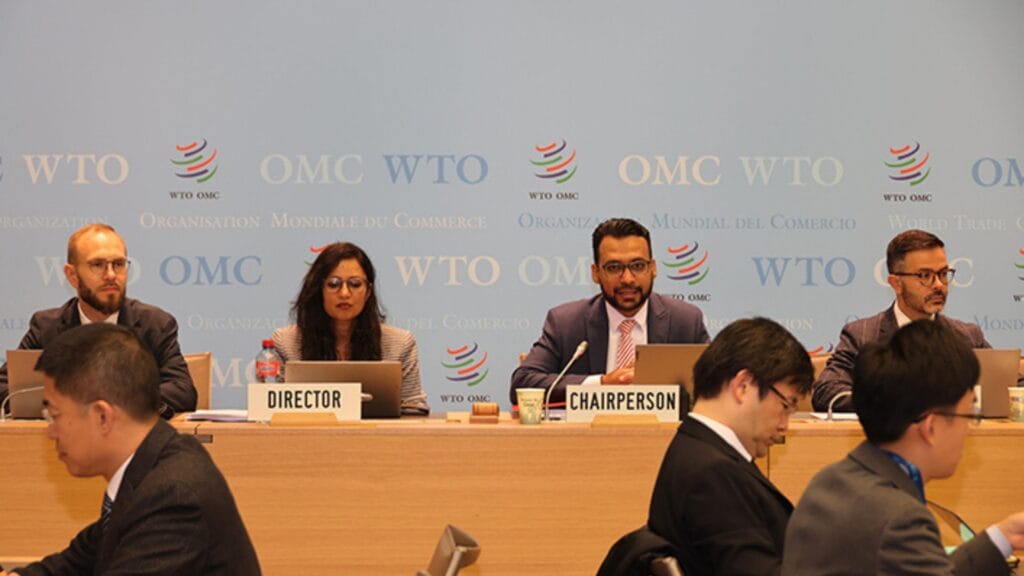
Geneva,  – The intricate, often opaque system of determining a product’s “economic nationality” is back in the spotlight, as trade members intensify discussions on improving the transparency and application of non-preferential Rules of Origin (RoO). These rules, essential for everything from imposing anti-dumping duties to compiling trade statistics, are being scrutinized by international bodies like the World Trade Organization (WTO) to ensure they do not become subtle barriers to global trade.   The Core Issue: Non-Preferential vs. Preferential   Discussions frequently center on two distinct categories of RoO: Preferential Rules of Origin: These are the rules negotiated within Free Trade Agreements (FTAs) or other preferential trade pacts (like the Generalized System of Preferences, or GSP). Their sole purpose is to determine if a good qualifies for reduced or zero tariffs between partner countries. Non-Preferential Rules of Origin (The Focus): These apply to all other trade and are not about granting tariff breaks. Instead, they are the foundation for a country’s wider commercial policy. Their application is crucial for: Implementing Anti-Dumping and Countervailing Duties. Applying Safeguard Measures (emergency restrictions on imports). Determining Tariff Quotas and Quantitative Restrictions. Enforcing Origin Marking and labeling requirements. Compiling accurate Trade Statistics.   The Call for Transparency and Harmonization   Under the WTO’s Agreement on Rules of Origin, members are mandated to ensure their non-preferential rules are applied in an impartial, consistent, and transparent manner. Despite a long-standing goal since the Uruguay Round (1995), a complete set of harmonized, non-preferential RoO has yet to be finalized. The renewed focus on transparency and the application of these rules stems from several critical challenges: Complexity of Global Supply Chains: As manufacturing processes are fractured across multiple countries, determining the “last substantial transformation” that confers origin is becoming increasingly difficult and subjective. Risk of Protectionism: Unclear or arbitrarily applied rules can be misused to pursue protectionist trade objectives, effectively restricting trade without imposing overt tariffs. Preventing Origin Fraud: Ensuring accurate origin helps customs authorities prevent misdeclaration intended to evade trade remedial duties or other restrictions.   Moving Forward: Digital Solutions and Due Diligence   To address these concerns, member countries are exploring practical solutions: Digitalization: Countries like Vietnam have recently been recognized for their efforts in maintaining transparency and preventing origin fraud, including the adoption of QR codes and other digital solutions in the issuance of Certificates of Origin (CoO). Stricter Documentation: Importing jurisdictions, such as the European Union, are increasingly strengthening their non-preferential rules by prescribing tighter norms and demanding comprehensive documentation from exporters to detail the entire production process. For businesses engaged in international trade, the shifting landscape means that thorough due diligence in determining and documenting origin is more important than ever. The ongoing talks signal a global push for greater clarity, predictability, and fairness in the one area of international commerce that defines a product’s most basic identity: its origin.

Scroll to Top