


















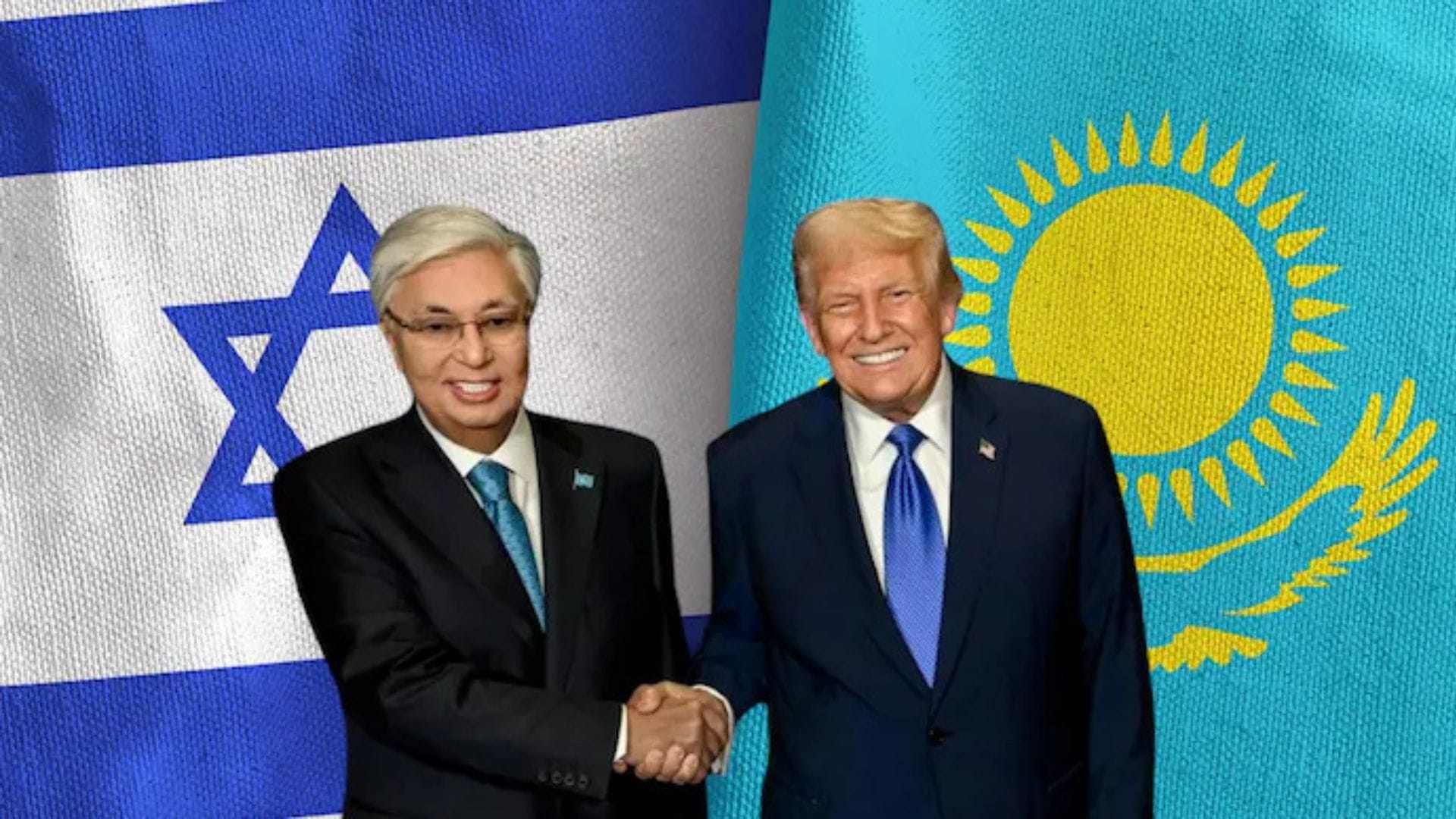
The Abraham Accords, once a diplomatic framework centered on the Middle East, have suddenly leapfrogged the map and landed in the heart of Central Asia. The official announcement that Kazakhstan—the region’s largest and wealthiest economy—will join the US-brokered pact with Israel is a quiet but seismic shift that redefines the country’s foreign policy and signals a new front in the global competition for influence.
While Kazakhstan and Israel have maintained full diplomatic relations since 1992, Astana’s accession is far more than a simple diplomatic footnote. It is a calculated, low-cost, yet high-visibility move that perfectly encapsulates the nation’s long-standing “multi-vector” foreign policy: a masterful act of geopolitical balancing.
The Logic of the Steppe: Counterbalancing Two Giants
Kazakhstan is geographically sandwiched between two global powers, Russia and China. This reality necessitates a complex foreign policy that seeks maximum flexibility and independence. For years, Astana has delicately managed its relationship with Moscow (a key security partner) and Beijing (its largest trading partner).
Joining the Abraham Accords represents a strategic maneuver to bring a powerful third pillar—the United States and its allies—firmly into its sphere of influence. Here’s why the move is a centerpiece of Kazakhstan’s balancing act:
- Gaining Washington’s Favor: The decision was announced during a high-profile C5+1 summit in Washington D.C. Accession to the Accords is a clear signal of preferential alignment with US strategic interests, generating goodwill with the Trump administration and paving the way for greater American investment.
- Economic Diversification and Technology: President Kassym-Jomart Tokayev has consistently emphasized the move’s economic rationale. Kazakhstan is eager to diversify its economy beyond oil and extractive industries. Israel, a global leader in high-tech fields like agritech, water management, cybersecurity, and defense, offers precisely the expertise needed for Kazakhstan’s modernization push. Furthermore, the move facilitates new cooperation on critical minerals, a key priority for the US to reduce its reliance on China.
- A Global Bridge Builder: By formalizing its role within the Accords, a pact that unites Muslim-majority nations with Israel, Kazakhstan reinforces its self-image as a moderate, stable Muslim nation and a diplomatic “bridge” between East and West. This status boosts its global soft power and separates it from the regional geopolitical rivalries of Russia and Iran.
Reinvigorating the Accords and Redrawing the Map
For the United States, Kazakhstan’s entry breathes new life into the Abraham Accords, which had slowed down amidst heightened tensions in the Middle East. It demonstrates that the diplomatic framework is a viable, expanding architecture of cooperation that transcends its original geography and remains relevant to the broader Muslim world.
For Israel, the move is a significant diplomatic success. It expands the Accords’ reach into the strategically vital territory of Central Asia, offering a strategic foothold in a region historically dominated by Moscow and increasingly courted by Tehran. Every new Muslim nation that joins the Accords chips away at the narrative of Israel’s international isolation.
Ultimately, Kazakhstan’s decision is less about creating a new relationship and more about placing an existing one into a new, powerful strategic architecture. It’s a pragmatic, utility-driven foreign policy choice designed to translate diplomatic symbolism into measurable economic and security gains.
In the high-stakes chess match for influence across Eurasia, Kazakhstan has chosen its next move carefully, leveraging an initiative from the West to counterbalance the proximity of the East. The steppe has spoken: the future of Central Asian diplomacy will be decided through a new, complex, and high-tech balancing act.