

New York, November 5, 2025
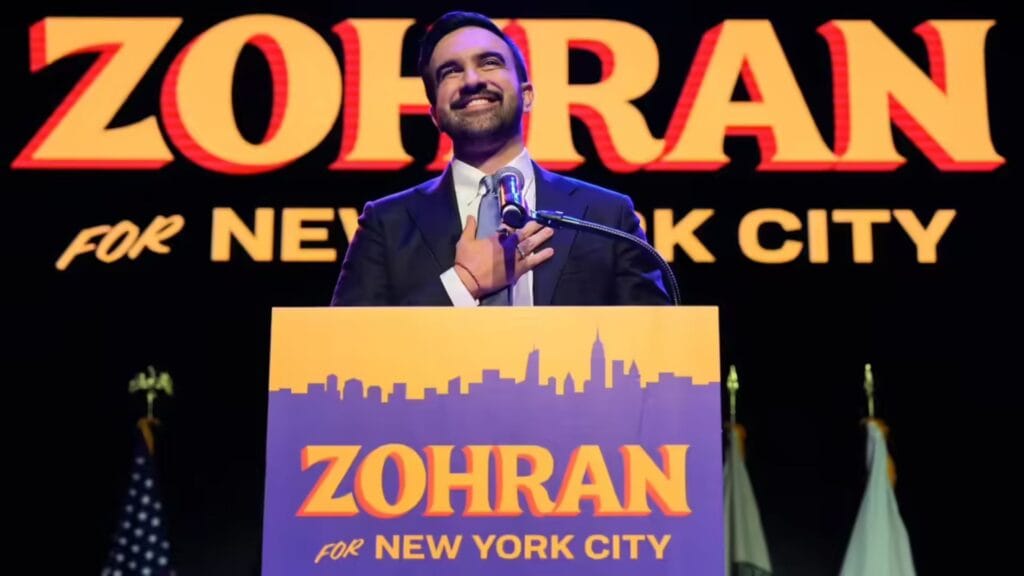
In a stunning political upset that sent a tremor through America’s elite, Zohran Mamdani, a 34-year-old Democratic Socialist, has been elected the next Mayor of New York City.1 His victory is not just a triumph of policy over personality; it is a profound repudiation of the idea that electoral politics can be bought, delivering a decisive blow to a massive, $22 million campaign funded by at least 26 billionaires determined to stop him.2
Mamdani’s insurgent campaign, built on an unapologetically progressive platform focused on working-class solidarity, defeated former Governor Andrew Cuomo, who ran as an Independent and became the reluctant champion of the city’s financial establishment.3
The Billionaire Wall That Failed
The scale of the opposition to Mamdani was unprecedented for a municipal race. Fearful of his proposed policies—including a rent freeze for over two million tenants, fare-free public buses, universal childcare, and a modest tax increase on the wealthiest New Yorkers—major figures from Wall Street and the real estate industry pooled their resources into anti-Mamdani Super PACs.
Hedge fund titan Bill Ackman, former Mayor Michael Bloomberg, and scions of powerful real estate families poured millions into a coordinated effort to paint Mamdani as a radical threat to the city’s economy.4 According to reports, the collective anti-Mamdani spending topped a staggering $22 million.5
Mamdani acknowledged the existential fear of the elite in his victory speech: “Billionaires like [Bill Ackman and Michael Bloomberg] have poured millions of dollars into this race because they say that we pose an existential threat.6 And I am here to admit something. They are right. We are an existential threat to billionaires who think their money can buy our democracy.”7
The Power of the Grassroots
Mamdani’s victory was not won with TV ads and glossy mailers, but through human capital and an electrifying, consistent message that resonated with an overburdened electorate.8
- Grassroots Funding: In stark contrast to his opponent’s reliance on large corporate donations, Mamdani’s campaign was overwhelmingly funded by small-dollar contributions, with an average donation size around $121.9 His campaign proudly leaned on the city’s public matching funds program.10
- The Volunteer Army: The campaign mobilized a remarkable number of volunteers—reportedly over 100,000—who knocked on doors and made calls, achieving a level of voter engagement not seen in a New York mayoral race in decades.11
Record Turnout: The election saw voter turnout surpass two million for the first time since 1969, signaling that Mamdani successfully energized a new coalition of young progressives, working-class families, and underrepresented communities.12
A New Era of Identity and Policy
Mamdani’s win is historic on multiple fronts. He will become New York’s first Muslim mayor, its first Asian American mayor, its first African-born mayor, and its youngest mayor in over a century.13 Born in Uganda and raised in New York, his identity became a powerful symbol against his opponents’ attempts to demonize him, including attacks from President Donald Trump.14
“New York will remain a city of immigrants,” Mamdani declared in his victory speech.15 “A city built by immigrants, powered by immigrants and, as of tonight, led by an immigrant.”16
With the establishment defeated, the focus now shifts to whether the newly elected mayor can deliver on his radical vision for a more affordable city. His agenda—a freeze on rent-stabilized units, free public transit, and a commitment to universal services—marks a decisive shift away from the center-right politics that have dominated City Hall for years, heralding a new and deeply contentious era for America’s largest city.17